




How to find chainsaw model number?
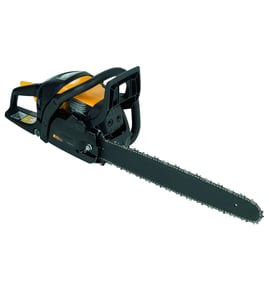
For a Craftsman chainsaw, the model number is typically printed on a data label on the saw body; for this parts list, the model is 358351190. Once you find the label, match every digit exactly so you get the right parts (bar, chain, air filter, and ignition parts).
Where to look on a Craftsman chainsaw
Check these common label locations first (wipe off oil and sawdust so you can read it clearly):
- On the starter housing (recoil starter side)
- Near the rear handle or trigger area
- On the crankcase or chassis near the bar mount
- Under the top cover near the air filter area
- On the bottom of the saw body near the oil tank
What the model number looks like
Many Craftsman gas chainsaws use a model format similar to 358.XXXXXX. Your label may show:
- A model number with or without a dot (example: 358.351190 vs 358351190)
- A separate serial number (not used for parts lookup)
- An engine family or manufacturer code (not the same as the model)
Quick ID table
| Label item | What it’s for | Use it to order parts? |
|---|---|---|
| Model number | Identifies the exact saw version | Yes |
| Serial number | Production tracking | No |
| Bar length | Cutting setup size (example: 18-in) | Sometimes |
| Chain spec | Pitch, gauge, drive links | Yes |
Why it matters
Chainsaw parts are highly model-specific. A one-digit mismatch can mean the wrong chain pitch, the wrong bar mount pattern, or a carburetor part that will not fit.
Helpful next step if you’re troubleshooting
If you’re looking up the model number because the saw will not start or runs rough, start with basic maintenance items like the air filter 545057701, then follow a proven diagnostic flow in tips for a hard to start chainsaw.
Last updated: January 2026
What are the parts of a chainsaw chain called?
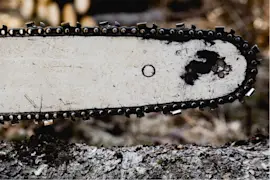
A chainsaw chain is made up of repeating links that cut, guide, and drive the chain around the bar. On your Craftsman 358351190 chainsaw, the key chain parts are the cutters (teeth), drive links, and tie straps, plus the rivets that hold everything together.
Main parts of a chainsaw chain
- Cutters (cutting teeth): The sharp links that do the cutting; each cutter has a top plate and side plate.
- Depth gauges (rakers): The small “bump” in front of each cutter that controls how much wood the cutter bites.
- Drive links: The bottom “tangs” that ride in the bar groove and engage the sprocket.
- Tie straps (side links): The flat links that connect the chain together on the sides.
- Rivets: The pins that fasten the links and allow the chain to flex around the bar and sprocket.
How these parts work together (quick reference)
| Chain part | What it does | Common issue when worn |
|---|---|---|
| Cutter | Slices wood fibers | Slow cutting, fine dust instead of chips |
| Depth gauge | Sets bite depth | Too low: grabby kickback-prone; too high: won’t feed |
| Drive link | Drives chain, stays aligned | Chain jumps, rough running, bar groove wear |
| Tie strap + rivets | Holds chain together | Stiff links, chain binding, uneven motion |
Why it matters when you sharpen or replace a chain
Understanding the names helps you match the correct chain pitch/gauge style, sharpen the cutters correctly, and avoid unsafe cutting behavior caused by incorrect depth gauge height.
When to replace the chain (practical checks)
- Cutters are sharpened back very short or are chipped/cracked
- Chain will not hold tension (stretches quickly) or has stiff links
- Drive links are burred, damaged, or the chain rides poorly in the bar groove
- You see uneven cutting (pulling to one side) after sharpening
If you need a replacement chain for this model, use the exact match listed for Craftsman 358351190: chain 20BPX072G. For sharpening basics and what each chain feature does, we recommend how to sharpen a chainsaw.
Last updated: January 2026
Do you use 40 1 or 50 1 gas in a chainsaw?
For the Craftsman chainsaw model 358351190, most owners should run a 50:1 gas-to-2-cycle oil mix unless the engine label or your original paperwork specifically calls for 40:1. Using the wrong ratio can cause hard starting, rough running, or premature engine wear.
Quick answer: 40:1 vs 50:1
- 50:1 (leaner oil mix) is common on many newer 2-cycle engines and is often the safer default when the exact spec is unknown.
- 40:1 (more oil) is sometimes used on older designs or during break-in on certain engines.
- If the saw smokes heavily, fouls plugs, or loads up at idle, the mix may be too oil-rich.
How to mix fuel correctly
Use fresh, ethanol-free fuel when possible and a quality 2-cycle oil.
- Mix in an approved fuel can, not in the chainsaw tank
- Add oil first, then add half the gas, shake, then top off and shake again
- Make only what you will use in 30 days
- Replace old fuel before troubleshooting starting or power issues
Common mix math
| Mix ratio | Gas amount | 2-cycle oil amount |
|---|---|---|
| 50:1 | 1 gallon | 2.6 oz |
| 40:1 | 1 gallon | 3.2 oz |
| 50:1 | 2.5 gallons | 6.4 oz |
If your chainsaw runs poorly after mixing
Fuel mix is only one piece of the puzzle. On the 358351190, these are common tune-up items that affect starting and power:
- Clean or replace the air filter 545057701
- Check for stale fuel and clogged fuel passages
- Inspect the ignition stop circuit if it dies suddenly (kill switch issues)
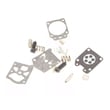
- If it surges or won’t stay running, the carburetor may need service (diaphragms and gaskets)
For step-by-step starting and fuel-system tips, use tips for a hard to start chainsaw.
Why it matters
A 2-cycle engine depends on the oil in the fuel for lubrication. Too little oil can score the cylinder and piston; too much oil can reduce performance, increase smoke, and foul the spark plug.
Last updated: January 2026
What are common chainsaw problems?
Common problems on the Craftsman 358351190 chainsaw include hard starting, rough running, chain oiling issues, and chain brake or cutting problems. Most causes trace back to fuel delivery, ignition shutoff, airflow restriction, or bar-and-chain wear and adjustment.
Most common symptoms and likely causes
- Won’t start or starts then dies: stale fuel, clogged carburetor circuits, restricted air filter, faulty kill switch
- Runs rough or lacks power: dirty air filter, carburetor out of adjustment, fuel line issues, air leak at carb gaskets
- Chain won’t oil or oils poorly: plugged oil passages, worn oil pump, clogged oil filter
- Chain won’t cut well: dull chain, incorrect chain tension, worn bar rails
- Chain brake issues: debris buildup around brake components, worn brake parts
Quick checks we recommend first (fast, high-impact)
- Confirm fresh, properly mixed fuel (most gas chainsaws use a 2-cycle oil mix; follow the mix ratio on your oil bottle).
- Inspect and clean or replace the air filter 545057701.
- Verify the stop/kill switch is not stuck and the wiring is intact; replace the switch 530069572 if it intermittently shuts off.
- Check bar oil level and look for oil on the bar tip after a short run; if dry, inspect the oil pickup and pump.
- Sharpen or replace the chain and set correct tension (snug on the bar, still able to pull around by hand with gloves).
Parts that commonly solve these problems
| Problem you see | Part to inspect | What it affects |
|---|---|---|
| Hard starting, surging | Repair kit | Carburetor metering and fuel delivery |
| Stalling when bumped | Switch | Ignition shutoff circuit |
| Poor oiling | Pump assembly | Bar-and-chain lubrication |
| Weak cutting | Chain / bar | Cutting performance and tracking |
For fuel-delivery problems, a carburetor service is often the fix; our how to rebuild a chainsaw carburetor guide walks through the typical steps and what to watch for.
Why it matters
A chainsaw that runs lean (from restricted fuel flow or air leaks) can overheat and lose power, while poor bar oiling quickly damages the bar and chain. Catching these issues early keeps your Craftsman saw cutting safely and consistently.
Last updated: January 2026