 Error Codes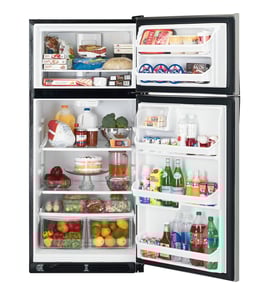



Are top mount or bottom mount fridges better?
Top-mount and bottom-mount refrigerators can both be “better”; it depends on how you use your fridge. For a Magic Chef CTB1925GRW top-mount refrigerator, the top-mount style typically costs less to buy and maintain and is often more energy-efficient, while bottom-mount models usually feel more convenient for everyday fresh-food access.
Quick comparison
| Feature | Top-mount (like CTB1925GRW) | Bottom-mount |
|---|---|---|
| Fresh-food access | Lower, more bending | Higher, less bending |
| Freezer access | Eye level | Lower drawer |
| Typical efficiency | Often higher | Often slightly lower |
| Typical price | Often lower | Often higher |
| Repair complexity | Usually simpler layout | Can be more complex (drawer rails, icemaker routing) |
Choose a top-mount if you want
- Lower upfront cost and a straightforward design
- A freezer you access frequently (frozen meals, ice trays)
- Good overall energy efficiency for the capacity
- Easier fit in tighter kitchens (no large freezer drawer swing)
Choose a bottom-mount if you want
- Fresh foods at eye level (less bending for produce, milk, leftovers)
- A wide refrigerator section that is easier to organize
- A freezer drawer that holds bulky items well
Why it matters
The “best” fridge layout is the one that matches your daily habits. If you open the refrigerator section far more than the freezer, a bottom-mount can reduce bending. If you want a simpler, budget-friendly layout with strong efficiency, a top-mount like the CTB1925GRW is a solid choice.
One practical tip before you decide
Confirm your exact model number and door-clearance needs before ordering parts or planning a replacement; how to find your appliance model number (and what it means for parts) helps you match the right Magic Chef refrigerator parts and diagrams.
Last updated: January 2026
What are the common problems with Magic Chef mini fridges?
Common Magic Chef mini fridge problems are poor cooling (warm fridge), constant running, frost or ice buildup, water leaking, and temperature swings. On Magic Chef model CTB1925GRW (a top-mount refrigerator), the same root causes apply: airflow restrictions, dirty coils, door seal leaks, and control or start-component issues.
Most common symptoms and likely causes
- Not cooling or weak cooling: dirty condenser coils, blocked vents, failed evaporator fan, weak compressor start device
- Runs all the time: dirty coils, door gasket leak, warm room temperature, frequent door openings
- Freezing food in the fresh-food section: control set too cold, items blocking the air outlet, damper stuck open (if equipped)
- Frost/ice buildup in freezer: door left ajar, bad gasket, frequent openings, defrost system problem
- Water leaking: clogged defrost drain, cracked drain pan, ice buildup around the drain
Quick checks we recommend (in order)
- Set the temperature to a mid-range setting and wait 24 hours for stabilization.
- Clean the condenser coils and make sure the condenser fan area (if present) is clear.
- Confirm the doors close easily and the gasket seals all the way around.
- Make sure food packages are not blocking interior air vents.
- Listen for the evaporator fan in the freezer; it should run when the compressor is running.
- If the compressor clicks but will not start, test the start components with a meter.
What “normal” looks like
| What you notice | Often normal | Often a problem |
|---|---|---|
| Compressor run time | Longer in hot rooms or after loading groceries | Constant running with warm temps |
| Light frost on freezer wall | Small amount | Heavy frost blanket or ice sheet |
| Temperature swings | Small changes after door openings | Big swings with spoiled food |
Why it matters
Cooling and frost issues usually start with airflow or sealing problems. Fixing those early helps prevent compressor strain, food spoilage, and repeat icing.
For electrical testing steps and tool basics, we recommend how to use a multimeter to test electrical parts video.
Last updated: January 2026
What are the disadvantages of a top mount fridge?
A top-mount refrigerator like the Magic Chef CTB1925GRW is usually affordable and reliable, but the main tradeoffs are convenience and features: fresh-food items sit lower (more bending), freezer space can be less organized, and premium options like in-door ice and water are less common.
Common disadvantages (what most owners notice)
- More bending for daily use: the refrigerator compartment is below the freezer, so produce, drinks, and leftovers often require bending.
- Less “grab-and-go” ergonomics: eye-level access is typically the freezer, not the fresh-food shelves.
- Fewer organization features: many top-mount designs have simpler bins, fewer adjustable zones, and less flexible storage than some bottom-freezer models.
- Limited dispenser options: in-door water and ice dispensers are less common on top-mount units.
- Smaller freezer usability: even when freezer capacity is decent, shelf layout can make bulky items harder to stack.
Quick comparison: top-mount vs bottom-freezer
| Feature | Top-mount refrigerator | Bottom-freezer refrigerator |
|---|---|---|
| Fresh-food access | Lower, more bending | Higher, easier access |
| Freezer access | Higher, easier access | Lower, may require bending |
| Storage/organization | Often simpler | Often more flexible |
| Dispenser availability | Less common | More common |
| Typical cost | Usually lower | Usually higher |
How to reduce the downsides
- Put everyday items (milk, lunch items) on the upper refrigerator shelves to reduce bending.
- Use clear bins to create “zones” (snacks, deli, leftovers) so items do not get lost.
- Keep the freezer efficient by grouping foods by type and using stackable containers.
- Clean door gaskets and condenser areas regularly to help maintain stable temperatures.
Why it matters
Most households open the fresh-food section far more than the freezer. If you want the most-used items at a comfortable height, a bottom-freezer layout often feels easier day to day; if budget and simplicity matter most, a top-mount can still be a strong choice.
For model identification and parts matching, use how to find your appliance model number (and what it means for parts).
Last updated: January 2026





