Error Codes


What is the average lifespan of a whirlpool dishwasher?
A Whirlpool dishwasher typically lasts 10 to 12 years. For your Whirlpool GU2455XTSS0 undercounter dishwasher, lifespan depends most on water quality, how often you run it, and whether key wear items (like seals, pumps, and heating components) are kept in good working order.
Typical lifespan and what affects it
Most dishwashers fall into a similar range, but these factors move the needle the most:
- Water hardness and scale buildup (can shorten heater and pump life)
- How many cycles per week you run (more cycles equals more wear)
- Cleaning and loading habits (food debris and overloading strain the circulation system)
- Heat-dry usage (adds stress to heating and temperature-sensing parts)
- Leak prevention (a small leak can damage wiring and components over time)
Parts that commonly impact “end of life” decisions
If your GU2455XTSS0 is not cleaning, not draining, leaking, or not heating, these are common repair points that can extend service life:
| Symptom | Common system involved | Example part on this model page |
|---|---|---|
| Dishes not drying or water not heating | Heating circuit | Dishwasher heating element W10518394 |
| Won’t drain or leaves standing water | Drain system | Dishwasher drain pump WPW10348269 |
| Water on the floor near the door | Door sealing | Dishwasher door seal W10542314 |
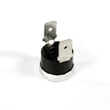
| Dead/no power symptoms | Electrical protection | Fuse W10258275 |
Why it matters
Knowing the 10 to 12 year average helps you decide whether a repair is a smart investment. If your dishwasher is near that age and needs a major pump or control repair, comparing repair cost versus replacement value becomes much clearer.
Quick tips to help yours reach the high end of the range
- Scrape off heavy food before loading
- Run hot water at the sink briefly before starting a cycle
- Keep the door seal clean and seated evenly
- Use rinse aid to reduce spotting and improve drying
- Address slow draining early (clogs and pump strain tend to get worse)
Last updated: February 2026
How can I get my whirlpool dishwasher to drain?
If your Whirlpool GU2455XTSS0 dishwasher will not drain, we start by clearing the filter area and checking the drain path for a blockage (air gap, disposer inlet, drain hose). If the drain path is clear, the drain pump or a blown fuse is the most common next cause.
Quick checks that fix most no-drain problems
- Cancel the cycle and let the unit try a drain (you should hear the drain pump run).
- Remove standing water, then check the sump and filter area for labels, glass, or food.
- If your sink has a garbage disposal, make sure the knockout plug in the disposer inlet was removed.
- Clean the sink air gap (if installed) and confirm water can flow through it.
- Inspect the drain hose for kinks, crushing, or a low spot that traps debris.
- Verify the drain hose has a proper high loop under the counter to reduce backflow.
Parts to consider for a Whirlpool GU2455XTSS0 that will not drain
If the drain path is clear but the dishwasher still will not drain, these model-matched parts are the usual suspects:
| Symptom | Most likely part | What you typically notice |
|---|---|---|
| Hums but does not move water | Dishwasher drain pump WPW10348269 | Pump noise, little or no water movement |
| Completely dead drain function | Fuse W10258275 | No response or intermittent power issues |
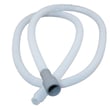
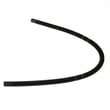
| Drains slowly or backs up | Dishwasher drain hose 8269144A | Water returns to tub, slow drain |
How we narrow it down (simple diagnosis)
- Pump runs, no drain: check for a clog at the pump inlet and in the hose first; then replace the drain pump if the impeller is damaged.
- No pump sound at all: check power to the dishwasher, then test the fuse and wiring connections.
- Drains into sink then flows back: correct the high loop, clear the air gap, and confirm the disposer inlet is open.
Why it matters
A dishwasher that cannot drain leaves dirty water in the tub, can trigger cycle interruptions, and can cause odors. Restoring proper drain flow also protects the circulation system and helps the unit clean and dry normally.
Last updated: February 2026
What's the most common problem with a whirlpool dishwasher?
For Whirlpool dishwashers like model GU2455XTSS0, the most common issue we see is not draining (standing water at the end of the cycle). In most cases, the cause is a restriction in the drain path or a failing drain component such as the drain pump.
Most common symptoms and what they usually point to
- Water left in the tub: clogged drain hose, blocked sump area, or a weak drain pump
- Humming but not draining: drain pump impeller jammed or pump failing
- Dirty dishes or gritty residue: circulation problem, clogged filters, or wash motor issues
- Leaks at the bottom of the door: worn door seal or door not closing squarely
- Stops mid-cycle or dead control: power interruption, blown fuse, or control issue
Quick checks you can do first (no parts yet)
- Cancel the cycle and run a drain function; listen for the drain pump running.
- Check the sink/disposer connection for a blockage (common after a disposer install).
- Inspect the drain hose routing for kinks and make sure it has a proper high loop.
- Remove standing water and check the sump area for debris that can jam the impeller.
- If the dishwasher is completely dead, verify the breaker is on and the door closes firmly.
Parts that commonly fix the most common Whirlpool dishwasher problems
If the basic checks do not restore normal draining, these are the most common repair paths for GU2455XTSS0:
| Problem you see | Most likely part area | Example part for this model |
|---|---|---|
| Won’t drain or drains slowly | Drain system | Dishwasher drain pump WPW10348269 |
| Leaks from the door area | Door sealing | Dishwasher door seal W10542314 |
| Dishwasher totally dead | Electrical protection | Fuse W10258275 |
| Poor drying, water not heating | Heating circuit | Dishwasher heating element W10518394 |
Why it matters
A dishwasher that does not drain can leave dirty water in the tub, cause odors, and eventually lead to leaks or pump damage. Addressing drain restrictions early often prevents a bigger repair like a pump motor or sump replacement.
Last updated: February 2026
What are the dimensions of the Whirlpool GU2455XTSS0?
Most Whirlpool 24-inch built-in (undercounter) dishwashers like model GU2455XTSS0 fit a standard opening that is about 24 inches wide and 34 to 35 inches high, with an overall depth typically around 24 to 25 inches (depending on door and control-panel style). For exact cutout and depth details, we recommend matching by model and installation style before ordering parts.
Typical fit dimensions to plan around
These are the common planning dimensions for an undercounter dishwasher installation:
- Opening width: about 24 inches (often 23 7/8 inches cabinet opening)
- Overall height: typically adjustable around 34 to 35 inches
- Overall depth: typically 24 to 25 inches to the front of the door
- Toe-kick depth clearance: commonly around 3 to 4 inches of toe-kick space
- Side clearance: minimal, but allow room so the tub does not rub cabinets
Quick reference table (typical ranges)
| Measurement | Typical range for this style | What changes it most |
|---|---|---|
| Width | 23 7/8 in to 24 in | Cabinet opening and trim |
| Height | 33 7/8 in to 34 1/2 in | Leveling legs adjustment |
| Depth | 24 in to 25 in | Control panel style, door thickness |
Why it matters
Dishwasher dimensions affect whether the unit sits flush with your cabinets, whether the door clears adjacent drawers, and whether the water line and drain hose route cleanly without kinks. A tight fit can also cause vibration noise and door sealing issues.
Parts that often come up during reinstall or fit issues
If you are reinstalling the dishwasher or correcting leaks after moving it, these model-matched parts are commonly involved:
- Dishwasher door seal W10542314 (helps prevent leaks around the tub opening)
- Dishwasher drain hose 8269144A (helps prevent kinks and draining problems)
- Dishwasher water inlet valve WPW10158389 (helps restore proper fill if water flow is weak)
Last updated: February 2026