

How to hard reset kenmore washer?
To hard reset your Kenmore washer model 11082983810, unplug it for 1 minute to clear the control’s stored state, then restore power and start a fresh cycle. This reset fixes many “won’t start,” “stuck cycle,” and intermittent control glitches.
Hard reset steps (power reset)
- Press Power/Cancel to stop the cycle (if the washer responds).
- Unplug the washer from the wall outlet.
- Wait 60 seconds.
- Plug the washer back in.
- Select a new cycle and press Start.
- If the washer has a lid lock, close the lid fully before starting.
If the reset does not help
A hard reset restores power, but it will not fix a mechanical failure. On model 11082983810, these checks often pinpoint the real cause:
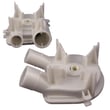
- No drain or slow drain: check for a clog and inspect the water pump WP3363394.
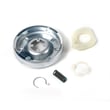
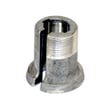
- Won’t spin or weak spin: look for a worn drive system such as the coupling 285753A or clutch 285785.
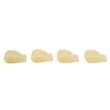
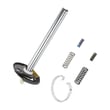
- Agitator not moving correctly: inspect the agitator dog 80040 and the agitator cam 285748.
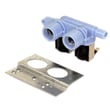
- Fills incorrectly or won’t fill: check inlet screens and consider the washer valve 285805.
- Dead washer or intermittent power: inspect the outlet and cord connection; the cord W10820044 is the model-matched replacement.
Quick symptom-to-part guide
| Symptom | What to check first | Common related part on this model |
|---|---|---|
| Hums but will not drain | Pump and drain path | Water pump WP3363394 |
| Agitates but will not spin | Drive coupling and clutch | Coupling 285753A, clutch 285785 |
| Agitator “ratchets” or slips | Agitator dogs/cam | Agitator dog 80040, agitator cam 285748 |
| Overfills or no fill | Inlet valve and screens | Washer valve 285805 |
Why it matters
A hard reset is the fastest way to rule out a temporary control issue before you spend time on deeper troubleshooting. If the same symptom returns right after the reset, focusing on the drain, drive, or fill components usually gets you to a lasting repair.
Last updated: February 2026
How to read Kenmore washer model numbers?
Kenmore washer model numbers (including 11082983810) are read left to right: the first 3 digits identify who built the washer for Kenmore, the next group identifies the base design, and the final digits show the specific version. Using the full model number helps us match the correct Kenmore washer parts.
What each section of a Kenmore model number means
Most Kenmore washer model numbers follow this pattern:
- Prefix (first 3 digits): manufacturer identifier (who produced the washer for Kenmore)
- Middle digits: base model or platform (the core design family)
- Ending digits: feature set, engineering revision, or color/trim variation
Example using your model
| Model number | How to read it | What it’s used for |
|---|---|---|
| 11082983810 | 110 + 82983 + 810 | Matching the correct parts list and diagrams |
Why the full model number matters for parts
Even small changes in the last digits can affect which parts fit. When you use the complete model number, we can narrow down the exact match for common repairs such as:
- Agitator not moving properly (often related to agitator dog 80040)
- Washer not draining (often related to water pump WP3363394)
- Washer not spinning or making a grinding noise (often related to coupling 285753A or clutch 285785)
Tips to avoid ordering the wrong part
- Copy the model number exactly as shown on the washer’s model tag
- Use all digits, even if the last ones seem “extra”
- If your parts symptom is mechanical (no spin, no agitation, leaks), match parts by model number first, then by symptom
Why it matters
Kenmore used multiple manufacturers and design platforms over the years. The model number is the fastest way to connect your washer to the right diagrams, compatible parts, and repair steps.
Last updated: February 2026
What is the average lifespan of a Kenmore washer?
A Kenmore washer typically lasts 10 to 15 years with normal household use and basic maintenance. For your Kenmore model 11082983810, lifespan depends most on load size, how often you run it, and whether wear items (like the drive and drain components) are replaced when symptoms start.
Typical lifespan and what affects it
Most washers reach the 10 to 15 year range, but these factors move the number up or down:
- Weekly usage (more cycles per week shortens life)
- Overloading (stresses the drive system and suspension)
- Water quality (sediment can affect valves and pumps)
- Drain performance (slow draining strains the pump)
- Timely replacement of wear parts (prevents secondary damage)
Signs your washer is nearing end of life
If you see these issues repeatedly, it often means major wear in the drive, spin, or drain system:
- Won’t spin out water consistently, even with balanced loads
- Loud grinding, burning smell, or repeated slipping during agitation/spin
- Leaks from the tub area or recurring water on the floor
- Slow or no drain, or the cycle stops mid-cycle
- Excessive shaking that is getting worse over time
Common repairs that can extend life (and when they help)
For model 11082983810, these parts are often involved when performance drops:
| Symptom | Common fix | Example part on this model |
|---|---|---|
| Won’t drain or drains slowly | Replace drain pump, check hoses | Water pump WP3363394 |
| Agitates poorly or “skips” | Repair agitator mechanism | Agitator dog 80040 |
| Won’t spin, loud during spin | Inspect drive coupling and clutch | Coupling 285753A, clutch 285785 |
Why it matters
Knowing the typical 10 to 15 year lifespan helps you decide whether to repair or replace. If the washer is within that range and needs a major drive or tub repair, comparing part cost and labor to the washer’s age usually leads to a clearer decision.
Last updated: February 2026