Error Codes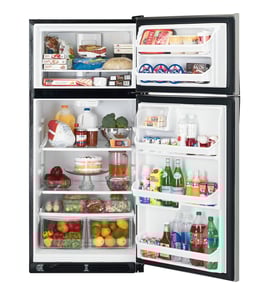


Can you still get parts for Kenmore refrigerators?
Yes. We still help customers find replacement parts for Kenmore refrigerators, including the Kenmore 2539366112 top-mount refrigerator. The fastest way is to match parts by the full model number so the water filter, door gasket, shelves, and ice maker components fit correctly.
How to find the right part for Kenmore 2539366112
Use your model number (2539366112) as the primary identifier. Kenmore refrigerators often have multiple versions that look similar, and the correct part depends on the exact model.
- Confirm the model number on the rating label inside the fresh food section
- Write down any revision numbers or suffixes shown on the label
- Identify the system you are repairing (cooling, defrost, ice maker, water, door seal)
- Compare the part description to what you see on the refrigerator (shape, connectors, mounting points)
- If you are replacing a filter, match the filter type used in your housing (push-in, twist-in, inline)
Common Kenmore refrigerator parts customers replace
These are the most frequently needed items for a top-mount refrigerator like model 2539366112:
| Part type | What it fixes | Typical symptom |
|---|---|---|
| Refrigerator water filter | Water quality and flow | Bad taste, slow dispenser, cloudy ice |
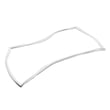
| Door gasket (door seal) | Air leaks and frost | Moisture on gasket, frost buildup, warm temps |
| Evaporator fan motor | Air circulation | Freezer cold but fridge warm, noisy fan |
| Defrost heater/thermostat | Frost control | Heavy frost on back wall, poor cooling |
Why it matters (fit and performance)
Using the correct Kenmore part for 2539366112 prevents leaks, noise, temperature swings, and repeat failures. A mismatched door seal or filter style can cause ongoing cooling problems even after installation.
Helpful DIY guides we recommend
Last updated: February 2026
What's the average lifespan of a Kenmore refrigerator?
Most Kenmore refrigerators, including top-mount models like 2539366112, typically last 10 to 15 years. With consistent maintenance (especially airflow and door sealing), it’s common to reach the upper end of that range and sometimes longer.
Typical lifespan ranges (what we see most often)
Lifespan depends on usage, kitchen temperature, and maintenance, but these are reliable expectations for a Kenmore refrigerator:
- 10 to 15 years: typical service life for most refrigerators
- 15+ years: common when coils stay clean and doors seal tightly
- Under 10 years: more likely when airflow is restricted, seals leak, or cooling issues go unaddressed
| Condition | What it usually leads to | What to do |
|---|---|---|
| Clean condenser area, good ventilation | Longer compressor life | Vacuum coils and keep clearance behind unit |
| Worn door gaskets, doors not closing | Longer run times, warm temps | Inspect and correct sealing issues |
| Frost buildup or weak airflow | Poor cooling, higher wear | Check for fan or defrost symptoms |
Maintenance that adds years (high impact)
These steps reduce run time and stress on the sealed system (compressor and refrigerant loop):
- Clean dust from the condenser coil and condenser fan area (often behind a rear panel or front toe grille)
- Keep food from blocking interior vents (especially in the freezer section)
- Confirm doors close on their own and the gasket seals all the way around
- Set stable temperatures (about 37°F fresh food, 0°F freezer)
- Defrost and clear heavy frost if airflow is getting restricted
Why it matters
A refrigerator usually “ages out” because it has to run too long to hold temperature. Long run times increase energy use and accelerate wear on the compressor, fans, and defrost components.
When it’s time to repair vs. replace
A repair is usually worthwhile when the cabinet is in good shape and the issue is isolated (fan noise, frost pattern problems, leaking water, weak ice production). If you’re seeing repeated warm-temperature events or constant running even after basic maintenance, troubleshooting the cooling system is the next step.
For display or control-related issues, we use error-code guidance to narrow the failure quickly; see Kenmore 111 model top freezer refrigerator error codes.
Last updated: February 2026
How do I tell what model Kenmore fridge I have?
Your Kenmore refrigerator’s model number is printed on a rating label inside the fresh food section or freezer. On Kenmore model 2539366112 (top-mount refrigerator), you will typically find it on an inside wall, along the door frame, or behind the lower crisper area.
Where to look first (most common spots)
- Inside the refrigerator compartment on a side wall near the top shelf
- On the refrigerator door frame (open the door and check the vertical frame)
- Behind or just above the lower crisper drawers (check the back wall)
- Inside the freezer compartment on a side wall
- Behind the lower front kickplate or toe grille (if your model has one)
What the label looks like and what to write down
The label usually includes several identifiers. We recommend copying these exactly:
- Model number (example format: 253.9366112 or 2539366112)
- Serial number (used to identify production run and age)
- Electrical rating (volts/amps) and sometimes refrigerant type
Quick ID checklist
| Item | Why it matters | Example |
|---|---|---|
| Model number | Ensures correct parts and diagrams | 2539366112 |
| Serial number | Helps match revisions and production changes | Letters + numbers |
| Brand | Confirms product family | Kenmore |
Why it matters
Kenmore refrigerators can look similar across multiple series. Using the exact model number prevents ordering the wrong refrigerator parts (like door bins, shelves, evaporator fan components, or a water filter style) and speeds up troubleshooting.
Next step after you find it
Use the model number to search our parts diagrams and repair help on Sears PartsDirect. If you are troubleshooting a display or control issue, our error-code resources can also help, such as Kenmore 111 model top freezer refrigerator error codes.
Last updated: February 2026
How many cubic feet is my Kenmore refrigerator by model number?
For Kenmore model 2539366112, the most reliable way to get the exact cubic-foot capacity is to read the refrigerator’s rating plate (usually inside the fresh food section). Model numbers help narrow the series, but capacity is confirmed by the rating plate or the model’s spec listing.
Fast ways to find the cubic feet (best to least)
- Check the rating plate inside the refrigerator compartment (often on a side wall near the crisper area) or inside the freezer.
- Look for a “Capacity” line listed in cubic feet (cu. ft.) on that plate.
- Search by the full model number (use all digits: 2539366112) in our model lookup on Sears PartsDirect to match the correct product family.
- Estimate by measuring interior volume only if the label is missing (less accurate).
Where to look on the refrigerator
Most Kenmore top-mount units place the rating plate in one of these spots:
- Left or right interior wall of the fresh food section
- Ceiling area near the temperature control housing
- Freezer side wall behind the ice bin (if equipped)
- Behind the crisper drawers (remove drawers for a clear view)
Quick estimating method (if the label is unreadable)
If you must estimate, measure the usable interior (not the exterior cabinet):
| What to measure | How to measure | Notes |
|---|---|---|
| Width | Inside wall to inside wall | Exclude door bins |
| Depth | Back wall to front edge of shelf area | Exclude door thickness |
| Height | Floor to ceiling inside | Measure fridge and freezer separately |
Then convert: (inches ÷ 12) × (inches ÷ 12) × (inches ÷ 12) = cubic feet. This gives a rough number because shelves, ducts, and liners reduce usable space.
Why it matters
Cubic-foot capacity helps you choose correctly sized replacements and accessories (like shelves, bins, and filters) and compare storage space across Kenmore refrigerator models without guessing.
Last updated: February 2026
How to read Kenmore model numbers?
Kenmore model numbers are read as a prefix plus a series of digits that identify who built the appliance and which design family it belongs to; for your Kenmore top-mount refrigerator model 2539366112, the 253 prefix is the key identifier we use to match the correct parts list and diagrams.
Where to find the model number on a refrigerator
On most Kenmore top-mount refrigerators, the model and serial tag is typically located in one of these spots:
- Inside the fresh food compartment on a side wall
- On the ceiling of the fresh food compartment near the light
- Along the door frame (hinge side)
- Behind the toe grille or lower front kickplate
- On the back of the cabinet (less convenient, but common)
How the number is structured (what each section means)
Kenmore model numbers usually follow this pattern:
| Section | Example (your model) | What it tells us |
|---|---|---|
| Prefix (first 3 digits) | 253 | Manufacturer code used for parts matching |
| Base model + feature set | 936611 | Design family and configuration |
| Revision/variation digits | 2 | Version change within the same family |
Why the prefix matters
The first three digits are the fastest way to narrow down the correct parts breakdown. For example, a Kenmore refrigerator starting with 253 uses a different parts catalog structure than models starting with 106, 111, 596, or 795.
Tips to avoid ordering the wrong part
When you search parts for Kenmore 2539366112, use the full model number exactly as shown on the tag.
- Copy the model number character-for-character (no spaces)
- Use the full number, not just the 253 prefix
- If a diagram asks for a “revision” or “series,” use the complete model number
- If your tag includes a serial number, keep it handy for confirming production variation
Why it matters
A single digit difference can change the door gasket, thermostat/control, defrost heater, or ice maker style. Using the full model number helps us match the correct refrigerator parts and avoid returns.
For troubleshooting that involves a display code or beeping, use our error-code references as a starting point: Kenmore 111 model top freezer refrigerator error codes.
Last updated: February 2026