Owner’s manual
 Error Codes





What is the average life expectancy of a GE refrigerator?
Most GE refrigerators have a typical life expectancy of 12 to 16 years, and many run 10 to 20 years with normal use. For your GE GFE28HSHCSS bottom-mount refrigerator, routine care like cleaning condenser coils and keeping airflow clear is what most often determines how long it lasts (see the GFE28HSHCSS owner's manual).
Typical lifespan ranges (what we see most often)
Refrigerator lifespan depends heavily on usage, room temperature, and maintenance. Features like in-door ice and water can add wear because more components run more often.
| Refrigerator type | Typical life expectancy | Notes |
|---|---|---|
| Basic top-freezer | 14 to 20 years | Fewer moving parts and electronics |
| French door / bottom-mount (like GFE28HSHCSS) | 10 to 16 years | More fans, sensors, and dispenser components |
| Built-in / premium feature-heavy models | 10 to 15 years | Higher complexity, more serviceable parts |
What extends the life of a GE refrigerator
We recommend these habits because they reduce compressor run time and prevent overheating and airflow problems.
- Clean dust from the condenser area regularly (more often with pets)
- Keep door gaskets clean and sealing tightly
- Avoid overpacking; leave space for air circulation
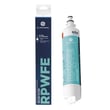
- Replace the water filter on schedule if you use the dispenser (example: GE refrigerator water filter RPWFE)
- Keep temperatures steady (avoid frequent warm-ups from long door openings)
Signs your refrigerator is nearing end-of-life
These symptoms often show up in the last few years of service life, especially on feature-rich models.
- Compressor runs almost constantly or is unusually loud
- Temperatures swing (food freezing in fresh food section or warm spots)
- Repeated frost buildup or recurring defrost issues
- Water dispenser flow drops even after filter changes
- Ice maker performance becomes inconsistent
Why it matters
A refrigerator that is working harder than it should uses more energy and can struggle to hold safe food temperatures. Early maintenance and timely part replacement can add years of reliable cooling.
Last updated: January 2026
What is the most common problem with a GE refrigerator?
The most common problem we see on GE refrigerators like model GFE28HSHCSS is a cooling complaint (food not staying cold enough or temperatures swinging). In many cases, the root cause is airflow restriction, a dirty condenser area, a door seal leak, or a failed cooling-system control component.
Quick checks that fix many “not cooling” calls
- Confirm the temperature settings were not accidentally changed.
- Make sure air vents inside the fresh food and freezer sections are not blocked by food.
- Clean dust from the condenser area (restricted airflow can raise temps).
- Check that doors close fully and the gaskets seal all the way around.
- Listen for the evaporator fan; if it is not running, cooling will suffer.
Parts that commonly relate to cooling issues
If basic checks do not help, these parts are frequent suspects on modern bottom-mount and French door style refrigerators:
| Symptom | Common area to check | Example part for GFE28HSHCSS |
|---|---|---|
| Temps warm or inconsistent | Temperature sensing and control | Refrigerator temperature sensor WR55X10025 |
| Frost buildup, weak airflow | Defrost system | Refrigerator defrost bi-metal thermostat WR50X10108 |
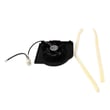
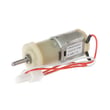
| Fan noise, no airflow | Evaporator fan | Refrigerator evaporator fan motor and blade WR60X10352 |
Why it matters
Cooling problems can look “random,” but they usually come down to one of three things: airflow, heat removal, or control/defrost. Addressing the simple airflow and cleaning items first can prevent unnecessary part replacement and protect food safety.
Helpful model-specific resources
- Use the troubleshooting and temperature-setting guidance in the GFE28HSHCSS manual.
- If you see a code or a repeating alarm pattern, match it using GE refrigerator error codes.
Last updated: January 2026
How do I find the model number on my GFE28HSHCSS?
Your GE bottom-mount refrigerator’s model number is printed on the appliance’s rating label. On most GE French door and bottom-mount models like GFE28HSHCSS, you will find that label inside the fresh food compartment along the cabinet wall near the crisper drawers or along the door frame.
Where to look on a GE bottom-mount refrigerator
Check these common label locations first:
- Inside the refrigerator section on the left or right side wall
- On the ceiling of the fresh food compartment near the lights
- Along the door frame (hinge side) when you open the refrigerator door
- Behind the crisper drawers on the cabinet liner
- On the back exterior panel (less common, but worth a quick check)
What the label should show
The rating label typically includes several identifiers. Use the model number for parts lookup and the serial number for age and production details.
| Label item | What it’s used for | Example format |
|---|---|---|
| Model number | Matching diagrams and ordering the correct parts | GFE28HSHCSS |
| Serial number | Identifying production run and date code | Letters and numbers |
| Electrical ratings | Verifying power requirements | Volts/amps |
Tips to make parts matching accurate
Once you find the label, we recommend:
- Write the model number exactly as shown (including any letters)
- Take a clear photo before the label gets worn or smudged
- Use the full model number when selecting parts like the GE refrigerator water filter RPWFE
Why it matters
GE often uses similar-looking cabinets across multiple model series; one character difference in the model number can change the correct ice maker, control board, or water filter fitment.
For diagrams and model identification details specific to your refrigerator, use the owner's manual.
Last updated: March 2026