Installation guide
 Owner’s manual
 Error Codes


Is it worth repairing a Kenmore washing machine?
Yes, repairing a Kenmore washer is worth it when the fix restores reliable washing and spinning for far less than replacing the machine. For Kenmore model 11025102310, many common failures involve serviceable parts like the lid lock, drive belt, or actuator, which are typically cost-effective repairs.
Quick way we decide: repair vs replace
- Repair when the washer still fills, drains, and spins normally after the fix
- Repair when the issue is a single part (lid lock, belt, actuator, inlet valve)
- Replace when the tub or basket is badly damaged, or multiple major systems are failing
- Replace when repeated breakdowns happen within a short period
- Repair when you can do safe DIY work using the 11025102310 owner's manual
Common repairs that are usually “worth it” on this model
These are frequent, straightforward fixes on top-load Kenmore 110-style washers:
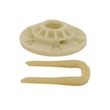
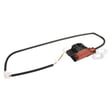
- Won’t start or lid won’t unlock: washer lid lock assembly W10404050
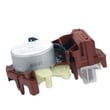
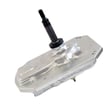
- Won’t agitate or spin correctly: washer actuator WPW10006355
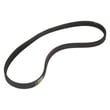
- Slipping, squealing, weak spin: washer drive belt WPW10006384
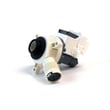
- No fill or slow fill: water inlet valve screens or washer water inlet valve assembly WPW10683603
- Off-balance banging: suspension wear (inspect rods and tub support)
Cost and complexity snapshot
| Repair type | Typical DIY difficulty | Typical value | Notes |
|---|---|---|---|
| Lid lock or actuator | Medium | High | Often restores “no start” and spin issues fast |
| Drive belt | Medium | High | Good fix for slipping or poor spin |
| Control board | High | Medium | Higher cost; confirm diagnosis first |
| Gear case or tub work | High | Lower | Labor and parts add up quickly |
Why it matters
A targeted repair can extend the life of model 11025102310 for years, while avoiding the cost and hassle of replacing a washer. The manual also notes normal safety behaviors like the lid staying locked until the basket stops spinning, which can look like a failure when it is operating correctly.
Last updated: February 2026
What is the average lifespan of a Kenmore washer?
A Kenmore washer typically lasts 10 to 15 years under normal household use. For your Kenmore model 11025102310, routine care like using HE detergent correctly and replacing wear items on schedule helps you reach the longer end of that range; see the 11025102310 owner's manual for the maintenance routine.
What affects lifespan the most
- Load size and balance: frequent overloading or consistently unbalanced loads increases stress on the drive system and suspension.
- Detergent habits: using HE detergent and not overdosing reduces residue and odor buildup.
- Water supply condition: old or kinked inlet hoses and restricted screens can cause fill problems and leaks.
- Drain setup: a poor drain connection can lead to slow draining and extra pump wear.
- Wear parts: belts, lid locks, and valves are common service items over time.
Maintenance schedule we recommend (based on typical washer care)
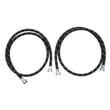
The manual for this washer calls out key upkeep, including replacing inlet hoses after 5 years.
| Task | How often | Why it matters |
|---|---|---|
| Replace water inlet hoses | Every 5 years | Reduces risk of hose failure and leaks |
| Inspect hoses for bulges, cuts, kinks, leaks | Periodically | Catches problems early |
| Use HE detergent and correct amount | Every load | Prevents residue, odor, and poor performance |
| Run occasional warm/hot washes | Sometimes | Helps reduce buildup inside the washer |
Parts that commonly shorten washer life when they fail
If performance changes (no spin, won’t start, won’t fill, loud noise), these model-compatible parts are often involved:
- Washer drive belt WPW10006384 (slipping, squealing, no agitation/spin)
- Washer lid lock assembly W10404050 (won’t start or lid won’t lock/unlock)
- Washer water inlet valve assembly WPW10683603 (slow fill, no fill, valve noise)
- Washer actuator WPW10006355 (shifting issues, agitation/spin problems)
Why it matters
Knowing the 10 to 15 year average helps you decide whether to maintain and repair (often cost-effective for wear parts like a belt or valve) or plan for replacement if major components like the gear case or tub system are worn.
Last updated: February 2026
How to identify a Kenmore washer model?
To identify your Kenmore washer model, we look for the model number tag on the machine itself. For Kenmore model 11025102310, the model and serial tag is typically on the washer cabinet (often under the lid on top-loaders or along the back panel area), and that exact number is what you use to match the correct parts and instructions in the 11025102310 owner's manual.
Where to find the model number tag
Check these common locations on Kenmore washers:
- Top-load washer: under the lid, around the tub opening or on the cabinet rim
- Back of the washer: on a label near the power cord entry or rear panel
- Inside the cabinet area: near the control console or side wall (varies by design)
- Front-load washer (if applicable): inside the door opening on the cabinet frame
What the model number looks like (and why it matters)
Kenmore model numbers often start with 110 and are usually 10 to 12 characters long. Using the full model number prevents ordering the wrong part, especially for fit-critical items like a lid lock, actuator, or water inlet valve.
Quick ID checklist
- Match every digit (example: 11025102310, not just “110.2510”)
- Record the serial number too (helps with production variations)
- Use the model number when selecting parts like the washer drive belt or lid lock assembly
Common parts that require an exact model match
If you are troubleshooting or replacing parts, these are the ones most likely to vary by model series:
| Part type | What it affects | Example for this model |
|---|---|---|
| Lid lock | Won’t start or won’t spin | Washer lid lock assembly W10404050 |
| Water inlet valve | No fill, slow fill, wrong temp | Washer water inlet valve assembly WPW10683603 |
| Drive belt | No agitation or weak spin | Washer drive belt WPW10006384 |
Why it matters
The model number is the fastest way to get the right Kenmore washer parts, correct installation clearances, and the right procedures for maintenance and troubleshooting. It also helps avoid repeat repairs caused by installing a similar-looking but incompatible part.
Last updated: February 2026
How many cubic feet is a Kenmore model 11025102310 washer?
The Kenmore washer model 11025102310 is a top-load design; washers in this Kenmore 110 platform typically fall in the about 3.2 to 3.5 cu. ft. capacity range. For the exact rated capacity for your specific unit, we recommend confirming it in the 11025102310 owner's manual.
How to confirm the exact capacity for model 11025102310
We use the manual because it lists the official specifications for your exact configuration.
- Check the Specifications section for “capacity” or “basket volume”
- Look for a model and serial label under the lid or on the cabinet and match it to the manual
- If the manual lists multiple variants, match by control style and cycle options
- If you are comparing to another washer, compare cu. ft. (not just “large” or “extra large”)
What “cubic feet” means in real-world loads
Capacity is the tub volume; it affects how much you can wash while still allowing proper agitation and rinsing.
| Capacity (cu. ft.) | Typical load size | Common examples |
|---|---|---|
| 3.0 to 3.5 | Medium | Mixed weekly laundry for 1 to 2 people |
| 3.6 to 4.0 | Medium-large | Towels, jeans, larger mixed loads |
| 4.1+ | Large | Bulky items more easily (comforters vary) |
Why it matters
Using the right capacity helps prevent overloading, which reduces out-of-balance spinning, improves cleaning, and can extend the life of drive components like the washer drive belt WPW10006384 and suspension parts.
Last updated: February 2026