Owner’s manual
 Error Codes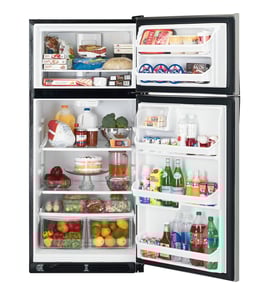



How to tell cubic feet of Kenmore refrigerator by model number?
For Kenmore model 10671192100, the most reliable way to get cubic feet is to look up the capacity in the specifications section of the 10671192100 owner's manual. If you do not see capacity listed, you can calculate a close estimate by measuring the usable interior space and converting cubic inches to cubic feet.
Find capacity using the model number
Use the model number exactly as shown on the rating label (inside the fresh food compartment). Then check the specs pages in the 10671192100 owner's manual.
Quick checklist
- Confirm the model is 10671192100 (not just “106.”).
- Look for a “Product specifications” or “Features and specifications” section.
- If the manual lists dimensions but not capacity, use the measurement method below.
- Ignore “106” prefix patterns for capacity; 106 models do not reliably encode cubic feet in the model number.
Estimate cubic feet by measuring the interior
This gives a practical estimate of storage volume (what you can actually use), which is often what customers want when comparing refrigerator sizes.
- Empty the compartment you are measuring.
- Measure interior width, height, and depth in inches.
- Multiply:
width x height x depth = cubic inches. - Convert:
cubic inches ÷ 1728 = cubic feet.
Conversion table
| What you have | What to do | Result |
|---|---|---|
| Inches (W x H x D) | Multiply W x H x D | Cubic inches |
| Cubic inches | Divide by 1728 | Cubic feet |
Why it matters
Cubic feet helps you compare refrigerator sizes, but it can be misleading if you only use exterior dimensions. Shelves, bins, the evaporator cover, and air channels reduce usable space, so measuring the interior gives a more realistic number for food storage.
Last updated: February 2026
How to tell what model Kenmore refrigerator?
To tell what model Kenmore refrigerator you have, look for the model and serial number label inside the fresh food (refrigerator) compartment. On Kenmore model 10671192100, the owner's manual notes the label is located on the inside wall of the refrigerator compartment; record the full model number and serial number exactly as shown.
Where to look for the model number label
Check these common locations on Kenmore top-mount refrigerators:
- Inside the refrigerator compartment on a side wall (most common)
- Inside the refrigerator compartment near the top/ceiling area
- Behind or beside the crisper drawers (you may need to slide a drawer out)
- Along the door frame area (fresh food side)
What to write down (and why)
Copy the information exactly as it appears on the label:
- Model number (example: 10671192100)
- Serial number
- Purchase date (if you know it)
This information is what we use to match the correct parts list, diagrams, and repair instructions for your exact refrigerator.
Quick check: model number vs. serial number
| Item | What it tells us | Example format |
|---|---|---|
| Model number | Which design and parts fit | 10671192100 |
| Serial number | Your unit’s production identifier | Letters and numbers |
Why it matters
Kenmore refrigerators often share similar looks across different model numbers, but parts like an ice maker, defrost timer, door gasket, or water inlet valve can vary by model. Using the exact model number helps prevent ordering the wrong replacement part.
Last updated: February 2026
What are the disadvantages of a top mount fridge?
Top-mount refrigerators like the Kenmore 10671192100 are reliable and efficient, but the main disadvantages are convenience and organization: fresh-food items sit lower (more bending), freezer access is at eye level (less ideal for heavy items), and features like in-door ice and water are less common.
Common disadvantages (what you will notice day to day)
- More bending for fresh food: the refrigerator compartment is below the freezer, so you reach down more often.
- Less flexible organization: many top-mount designs have fewer premium bins and adjustable storage options than some bottom-freezer styles.
- Fewer dispenser options: in-door water and ice dispensers are less common on top-mount models.
- Odor transfer between sections: because air circulates between freezer and refrigerator, odors can move from one section to the other if food is not wrapped well.
- Airflow can be easier to block: overpacking can block vents and lead to temperature swings or moisture issues.
What to do to minimize the downsides
We recommend these practical habits for the Kenmore 10671192100:
- Keep frequently used items at the front and mid-shelves to reduce bending.
- Do not block freezer or refrigerator vents; leave space around vent openings.
- Wrap foods tightly and clean spills quickly to reduce odor transfer.
- Set controls to the factory mid-settings after installation, then adjust gradually.
- Level the refrigerator so doors seal evenly and temperatures stay stable (leveling and door alignment steps are in the owner's manual).
Quick comparison: top-mount vs bottom-freezer
| Feature | Top-mount refrigerator | Bottom-freezer refrigerator |
|---|---|---|
| Fresh-food access | Lower, more bending | Higher, easier access |
| Freezer access | Higher, easier to see | Lower, may require bending |
| Storage features | Often simpler | Often more flexible |
| Dispensers | Less common | More common |
Why it matters
Most performance complaints in a top-mount refrigerator come from blocked airflow, door sealing issues, or food odor transfer. Using good loading habits and keeping the unit level helps your Kenmore 10671192100 cool evenly and avoid moisture and smell problems.
Last updated: February 2026
What is the life expectancy of a Kenmore refrigerator freezer?
Most Kenmore top-mount refrigerators like model 10671192100 last 12 to 15 years with normal household use. Keeping airflow clear, cleaning the condenser area, and fixing door-seal or defrost issues quickly helps you reach (and often exceed) that typical lifespan.
Typical lifespan and what affects it
A refrigerator’s life is mostly driven by compressor run time, heat removal, and how well the doors seal.
- Ventilation: blocked toe-kick or rear airflow makes the compressor work harder
- Condenser cleanliness: dust buildup raises operating temperature
- Door gasket condition: air leaks cause longer run times and frost
- Defrost performance: ice buildup reduces airflow and cooling efficiency
- Usage habits: frequent door openings and warm food loads increase run time
Quick maintenance checklist (high impact)
Use these steps to reduce wear on the sealed refrigeration system.
- Vacuum dust from the condenser area and nearby vents
- Confirm the doors close fully and do not pop open
- Wipe gaskets clean; check for gaps, tears, or hardened sections
- Keep freezer vents inside the cabinet unblocked by packages
- Set stable temps (typical targets: 0°F freezer, 37°F fresh food)
Common “wear items” vs. major components
| Category | Examples | Why it matters |
|---|---|---|
| Wear and convenience parts | light switch, bulb, ice maker parts | Small failures can be annoying but usually do not end the fridge’s life |
| Cooling system support | defrost timer, defrost bi-metal, condenser fan | Problems here can cause warm temps, frost, and heavy compressor run time |
| Major sealed system | compressor, refrigerant tubing | These repairs are more complex and often determine whether to repair or replace |
Parts that often help extend service life
If you are addressing symptoms (warm temps, frost, no ice), using the correct model-matched part prevents repeat failures.
- Refrigerator defrost timer W10822278
- Refrigerator defrost bi-metal WP4387503
- Refrigerator condenser fan W10181323
- Refrigerator gasket panel 2159061
Why it matters
A refrigerator that runs longer than it should (from dirty condenser coils, poor airflow, or a leaking gasket) puts extra load on the compressor and can shorten overall life. Preventive maintenance keeps temperatures stable and reduces energy use.
For model-specific care and operating guidance, follow the owner's manual.
Last updated: February 2026