 Owner’s manual


What is the life expectancy of a GE washing machine?
A GE washer like model GTW500ASN0WS commonly lasts about 10 to 14 years in typical home use, but real life expectancy depends most on load size, detergent habits, installation/leveling, and how quickly small issues (leaks, vibration, draining problems) are corrected. See the care guidance in the GTW500ASN0WS owner’s manual.
- Overloading: consistently packing the basket strains the drive system and suspension.
- Too much detergent: oversudsing can lead to poor rinsing and extra wear.
- Out-of-balance spinning: repeated heavy vibration can shorten suspension and tub support life.
- Water quality and hoses: old or restricted hoses can cause fill issues and stress valves.
- Moisture left in the tub: leaving the lid closed all the time can contribute to odors and residue.
- Use HE detergent and measure carefully (more is not better).
- Load items loosely and evenly around the basket.
- Leave the lid open after washing so moisture can evaporate.
- Replace water supply hoses about every 5 years.
- If the Spin light blinks and clothes are wet, redistribute the load and run Drain & Spin.
| If your washer is… | Usually makes sense to… |
|---|---|
| Under ~7 years old with a single failure | Repair (often cost-effective) |
| 8–12 years old with repeated issues | Compare repair cost vs. replacement |
| 12+ years old with major drive/drain problems | Consider replacement if repair is extensive |
Knowing the typical lifespan helps you plan maintenance and decide when a repair is worth it. Catching early symptoms (leaks, slow draining, excessive vibration) can prevent secondary damage and extend the service life.
Last updated: January 2026
What is the most common problem with GE washers?
For the GE GTW500ASN0WS top-load washer, the most common issues we see are draining problems, out-of-balance vibration during spin, and fill or leak complaints caused by hoses or inlet screens. The exact “most common” failure varies by usage, water quality, and load habits; GTW500ASN0WS owner’s manual is the best model-specific reference for symptoms and checks.
- Won’t drain or leaves water in the tub: kinked drain hose, standpipe/siphoning setup, or a failing drain pump
- Shakes, bangs, or won’t spin out well: unbalanced loads, leveling issues, or worn suspension components
- Slow fill or no fill: closed supply valves, clogged inlet screens, or a water inlet valve problem
- Leaks: loose hose connections, worn hose washers, or internal pump/hose leaks
- Won’t start or lid won’t lock: lid lock system or related wiring/controls
- Confirm the lid is fully closed and start the cycle again.
- Verify both water valves are fully open and hoses are not kinked.
- Check drain hose setup: avoid pushing the hose too far into the standpipe; keep an air gap.
- Reduce oversudsing: use HE detergent and measure carefully.
- Redistribute the load and run Drain & Spin if clothes are too wet.
If the basic checks do not resolve the symptom, these model-compatible parts are common solutions:
| Symptom | Likely part to inspect/replace | Notes |
|---|---|---|
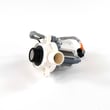
| Won’t drain / humming during drain | Washer drain pump assembly WH23X28418 | Pump issues can also cause leaks during cycles. |
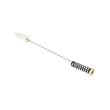
| Excessive vibration / off-balance | Washer suspension rod and spring assembly WH16X26911 | Leveling and load size still matter. |
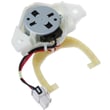
| Won’t shift/spin correctly | Washer shifter WH03X30517 | Can cause agitation/spin problems. |
Catching drain, vibration, and fill issues early helps prevent secondary problems like water leaks, repeated out-of-balance shutdowns, and poor cleaning performance.
Last updated: January 2026
How to force GE washer to drain and spin?
On the GE GTW500ASN0WS washer, you can force a drain and spin by selecting the Drain & Spin cycle and pressing Start with the lid closed. If the washer cannot balance the load, redistributing items and rerunning Drain & Spin usually restores spinning.
- Turn the cycle selector knob to Drain & Spin.
- If your model has a spin selection, choose Max/Extra.
- Close the lid fully (the washer will not spin with the lid open).
- Press Start.
- If you paused the cycle, press Start again to resume.
For cycle descriptions and Start/Pause behavior, see the GTW500ASN0WS owner’s manual.
These checks match common GTW500-series behavior:
- Out-of-balance load: Open the lid, redistribute items evenly around the basket, then run Drain & Spin again.
- Paused too long or lid left open: Reselect Drain & Spin and press Start (the washer can cancel and drain after extended pauses).
- Drain hose issue: Make sure the drain hose is not kinked or crushed; confirm the drain setup is correct.
- Control reset: Unplug the washer for 2 minutes, plug it back in, then try Drain & Spin.
If you hear a humming sound but water does not move, or draining is consistently slow, the drain pump or drain path may need inspection.
| Symptom | What it often points to | What to do next |
|---|---|---|
| Hums but won’t drain | Pump jam or failing | Check for debris; consider replacing the washer drain pump assembly WH23X28418 |
| Drains slowly | Partial restriction in drain path | Check hose routing and connections; inspect the pump and tub-to-pump path |
| Spin light blinks, clothes still wet | Load could not balance for full spin | Redistribute load; rerun Drain & Spin |
If you’re seeing flashing indicators and want to interpret them, use GE gtw top load washer error codes.
Running Drain & Spin is the safest way to remove standing water before moving laundry, checking the drain hose, or diagnosing a no-drain condition. It also helps prevent repeat cycle cancellations caused by an unbalanced load.
Last updated: January 2026


