 Owner’s manual
 Error Codes




Are all Bosch refrigerators 72 inches tall?
No. Bosch refrigerators come in multiple cabinet heights, so 72 inches is common but not universal. For your Bosch B26FT70SNS, we recommend confirming the exact height (with hinges and leveling legs) in the B26FT70SNS owner's manual before planning cabinetry, trim, or an alcove opening.
Bosch offers several refrigerator configurations (bottom-mount, French door, side-by-side, and counter-depth), and overall height varies by design.
Common height ranges you will see:
- Around 69 to 70 inches on many counter-depth styles
- Around 71 to 72 inches on many full-height freestanding styles
- Slightly taller overall height when you include hinges and leveling legs
Use this checklist so your measurement matches how the refrigerator actually installs:
- Measure from the floor to the top of the hinge cover (not just the cabinet box)
- Confirm the unit is level; front leveling legs can change height
- Allow clearance for ventilation and door swing
- If installing under cabinets, verify the opening height and any trim interference
These are common planning targets for bottom-mount refrigerators; use your manual for the exact numbers.
| What you are planning for | What to verify | Why it matters |
|---|---|---|
| Overall height | Cabinet plus hinges | Prevents the top from hitting cabinets |
| Leveling range | Leg adjustment range | Helps doors align and seal properly |
| Top clearance | Venting space above | Supports proper cooling performance |
A 1 to 2 inch height difference can stop a refrigerator from fitting an opening, force removal of upper cabinets, or cause door alignment and sealing issues that lead to warm temps and frost.
Last updated: January 2026
What does the super button do on a Bosch fridge freezer?
On the Bosch B26FT70SNS refrigerator, the Super button temporarily boosts cooling performance (Super Cool for the fridge and/or Super Freeze for the freezer) to pull temperatures down faster after you load groceries or open the doors frequently. Use it for short periods, then let the unit return to normal operation.
- Super Cool: Quickly chills the fresh food compartment to help protect temperature-sensitive items.
- Super Freeze: Quickly lowers freezer temperature to help newly added food freeze faster.
- After shopping: Helps recover temperature after adding a lot of room-temperature food.
- After long door openings: Helps stabilize temps if doors were open during cleaning or organizing.
- Short-term boost: Designed for temporary use, not as an everyday setting.
- Turn Super on before a big grocery load when possible.
- Load food with airflow in mind; do not block vents.
- Turn Super off after temperatures stabilize, or follow the timing guidance in the B26FT70SNS user manual.
| Situation | Use Super Cool | Use Super Freeze |
|---|---|---|
| Putting away fresh groceries | Yes | Sometimes |
| Adding unfrozen meat/seafood to freezer | No | Yes |
| Normal daily use | No | No |
| Power outage recovery (after power returns) | Sometimes | Sometimes |
Using Super correctly helps keep food in safe temperature ranges, improves cooling recovery after heavy use, and reduces the chance of soft ice cream or warming in the fresh food section.
Last updated: January 2026
How much space is needed around a Bosch fridge freezer?
For a Bosch B26FT70SNS bottom-mount refrigerator, we recommend leaving small ventilation gaps around the cabinet so heat can escape and airflow stays steady. A practical target is about 1 to 1 1/4 inches (2 to 3 cm) at the back and top, plus enough side clearance to prevent rubbing.
Use these as a safe starting point, then confirm the exact numbers in the B26FT70SNS owner's manual.
- Back: 1 to 1 1/4 inches (2 to 3 cm)
- Top: 1 to 1 1/4 inches (2 to 3 cm)
- Sides: 1/8 to 1/4 inch (3 to 6 mm) each side (more if walls are uneven)
- Front: keep the grille area unobstructed for airflow
- Door swing: allow extra room so doors and bins clear nearby walls and cabinets
| Location | Minimum starting point | What to watch for |
|---|---|---|
| Back | 2 to 3 cm | Prevents heat buildup and poor cooling |
| Top | 2 to 3 cm | Helps ventilation and compressor efficiency |
| Sides | 3 to 6 mm | Avoids cabinet rub and vibration noise |
| Door swing | As needed | Prevents door bins from hitting walls |
Proper clearance helps your refrigerator cool evenly, reduces compressor run time, and prevents nuisance issues like warm temperatures, excess condensation, and vibration noise.
- Level the refrigerator so doors self-close and seals contact evenly.
- Keep the condenser area and vents free of dust and obstructions.
- If the unit is tight in a cabinet cutout, prioritize back and top airflow first.
- After moving the refrigerator, recheck door alignment and gasket contact.
Last updated: January 2026
What is the most common problem with a Bosch fridge freezer?
The most common Bosch fridge-freezer complaint is poor cooling caused by airflow or defrost issues, often tied to frost or ice buildup that blocks air movement between the freezer and fresh-food sections. On the Bosch B26FT70SNS, start by checking for heavy frost, warm spots, and fan noise, then follow the checks in the B26FT70SNS owner's manual.
- Freezer is cold but refrigerator section is warm
- Frost or ice buildup on the back wall of the freezer
- Loud humming or a fan that cycles on and off
- Temperature swings, especially after door openings
- Water pooling or refreezing near the freezer floor
- Look for frost buildup: Heavy frost usually points to a defrost problem or a door seal/door-left-open issue.
- Listen for the evaporator fan: If the fan is not running, cold air will not circulate properly.
- Confirm vents are clear: Overpacked shelves can block return vents and mimic a cooling failure.
- Check the door seal: A leaking gasket pulls in humid air and accelerates ice buildup.
- Verify temperature settings: Use the recommended setpoints in the manual before chasing parts.
| Likely cause | What you notice | Parts that are often involved |
|---|---|---|
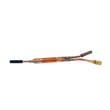
| Frosted evaporator (defrost issue) | Ice on freezer back panel, weak airflow | Defrost sensor, control, heater (varies by model) |
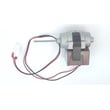
| Evaporator fan problem | Warm fridge, little or no airflow | Refrigerator evaporator fan motor 00618893, refrigerator fan blade 00622352 |
| Water/ice maker supply issue | No ice, slow fill, dispenser issues | Bosch refrigerator water inlet valve 00649626, water filter |
A fridge-freezer cools by moving cold air from the evaporator through both compartments. When frost blocks the evaporator or the evaporator fan cannot move air, temperatures rise even if the compressor is running, and food safety becomes a concern.
- If the fan is not spinning or is noisy, the refrigerator evaporator fan motor 00618893 and/or refrigerator fan blade 00622352 are common fixes.
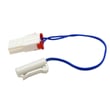
- If you see repeated heavy frost after a manual defrost, a failed refrigerator defrost sensor 00618543 is a common suspect.
Last updated: January 2026





