Owner’s manual



Can you get a universal remote for an old garage door opener?
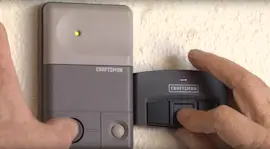
Yes. For an older Craftsman garage door opener like model 13953535SRT1, you can use a compatible universal remote if it supports your opener’s radio frequency and learn/program method. If compatibility is limited, adding an external receiver kit is the reliable universal option; it gives you modern remotes without changing the opener.
How to choose the right “universal” option
Universal remotes are not truly one-size-fits-all; they must match the opener’s signal type.
- Check the opener’s learn/program button (location and color can indicate the radio system)
- Confirm the opener’s frequency (common older ranges include 300-400 MHz)
- Verify whether your opener uses fixed code (DIP switches) or rolling code
- If the remote lists Craftsman compatibility, confirm it includes older Sears/Craftsman systems
- If you cannot match the radio system, plan on an external receiver (most universal solution)
Programming basics (what usually works)
Most universal remotes program one of two ways:
| Opener type | What you’ll see | Typical programming approach |
|---|---|---|
| Rolling code | Learn button on motor head | Press Learn, then press remote button |
| Fixed code | DIP switches in remote/opener | Match switch pattern, then test |
For model-specific button locations and programming steps, follow the 13953535SRT1 owner's manual.
When an external receiver is the best choice
An add-on receiver is the clean fix when the opener is too old or uncommon for today’s universal remotes.
- Receiver wires to the opener’s wall control terminals
- New remotes pair to the receiver (not the opener’s original radio)
- Often improves reliability if the original receiver is weak
- Lets you keep the existing motor unit, rail, and door hardware
Why it matters
A mismatched remote can look like a bad opener, bad logic board, or bad safety sensors. Confirming compatibility first prevents wasted time and avoids unnecessary force adjustments or travel-limit changes.
Related troubleshooting help
If your opener has diagnostic flashes or won’t respond consistently, use Craftsman error codes to narrow the cause before replacing anything.
For replacement parts and accessories, start with the model 13953535SRT1 parts listing, or search by model number on Sears PartsDirect.
Last updated: February 2026
How do I know what model my garage door opener is?
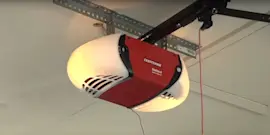
Your garage door opener’s model number is printed on a label on the powerhead (the motor unit mounted to the ceiling). For Craftsman model 13953535SRT1, the label is typically behind or under a light lens cover on the opener housing; check both light lens areas and the side opposite the antenna.
Where to look on the opener (powerhead)
We recommend checking these common label locations first:
- Under the front light lens cover
- Under the left light lens cover (when you’re facing the garage door)
- On the side panel opposite the antenna
- On the back or underside of the motor unit near the hanging bracket
- Near the learn/program button area (often close to the wiring terminals)
What the model label looks like
Most Craftsman openers use a white or silver sticker that includes the model number and other identifiers.
| What you might see | What it means | What to do with it |
|---|---|---|
| Model number (example: 13953535SRT1) | Identifies the exact opener version | Use it to match parts and troubleshooting steps |
| Serial number | Manufacturing identifier | Helpful for recordkeeping |
| Electrical rating (volts/amps) | Power requirements | Useful when checking wiring or a replacement logic board |
Why it matters
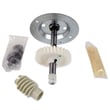
The model number determines which parts fit (wall control, safety sensors, logic board, drive gear kit) and which troubleshooting steps apply. Using the wrong model can lead to ordering the wrong replacement part or setting incorrect travel and force adjustments.
Next steps after you find the model number
- Write the model number exactly as shown (letters and numbers)
- Compare it to the opener’s remote and wall control type (some systems are not cross-compatible)
- Use the owner's manual for model-specific label diagrams and programming steps
- If you’re diagnosing flashing lights or beeps, use Craftsman error codes to match the symptom to the likely cause
- If you need to search beyond the parts list for this model, use Sears PartsDirect and search by the full model number
Last updated: February 2026
Is it cheaper to repair or replace a garage door opener?
Repairing your Craftsman garage door opener model 13953535SRT1 costs less when the failure is isolated (sensor alignment, remote, wall control, wiring). Replacing is the better value when the opener is 10 to 12+ years old, has repeat problems, or the repair total approaches the cost of a new unit.
Quick decision guide
- Repair if the door moves smoothly by hand and the issue is control-related (remote, wall button, sensors).
- Repair if the opener runs but stops or reverses and a force/travel adjustment or sensor fix resolves it.
- Replace if you have frequent breakdowns or multiple symptoms at once.
- Replace if the drive system is very noisy, slipping, or binding and the door hardware is also worn.
- Replace if you want modern features (quieter operation, Wi-Fi, battery backup).
Typical cost comparison
| Option | Typical total cost | Best for |
|---|---|---|
| Minor repair (adjustment, sensor alignment, remote/wall control troubleshooting) | $0 to $200 | Newer openers with one clear fault |
| Moderate repair (diagnosis plus parts/labor) | $150 to $500 | One-time failure on an otherwise reliable unit |
| Replace opener (new unit plus installation) | $300 to $1,000+ | Older units, repeat failures, feature upgrades |
What to check first (often saves the most money)
- Pull the emergency release and lift the door by hand; it should move smoothly and stay about halfway open.
- Confirm safety sensor LEDs are steady; clean and align the lenses.
- Check wall control wiring for loose connections or pinched wire.
- Replace the remote battery and reprogram the remote.
- If your opener shows diagnostic flashes, match them using Craftsman error codes.
Why it matters
If the door is binding (rollers, tracks, springs), the opener works too hard and repairs do not last. Verifying smooth manual door travel helps you spend money on the real cause.
For model-specific adjustment and operating steps, use the 13953535SRT1 owner's manual. If you decide to shop by model number, start with the parts list for 13953535SRT1 or search on Sears PartsDirect.
Last updated: February 2026
Where can I buy Craftsman garage door opener parts?
You can buy replacement parts for your Craftsman 13953535SRT1 garage door opener from the model-specific parts list, and you can also search by model number on Sears PartsDirect to find additional Craftsman garage door opener parts and diagrams.
How we recommend finding the right part
Use these steps to match the part to your exact Craftsman 13953535SRT1 setup:
- Confirm the model number on the opener’s motor unit label (use 13953535SRT1 exactly).
- Use the exploded diagrams to identify the part by location (rail, motor unit, sprocket area, safety sensor wiring).
- Cross-check the part description against what you see on the opener (chain drive components, logic board cover, wall control wiring).
- Review any notes in the owner's manual about adjustments and safety sensor alignment before ordering.
- If the opener runs but the door does not move, focus on drive components (sprocket, gear kit, rail parts) before ordering electronics.
Common parts people replace (and what they fix)
These are the most frequent garage door opener part categories customers shop for when troubleshooting Craftsman units:
| Symptom | Most likely part area | What to check first |
|---|---|---|
| Door will not close | Safety sensors | Sensor alignment, dirty lenses, pinched sensor wires |
| Motor runs, door does not move | Drive system | Chain/belt tension, sprocket/gear wear, trolley engagement |
| Remote or wall button issues | Controls | Wall control wiring, learn button programming, battery in remote |
| Reverses or stops mid-travel | Travel/force settings | Force and travel limits, door binding, broken spring (door too heavy) |
Why it matters
Ordering by the exact model number (Craftsman 13953535SRT1) prevents mismatched parts, especially for items like wall controls, safety sensors, and drive components that can vary by series and production run.
Helpful troubleshooting resources before you order
If you are seeing diagnostic flashes or error indicators, use Craftsman error codes to narrow the failure to sensors, travel/force settings, or control issues.
Last updated: February 2026