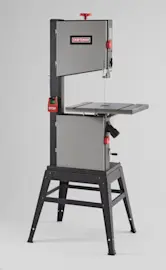
Owner’s manual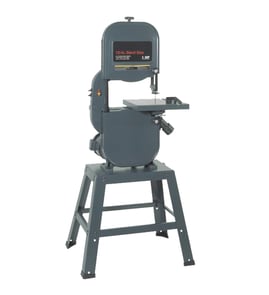

How do you tell the size of a bandsaw?
A band saw’s “size” is usually the throat capacity (the distance from the blade to the frame column), not the maximum resaw height. For your Craftsman 137214090 band saw, confirm the exact sizing terms and capacities in the 137214090 owner's manual.
What “band saw size” usually means
Most manufacturers describe band saw size using one main measurement:
- Throat capacity: blade to frame (controls how wide a board you can cut)
- Resaw capacity: table to upper blade guide (controls how tall a board you can cut)
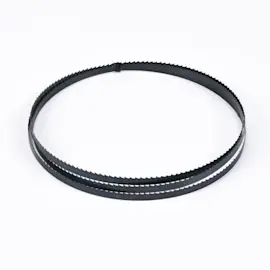
- Blade length: the loop length the saw requires
- Blade width range: what widths the guides and wheels support
- Table tilt range: affects bevel cutting, not “size”
Quick sizing cheat sheet
| Term people say | What it measures | What it affects |
|---|---|---|
| “10-inch band saw” | Throat capacity | Max width you can cut to the left of the blade |
| “6-inch resaw” | Resaw capacity | Max height you can cut upright |
| “59-inch blade” | Blade length | What replacement blade fits |
Model-specific details we can confirm for Craftsman 137214090
From the manual specs and accessory guidance for this model:
- Blade length is 59 in. to 59-1/4 in.
- Blade width range is 1/8 in. to 3/8 in. (recommended accessories listing)
- Use blades rated 2480 FPM or greater
- The table tilts 0° to 45° to the right
- Adjust the upper blade guide to about 1/8 in. above the workpiece for support
Why it matters
If you shop by “band saw size” alone, it is easy to buy the wrong blade length or expect more resaw height than the saw is designed to deliver. Matching blade length, blade width, and proper guide adjustment helps cutting speed, straightness, and blade life.
Last updated: January 2026
What is the 3-tooth rule for bandsaws?
The 3-tooth rule means your band saw blade should have at least three teeth engaged in the material at all times during a cut. On the Craftsman 137214090 band saw, following this rule helps prevent tooth stripping, reduces snagging, and improves cut quality and blade life.
How to apply the 3-tooth rule (quick blade selection)
Choose a blade TPI (teeth per inch) so the workpiece thickness keeps 3 or more teeth in contact.
- Thin stock needs higher TPI so multiple teeth stay engaged.
- Thick stock can use lower TPI for faster cutting and better chip clearance.
- If the cut feels grabby or chatters, you usually need more TPI.
- If the blade heats up or loads with sawdust, you usually need fewer TPI or a slower feed rate.
- Keep the blade sharp; dull teeth force you to push harder and overheat the blade.
Setup checks that make the rule work
Even with the right TPI, poor setup can still cause rough cuts or blade damage. Our manual for this model emphasizes correct blade use and guide adjustment.
- Set the upper blade guide/guard about 1/8 inch above the workpiece.
- Make sure blade guides, support bearings, and blade tension are adjusted correctly.
- Confirm the blade teeth point down and toward the table.
- Use a light, steady feed; do not force the workpiece into the blade.
- Turn the wheels by hand after adjustments to confirm the blade tracks freely.
Common symptoms and what they usually mean
| What you notice | Common cause | Typical fix |
|---|---|---|
| Snagging, chattering, tooth breakage | Too few teeth engaged (TPI too low for thickness) | Switch to higher TPI; reduce feed pressure |
| Burning, slow cutting, heavy sawdust packing | Too many teeth engaged (TPI too high) or dull blade | Switch to lower TPI; replace blade |
| Wandering or not cutting straight | Setup or blade condition issue | Recheck guides/tension; replace blade |
Why it matters
Keeping at least three teeth in the cut spreads the load across multiple teeth. That reduces shock on each tooth, helps the blade track predictably, and supports smoother ripping, crosscutting, and curve cutting.
For model-specific operating and adjustment details, use the 137214090 owner’s manual.
Last updated: January 2026
What is the specs of the Craftsman 137214090?
The Craftsman band saw model 137214090 is a 9-inch band saw with a 1/3 HP (max developed) motor and a no-load blade speed of 2,480 FPM. For the full list of product specifications and setup requirements, use the 137214090 owner's manual.
Key specs we can confirm for model 137214090
- Saw size class: 9-inch band saw
- Motor rating: 1/3 HP (max developed)
- Blade speed: 2,480 FPM (no load)
- Documentation type: Operator’s Manual (covers safety, installation, operation, maintenance, and parts list)
What to check in the manual for the rest of the specs
Many band saw “specs” are model-specific (and important for blade selection and accurate cuts). In the 137214090 owner's manual, look for:
- Blade length and recommended blade widths
- Maximum cutting depth and throat capacity
- Table size and tilt range
- Electrical requirements (voltage/amps) and circuit guidance
- Recommended adjustments (tracking, guide bearings, tension)
Quick reference table
| Spec item | Craftsman 137214090 value |
|---|---|
| Band saw size | 9-inch |
| Motor | 1/3 HP (max developed) |
| Blade speed | 2,480 FPM (no load) |
Why it matters
Using the correct blade length, blade width, and tension settings helps prevent common problems like slow cutting, drift, and the blade slipping off the wheels. If performance is off after you confirm the basics, our DIY symptom guide band saw cutting slowly helps narrow down causes such as feed rate, blade condition, and drive issues.
Last updated: January 2026