Installation guide
 Owner’s manual
 Error Codes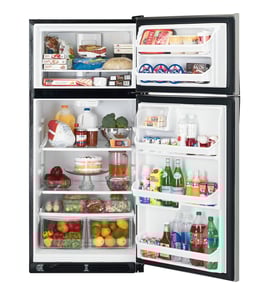



What is the top part of a refrigerator called?
On a Kenmore top-mount refrigerator like model 2536321201D, the top compartment is called the freezer. It’s the section designed to keep foods frozen, and it’s also where ice trays or an automatic ice maker (if equipped) operate. See the 2536321201D owner's manual for your exact compartment features.
What the freezer does (and what to store there)
The freezer is built for long-term frozen storage and fast freezing when air can circulate properly.
- Keeps food at freezing temperatures for safe storage
- Freezes fresh items faster when packages are spaced apart
- Holds items that need the most stable cold temperature in the interior (not the door)
- Works with the refrigerator’s airflow system, so blocked vents can reduce performance
Quick storage tip table
| Item type | Best spot | Why |
|---|---|---|
| Ice cream | Freezer interior | Door temps fluctuate more |
| Juice concentrates | Freezer interior | More consistent freezing |
| Frequently used items | Upper basket/shelf | Easier access |
| Small items | Bin or tray | Prevents loss and spills |
Why it matters
Knowing the freezer location helps with troubleshooting cooling complaints. If the freezer is overloaded or airflow is blocked, the refrigerator section often warms up because cold air typically originates in the freezer and circulates downward.
Helpful use and setup reminders
For best performance on a top-mount design:
- Leave space between packages so cold air circulates
- Avoid overloading the freezer with warm food at one time
- Keep door shelves for less temperature-sensitive frozen items
- Level the refrigerator so doors close tightly
- Follow clearance and placement guidance during setup (airflow and efficiency)
Last updated: February 2026
How do I figure out what water filter I need for my Kenmore fridge?
For your Kenmore refrigerator model 2536321201D, the right water filter is the one that matches the filter housing style used in your exact model. We recommend confirming the model number inside the fresh food compartment, then using the filter number printed on the old cartridge or the filter head as your match point in the 2536321201D owner's manual.
Fast ways to identify the correct filter
Use these checks in order; they are the quickest and most reliable:
- Look at the current filter: the cartridge label usually shows the filter model number.
- Check the filter location: inside the refrigerator ceiling, upper right corner, base grille, or rear inline filter.
- Match the connection style: push-in, quarter-turn, or twist-lock designs are not interchangeable.
- Confirm your model number: 2536321201D should match exactly (letters and numbers).
- If you have an ice maker only: some installations use an inline filter on the water line instead of an internal cartridge.
If your refrigerator is plumbed for ice and water
Your installation requirements matter because they tell us whether the unit is set up for a water line (and therefore a filter may be present). The installation guidance for this model calls for a household cold water supply at 30 to 100 psi and recommends 1/4-inch OD copper tubing for the supply line. For the full setup details, use the 2536321201D installation guide.
Quick setup checklist (helps confirm what you have)
| What you see | What it usually means | What to do next |
|---|---|---|
| Filter door or filter knob inside fridge | Internal cartridge filter | Read the cartridge label and match it exactly |
| No internal filter, but water line connected | Inline filter may be installed | Check behind the unit or under the sink for an inline filter |
| No water line connected | No filtration needed for this setup | Keep ice maker switch Off until water is connected |
Why it matters
Using the correct Kenmore-compatible filter protects water flow to the ice maker and dispenser (if equipped), helps prevent leaks at the filter head, and keeps taste and odor performance consistent.
Last updated: February 2026
How big is a Kenmore chest freezer model 2536321201D?
Kenmore model 2536321201D is a top-mount refrigerator, not a chest freezer. For this model family, most units are approximately 28 to 33 inches wide, 60 to 67 inches tall, and 30 to 34 inches deep (depth varies with handles). For exact dimensions, use the 2536321201D owner's manual.
How to get the exact dimensions for 2536321201D
We recommend confirming the size using the model’s spec section in the manual, then measuring your installation space.
- Check the product dimensions and clearance requirements in the 2536321201D owner's manual
- Measure width, height, and depth of the cabinet opening
- Add clearance for:
- Door swing
- Airflow behind and above the refrigerator
- Water line (if equipped)
- Measure depth with and without handles if your space is tight
- Confirm the unit is on a level floor before final fit checks
Quick measuring checklist (what to measure)
| Measurement | What to include | Why it matters |
|---|---|---|
| Width | Cabinet opening side-to-side | Prevents binding and vibration |
| Height | Floor to overhead cabinet | Ensures the top clears |
| Depth | Wall to front edge | Avoids doors sticking out too far |
| Door clearance | Space to fully open doors | Allows drawers and shelves to slide out |
Why it matters
A refrigerator that is even 1 inch too large can prevent proper ventilation, limit door opening, and make leveling difficult. Confirming the exact dimensions for Kenmore 2536321201D helps avoid delivery and installation problems.
Last updated: February 2026
How do I tell what model Kenmore fridge I have?
Your Kenmore refrigerator’s model number is printed on the serial plate inside the fresh food (refrigerator) compartment. For Kenmore model 2536321201D, the plate is typically on an inside wall; use the number on that plate to match parts and the correct documentation in the 2536321201D owner's manual.
Where to look for the model and serial plate
Check these common locations on Kenmore top-mount refrigerators like 2536321201D:
- Inside the refrigerator compartment on a side wall (most common)
- On the ceiling of the fresh food compartment near the light
- On the frame just inside the door opening
- Less commonly, inside the freezer compartment on an interior wall
What to write down (and why)
Record both numbers exactly as shown on the plate:
- Model number (example format in the manual: starts with 253.)
- Serial number
- Purchase date (helpful for service history and warranty timing)
Quick ID checklist
- Use a flashlight and look for a white or silver sticker/plate
- Copy the model number character-for-character (including dots and suffix letters)
- Take a clear photo before the label gets worn or smeared
Model number vs. serial number: what’s the difference?
| Item | What it tells us | When you need it |
|---|---|---|
| Model number | Exact design and parts fit | Ordering parts, finding diagrams, using the right manual |
| Serial number | Production-specific identifier | Service calls, verifying manufacturing details |
Why it matters
Kenmore refrigerators often share similar styling across multiple model families, but parts like door gaskets, shelf trim, and fan components can vary by model. Using the exact model number from the serial plate helps us match the correct replacement parts and procedures from the 2536321201D installation guide.
Last updated: February 2026
How to unclog a Kenmore refrigerator drain line?
For Kenmore refrigerator model 2536321201D, we unclog a drain line by safely unplugging the refrigerator, melting any ice at the freezer drain opening, then flushing the drain with hot water until it flows freely into the drain pan underneath. Use the steps in the 2536321201D owner's manual for safe access and handling.
Quick steps to clear the drain
- Unplug the refrigerator (power stays on to some components until you unplug it).
- Empty the freezer floor area so you can reach the rear bottom panel and drain trough.
- Melt visible ice around the drain hole using warm water (not sharp tools).
- Flush the drain hole with hot water using a turkey baster or squeeze bottle.
- If it still backs up, gently feed a flexible pipe cleaner into the drain tube to break up sludge.
- Confirm water is reaching the drain pan under the cabinet and not pooling inside.
What usually causes the clog
| Cause | What you notice | What fixes it |
|---|---|---|
| Ice blocking the drain hole | Sheet of ice on freezer floor | Melt ice, then flush with hot water |
| Food debris or sludge in tube | Slow drain, recurring puddles | Hot-water flush, pipe cleaner |
| Door left ajar or bad seal | Frost buildup, repeat icing | Improve door closing, check gasket |
| Unit not level | Water runs forward | Level the refrigerator per the manual |
Helpful tips that prevent repeat clogs
- Keep packages from touching the freezer back wall where frost forms.
- Avoid forcing items into the drain trough area.
- Clean spills quickly so sugary liquids do not turn into sticky drain sludge.
- If you see warm air leaks, inspect the door gasket; a torn gasket can drive heavy frost (see how to fix a fridge door seal).
Why it matters
A clogged defrost drain makes meltwater overflow into the freezer or fresh food section, leading to ice sheets, leaks, and temperature swings. Clearing the drain restores normal defrost water flow and helps protect flooring and food.
Last updated: February 2026
What is the average lifespan of a Kenmore refrigerator?
Most Kenmore refrigerators, including top-mount models like Kenmore 2536321201D, last 10 to 15 years with normal household use; consistent maintenance (airflow, clean seals, stable temperatures) is what most often determines whether you land closer to 10 years or closer to 15.
Typical lifespan and what affects it most
A refrigerator’s sealed system (compressor, evaporator, condenser) usually sets the overall lifespan, but day-to-day conditions can shorten or extend it.
- Keep the unit level so doors close correctly and the compressor runs efficiently.
- Maintain good airflow clearances (sides/top and rear) to reduce heat load on the compressor.
- Avoid placing it in extreme room temperatures; very cold or very hot rooms make cooling harder.
- Limit frequent, long door openings that warm the compartments.
- Fix door seal leaks quickly; warm air infiltration makes the refrigerator run longer.
For model-specific placement and clearance guidance, follow the 2536321201D installation guide.
Quick reference: lifespan vs. common symptoms
| What you notice | What it often means | What to check first |
|---|---|---|
| Runs almost constantly | Heat load or air leaks | Door gaskets, clearances, condenser area cleanliness |
| Fresh food warm, freezer OK | Airflow/control issue | Temperature settings, blocked vents, door closing |
| Frost or moisture inside | Warm air entering | Door alignment, gasket condition |
| No interior light | Bulb or switch issue | Replace bulb, check door switch |
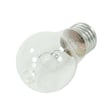
If you need the correct replacement bulb for this model, use the refrigerator light bulb 316538904.
Why it matters
A refrigerator that runs longer than necessary uses more energy and puts extra wear on the compressor. Simple steps like maintaining clearances and keeping gaskets sealing can add years to the service life.
For operating and care details (including temperature-setting guidance and troubleshooting tables), use the 2536321201D owner’s manual.
Last updated: February 2026
How many cubic feet is my Kenmore refrigerator model 2536321201D?
Kenmore model 2536321201D is a top-mount refrigerator in the Kenmore 253 series; its capacity is typically in the low-to-mid 20 cubic foot range for this platform. For the exact cubic feet rating for your specific configuration, we recommend confirming it in the 2536321201D owner's manual.
How to confirm the exact capacity (fastest methods)
- Check the specifications section in the 2536321201D owner's manual.
- Look for the model and serial label inside the fresh food compartment; capacity is often listed with other key specs.
- If your unit has an EnergyGuide label (often saved with paperwork), it commonly lists capacity.
- Compare your interior layout (shelf and bin configuration) to the manual’s model list for the closest match.
Typical capacity ranges for similar Kenmore 253 top-mount refrigerators
| Refrigerator type | Typical capacity range | Best use case |
|---|---|---|
| Top-mount (standard width) | 18 to 22 cu. ft. | Smaller kitchens, lighter storage needs |
| Top-mount (larger platform) | 22 to 26 cu. ft. | Family use, more fresh food space |
| Side-by-side | 22 to 28 cu. ft. | Wider freezer access, door storage |
Why it matters
Capacity affects how you load the refrigerator for proper airflow and cooling performance. Overpacking can restrict air circulation, which can lead to warm spots, frost buildup, and longer compressor run times.
Related parts that impact usable space
If you are trying to restore lost storage space (broken bins, rails, or trim), these model-matched parts are commonly replaced:
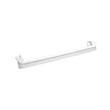
- Galaxy refrigerator door shelf rail 240534701 (helps support door bin storage)
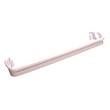
- Frigidaire refrigerator shelf trim 240357704 (helps secure shelf edges and fit)
- Refrigerator dairy door 240337712 (restores small-item door storage)
Last updated: February 2026
What are the common problems with Kenmore Elite refrigerators?
Common Kenmore Elite refrigerator problems are usually tied to airflow, temperature control, and door sealing: warm fresh food or freezer temps, excess running, moisture or leaks, ice maker complaints, and interior light or odor issues. For Kenmore model 2536321201D, start with the basics in the 2536321201D owner's manual and correct installation clearances and room temperature.
Most common symptoms and what they usually point to
- Not cooling well or uneven temps: blocked vents, dirty condenser area, or a weak evaporator fan
- Runs too much: frequent door openings, warm room conditions, or a leaking door gasket
- Moisture inside or sweating: humid weather, door left slightly open, or containers left uncovered
- Door not closing or hard to open: cabinet not level, overloaded bins/shelves, or worn gasket
- No interior light: burned-out bulb (replace with the correct type)
Quick checks we recommend first (fast, no parts guessing)
- Verify the refrigerator is installed where temps stay between 55°F and 110°F and the toe grille is not blocked.
- Confirm clearances for airflow (typical guidance from the manual):
- Sides and top: 3/8 in.
- Back: 1 in.
- Set controls, then allow 24 hours for temperatures to stabilize after changes.
- Check door sealing and closing: clean the gasket and make sure the cabinet is level and stable.
- If the light is out, replace the bulb with the correct style; see 2536321201D owner's manual for the procedure.
Common problem-to-fix map
| Problem you notice | Most likely cause | Best first action |
|---|---|---|
| Fresh food warm, freezer OK | Fresh food control set too warm, airflow issue | Adjust control; wait 24 hours; clear vents |
| Freezer too cold | Freezer control set too cold | Set to warmer; wait 24 hours |
| Moisture on inside walls | Hot/humid conditions, door ajar | Reduce door openings; confirm door closes fully |
| Door seal leaking | Dirty, worn, cracked gasket | Clean gasket; replace if damaged |
Parts that commonly get replaced for these symptoms
If you confirm a failed component, these model-matched parts are common fixes:
- For door sealing issues: frigidaire refrigerator door gasket (white) 242193213 (fresh food door) or refrigerator freezer door gasket (white) 242193205 (freezer door)
- For a broken or missing door bin/rail: galaxy refrigerator door shelf rail 240534701
- For no interior light: refrigerator light bulb 316538904
Why it matters
Air circulation and a tight door seal directly affect compressor run time, temperature stability, and moisture control. Fixing simple issues like leveling, clearances, and gasket sealing often restores normal cooling without deeper repairs.
Last updated: February 2026
What is the ER if code on a Kenmore Elite?
ER IF is an error code used on certain Kenmore Elite electronic refrigerators to indicate an ice maker airflow problem, typically involving the freezer evaporator fan or an airflow path feeding the ice area. For Kenmore model 2536321201D, use the troubleshooting and “Before you call” sections in the 2536321201D owner’s manual to match symptoms to the correct cooling system checks.
What ER IF means on Kenmore Elite models that display it
On models with a digital control and ice system, ER IF points to an airflow fault that prevents cold air from reaching the ice maker area.
Common causes include:
- Evaporator fan not running or running intermittently
- Frost or ice blocking the evaporator cover vents
- Door left ajar causing heavy frost buildup
- Air ducts blocked by packages or ice buildup
- Loose wiring connection at the fan motor
What to check first (safe, no-tools steps)
Start with basic airflow and temperature checks before replacing parts.
- Confirm the freezer is set to about 0°F
- Make sure vents are not blocked by food
- Check for heavy frost on the back freezer panel
- Close doors firmly and verify the gasket seals all the way around
- Power reset: unplug for 5 minutes, then restore power
When a fan or defrost issue is likely
If the freezer warms up, ice production drops, or you hear unusual fan noise, the evaporator fan or a defrost-related restriction is often involved.
| Symptom | Most likely issue | What we do next |
|---|---|---|
| No fan sound with compressor running | Evaporator fan motor or wiring | Test fan operation, inspect connectors |
| Heavy frost on back freezer panel | Defrost problem restricting airflow | Check defrost components and airflow paths |
| Fan runs but temps still warm | Air blockage or door seal leak | Clear vents, inspect gasket fit |
Parts that commonly relate to airflow on this platform
If diagnosis points to a failed component, these are common airflow and frost-related parts for this Kenmore 2536321201D platform:
- Refrigerator evaporator fan motor 241854401
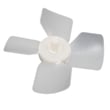
- Refrigerator evaporator fan blade 5308000010
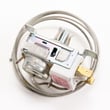
- Refrigerator defrost bi-metal thermostat 5303918634
- Refrigerator defrost timer 215846604
Why it matters
Airflow problems reduce cooling, increase run time, and can lead to soft ice, thawing food, and recurring frost buildup in the freezer.
Last updated: February 2026