Installation guide
 Owner’s manual



Is GE Profile considered high end?
Yes. GE Profile is generally considered GE’s premium (higher-end) line, positioned above standard GE models; it typically adds upgraded design, more features, and more advanced controls compared with base-line GE appliances.
GE Profile is a product line, not a requirement for parts or service. For your GE GLD5600N10BB dishwasher, what matters most is the exact model number when you’re checking features, cycle options, and maintenance steps in the owner's manual.
In most kitchens, “high end” for GE Profile refers to a step-up tier that commonly includes:
- More cycle and option selections (wash, dry, sanitize-type options)
- More electronic controls and display features
- Quieter operation features (insulation, improved sound control)
- More flexible rack and loading features
- More styling and finish choices
| Category | Standard GE (typical) | GE Profile (typical) |
|---|---|---|
| Features | Core essentials | More advanced options |
| Controls | Basic electronic or mechanical | More advanced electronic UI |
| Styling | Standard finishes | More premium styling |
| Price tier | Value to mid-range | Mid-range to premium |
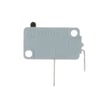
Knowing the product tier helps set expectations for features and complexity. Premium lines like GE Profile often use more electronic components, so troubleshooting may involve control-related parts such as a user interface or door switch on some models.
Use your model number (GLD5600N10BB) to match the correct parts and procedures. Common dishwasher components that affect operation include:
- Door latch and switch circuits
- User interface and control inputs
- Water fill and drain components
- Wash motor and spray system
For model-specific operating details and feature lists, rely on the owner's manual.
Last updated: February 2026
Can a clogged drain cause an FTD error?
Yes. On the GE GLD5600N10BB dishwasher, an FTD error is commonly tied to a drain problem; a clogged drain path (air gap, disposer connection, drain hose, or filter area) can keep water from leaving the tub on time and trigger the code. See the drain checks in the installation guide.
- Air gap (if your sink has one): remove the cap and clean out debris.
- Garbage disposer connection: confirm the drain plug knockout was removed where the dishwasher hose connects.
- Drain hose routing: make sure the hose is not kinked, crushed, or sagging behind/under the dishwasher.
- Sink drain performance: if the kitchen sink drains slowly, the dishwasher can back up too.
- Filter and sump area: clear food debris that can restrict flow.
We use this simple test because the install instructions call it out as a wet test and it confirms whether the unit drains within a few minutes.
- Latch the door.
- Start a Rinse Only cycle.
- After about 5 minutes, the dishwasher should drain and shut off.
- Open the door and confirm most water is gone.
If it does not drain, focus on the air gap, disposer plug, and drain hose routing described above.
A clog is often the cause, but if the drain path is clear and the dishwasher still will not drain, these parts are common suspects.
| Symptom | Most likely area | Example part for GLD5600N10BB |
|---|---|---|
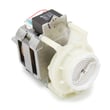
| Hums but won’t pump out | Drain pump | Dishwasher drain pump WD26X10025 |
| Drains slowly or intermittently | Drain hose routing or partial blockage | (No part needed if it’s a kink or clog) |
| Overfills then stops or drains oddly | Float stuck up | Dishwasher float assembly WD12X10047 |
A restricted drain can leave dirty water in the tub, cause cycle interruptions, and lead to repeated error codes. Fixing the drain path first prevents unnecessary part replacement.
Last updated: February 2026
What is the most common problem with a GE dishwasher?
For a GE dishwasher like model GLD5600N10BB, the most common problems we see are won’t start, won’t drain, or doesn’t clean well. Many of these come down to a door that is not fully latched, a canceled cycle (START/RESET flashing), or restricted water flow and drainage; our owner's manual troubleshooting chart covers these basics.
- Make sure the door is fully closed and latched; the dishwasher can beep every 30 seconds if the door is left open during operation.
- If START/RESET is flashing, press START/RESET only when you want to restart; canceling a cycle triggers a drain that takes about 90 seconds.
- Run the hot water at the nearest faucet until it is fully hot, then start the cycle (low inlet water temperature reduces cleaning).
- Check for a clogged air gap or disposer connection if you have one; clean the air gap if needed.
- Confirm large items are not blocking the detergent dispenser or spray arms.
| Symptom | Most likely cause | What to do next |
|---|---|---|
| Won’t start | Door not latched, control selection issue | Verify latch and cycle selection; review the manual’s “beeps” and “START/RESET” notes |
| Won’t drain | Drain restriction, drain pump issue | Check drain path and air gap; if the pump is noisy or not running, consider the dishwasher drain pump WD26X10025 |
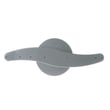
| Not cleaning | Low water temp, blocked spray, filter restriction | Improve inlet temp, reload racks, clean filter; inspect the dishwasher spray arm WD22X10047 and dishwasher filter WD12X10109 |
These “common problems” often look like a major failure, but they usually trace back to water temperature, loading, or drain/air-gap restrictions. Fixing those first prevents repeat issues and helps protect high-cost components like the pump and motor.
If your GLD5600N10BB displays an electronic error, use the GE electronic dishwasher error codes guide to match the code to the most likely cause and next steps.
Last updated: February 2026
What is the average lifespan of a GE dishwasher?
A GE dishwasher typically lasts 10 to 12 years. With consistent care (cleaning, correct detergent use, and avoiding chronic overloading), many units reach 12 to 15 years before major repairs become common. For model GLD5600N10BB, follow the maintenance guidance in the owner's manual.
Most GE dishwashers fall into a predictable range, but real-world lifespan depends on water quality, usage, and maintenance.
- Typical average: 10 to 12 years
- Often achievable with good care: 12 to 15 years
- Shortened lifespan is common when: hard water scale builds up, filters are neglected, or the unit runs multiple heavy loads daily
These steps reduce wear on the pump, motor, and valves.
- Keep the tub and wash system clean; remove food debris regularly.
- Use dishwasher-specific detergent and keep it fresh and dry.
- Match detergent amount to water hardness (hard water needs more; soft water needs less).
- Avoid overloading racks; ensure spray arms can rotate freely.
- Periodically inspect for leaks around the door and tub seal.
The manual notes that hard water can cause lime buildup in the water valve, which can lead to sticking and potential flooding. Managing hardness and detergent use helps protect components like the inlet valve and circulation system.
When a dishwasher approaches the end of its typical lifespan, the decision often comes down to the type of failure.
| Situation | What it usually means | Common next step |
|---|---|---|
| Minor leak at the door | Seal wear or alignment issue | Check/replace gasket, verify door closure |
| Not draining | Drain restriction or drain pump issue | Clear blockage; consider pump service |
| Poor cleaning | Spray/filtration issue or loading problem | Clean filter, check spray arm rotation |
| Repeated electrical/control issues | Higher-cost troubleshooting | Consider repair cost vs. age |
If performance problems show up, these model-matched parts are often involved:
- Dishwasher filter WD12X10109 (helps prevent debris from recirculating)
- Dishwasher spray arm WD22X10047 (drives wash coverage)
- Dishwasher water inlet valve WD15X10003 (controls fill)
- Mechanism assembly WD26X10053 (pump and motor assembly)
Knowing the typical lifespan helps you plan maintenance and make smarter repair decisions. A well-maintained GE dishwasher is more likely to avoid expensive failures in the pump, motor, and water valve as it ages.
Last updated: February 2026