Owner’s manual
 Error Codes


What is the most common problem with LG refrigerators?
The most common LG refrigerator problem is a loss of cooling (refrigerator warm, freezer warm, or both). On the LG LNXC23726S, the most frequent root causes we see behind “not cooling” complaints are airflow and temperature-sensing issues, defrost-related ice buildup, and sealed-system or compressor problems.
- Fresh food section is warm but freezer seems OK
- Freezer is warm and ice cream is soft
- Fridge runs constantly or cycles oddly
- Clicking, buzzing, or louder-than-normal running noise
- Ice maker or dispenser performance drops when temperatures rise
- Airflow blocked: Overpacked shelves, blocked vents, or a door not sealing well.
- Dirty condenser area: Dust buildup reduces heat release and cooling efficiency.
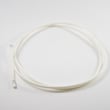
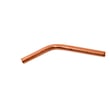
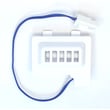
- Temperature sensing/control issues: A bad sensor can misread temps and cause poor cooling; for this model, a common related part is the refrigerator temperature sensor and cover ACQ73244001.
- Defrost problems: Frost/ice on the evaporator can choke airflow and warm the refrigerator.
- Sealed-system/compressor issues: When the compressor or sealed system is failing, cooling often drops in both compartments.
- Confirm the controls are set correctly (typical targets: 37°F fridge, 0°F freezer).
- Make sure doors close fully and gaskets are clean and sealing.
- Vacuum dust from the condenser area and ensure good airflow around the cabinet.
- Listen for the evaporator fan and check for heavy frost on the back interior panel.
| Symptom | Most likely area | Typical next step |
|---|---|---|
| Fridge warm, freezer OK | Airflow/defrost | Check vents, frost buildup, fan operation |
| Both warm | Sealed system/compressor | Professional diagnosis recommended |
| Temps swing up and down | Sensor/control | Test/replace thermistor-type sensor |
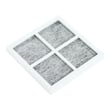
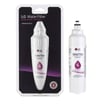
| Musty odors with normal temps | Air filtration | Replace the air filter |
Cooling problems can spoil food quickly and also strain major components. Catching airflow, gasket, and condenser issues early often prevents bigger repairs.
For model-specific operating settings and care steps, use the LNXC23726S manual.
Last updated: January 2026
How to tell if an LG compressor is bad?
A bad compressor in your LG LNXC23726S refrigerator usually shows up as warm temperatures (fresh food and freezer), long run times, and little to no cooling even though the lights and controls still work. You may also hear repeated clicking from the compressor area as it tries to start.
- Refrigerator and freezer both warming up at the same time
- Compressor is silent when it should be running, or it clicks on and off every few minutes
- Condenser fan runs but cooling does not improve
- Unit runs almost constantly with poor temperature recovery
- You notice a hot compressor shell and little heat being rejected at the condenser area
Many “bad compressor” complaints are actually airflow, defrost, or control issues. We recommend these checks first:
- Confirm the temperature settings and any “demo” or “display” mode status in the LNXC23726S owner's manual
- Clean dust from the condenser area and make sure airflow is not blocked
- Listen for the condenser fan near the compressor; it should run when the compressor runs
- Check for heavy frost on the rear freezer panel (often points to a defrost or evaporator fan problem)
- Verify the doors seal tightly; a leak can cause nonstop running and warm temps
| What you hear | Most common cause | What it points to |
|---|---|---|
| Repeated click every 2 to 10 minutes | Start device/overload opening | Compressor not starting reliably |
| Low hum then click off quickly | Locked rotor or weak start components | Compressor start problem |
| No sound at all from compressor area | No power to compressor or control issue | Electrical or board issue |
If the compressor is confirmed faulty, replacement is a sealed-system repair that typically requires a technician. For this model, the compressor is listed as refrigerator compressor TCA36491304.
A compressor that cannot start or cannot pump refrigerant will leave both compartments warm, which can quickly lead to food spoilage. Ruling out airflow and defrost problems first prevents unnecessary sealed-system work.
Last updated: January 2026
Why does my LG freezer keep icing up at the bottom?
On the LG LNXC23726S bottom-mount refrigerator, ice buildup at the bottom of the freezer is usually caused by warm, moist air leaking in (drawer not sealing or closing fully) or a defrost drain issue that lets water refreeze on the freezer floor. Use the LNXC23726S manual to confirm the exact access points and cleaning steps for your model.
- Freezer drawer not closing all the way (packages, bins, or rails blocking it)
- Door gasket not sealing (gaps, tears, hardened areas, or debris on the sealing surface)
- Frost or ice preventing the drawer from seating fully
- Defrost drain partially clogged; meltwater refreezes at the bottom
- High humidity or frequent openings causing excess frost load
- Inspect the gasket: wipe the gasket and the cabinet sealing surface with warm, soapy water; dry fully.
- Paper test: close the drawer on a strip of paper; it should resist being pulled out around the perimeter.
- Look for obstructions: make sure baskets and food packages are not pushing the drawer outward.
- Check for ice “sheeting”: if you see a flat ice layer on the freezer floor, suspect a drain or airflow/defrost issue.
- Verify temperatures: set freezer near 0°F and fresh food near 37°F; allow 24 hours to stabilize.
| What you see | Likely cause | What we recommend |
|---|---|---|
| Frost mainly near the front/edges | Air leak at drawer/gasket | Clean gasket, remove obstructions, warm and reshape gasket if warped |
| Solid ice on the freezer floor | Defrost water not draining | Defrost, clear drain path, confirm drain pan flow per the manual |
| Frost plus weak cooling | Airflow/defrost system problem | Check for blocked vents; if persistent, schedule service |
If the gasket is torn or won’t seal after cleaning and reshaping, replacement is the long-term fix. For this model, common gasket options include the LG refrigerator door gasket, left ADX72930427 and LG refrigerator door gasket, right ADX72930428 (match the correct side and door location before ordering).
Ice at the bottom can force the freezer drawer open slightly, which drives more frost, temperature swings, and longer compressor run time. Fixing the seal or drain early helps protect food quality and reduces energy use.
Last updated: January 2026