Installation guide
 Owner’s manual
 Error Codes


How long do admiral washers last?
Most Admiral top-load washers like model ATW4475VQ1 last 10 to 14 years with normal household use and basic care. Consistent maintenance (especially preventing leaks, overloads, and vibration) is what most often determines whether you land closer to 10 years or 14.
- Load size and balance: Overloading and unbalanced loads increase wear on the drive system and suspension.
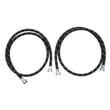
- Water hose condition: Replace inlet hoses about every 5 years and sooner if you see bulges, cracks, kinks, or leaks.
- Leveling and vibration: A washer that is not level can shake, stress components, and shorten bearing and suspension life.
- Detergent and residue: Using the right amount helps reduce buildup that can cause odors and performance issues.
- Downtime and storage: If you will not use the washer for a while, turning off water and unplugging helps prevent damage.
Use the care and troubleshooting guidance in the ATW4475VQ1 owner's manual.
- Replace inlet hoses on schedule and inspect them periodically
- Keep the washer level and correct excessive vibration early
- Avoid chronic overloading; let items move freely during washing
- Turn off water supply when away for extended periods
- Address early symptoms (noisy spin, slow drain, burning smell) before they become major failures
These are typical failure points on many direct-drive top-load washers; replacing them promptly often prevents bigger damage.
| Symptom | Common cause | Example part for ATW4475VQ1 |
|---|---|---|
| Won’t spin or drains poorly | Drain pump issue or obstruction | Washer drain pump WPW10288040 |
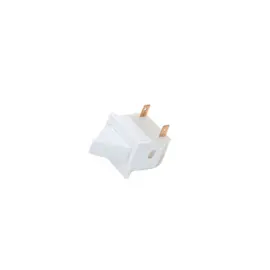
| Won’t run or stops when lid opens | Lid switch not closing | Washer lid switch assembly WP8318084 |
| Agitates weakly or slips | Agitator dogs worn | Agitator dog 80040 |
A washer that is maintained and repaired early typically costs less to own over time because small issues (hoses, lid switch, drain pump) are easier on the motor, clutch, and gear case than running the machine while it struggles.
Last updated: January 2026
How to fix an unlevel washing machine?
An unlevel Admiral washer like model ATW4475VQ1 can shake, walk, leak, or leave the basket sitting crooked. Fixing it usually means leveling the cabinet, making sure the front feet are installed and locked, and then rechecking load balance and floor stability using the steps in the ATW4475VQ1 installation guide.
- Unplug the washer for safety.
- Confirm the washer sits on a solid floor; reinforce or relocate if the floor flexes.
- Rock the washer gently corner-to-corner; identify which corner lifts.
- Adjust the front leveling feet until the washer sits firmly with no rocking.
- Tighten the leveling locknuts against the base so the feet do not back off.
- Recheck level side-to-side and front-to-back, then run a small spin test.
The manual notes that an unlevel washer and an unbalanced load can make the basket look off-center; centering the basket before starting and keeping loads balanced helps.
- Make sure the load is not overloaded.
- Mix large and small items to balance the load.
- Stop the cycle and redistribute items if the washer starts banging.
- Push the basket back to center if it was pulled forward during loading.
- Verify the front feet are properly installed and the nuts are tightened.
| Symptom | Most common cause | What to do |
|---|---|---|
| Washer “walks” during spin | Feet not locked, floor flex | Level again; tighten locknuts; stabilize floor |
| Basket looks crooked | Load off-balance, washer not level | Redistribute load; re-level cabinet |
| Water splashes or leaks during fill/rinse | Washer not level, load deflecting water | Level washer; avoid overloading; center load |
A level ATW4475VQ1 protects the suspension, reduces vibration noise, helps prevent water from deflecting off the load, and improves spin performance so clothes come out less wet.
Last updated: January 2026
Is 3.2 cubic feet a large capacity washer?
A 3.2 cubic feet washer is typically considered small-to-medium capacity, not large. For an Admiral washer like ATW4475VQ1, 3.2 cu. ft. handles everyday loads well, but bulky items (comforters, heavy blankets) fit more comfortably in larger-capacity models.
Washer capacity is usually grouped like this:
- 2.0 to 3.2 cu. ft.: small to medium (good for singles, couples, light-to-average laundry)
- 3.3 to 4.5 cu. ft.: medium to large (better for families and mixed loads)
- 4.6 cu. ft. and up: extra-large (best for bulky bedding and large households)
| Capacity (cu. ft.) | Common fit | Best for |
|---|---|---|
| 2.0 to 3.2 | Smaller baskets | Apartments, lighter weekly laundry |
| 3.3 to 4.5 | Larger baskets | Family loads, towels, jeans |
| 4.6+ | Extra-large baskets | Comforters, bulky items, big loads |
A 3.2 cu. ft. top-load washer is a practical “daily driver” size. To get the best cleaning and spin performance:
- Load loosely; don’t pack clothes down
- Keep items balanced (mix small and large pieces)
- Wash bulky items one at a time when possible
- Use the right water level and cycle for the fabric
- Avoid overusing detergent (extra suds can reduce cleaning)
Capacity affects cleaning, rinsing, and spin results. Overloading a smaller-to-medium basket can lead to poor agitation, out-of-balance spinning, and extra wear on drive components.
For cycle and loading recommendations specific to Admiral ATW4475VQ1, use the ATW4475VQ1 owner's manual.
Last updated: January 2026