Installation guide
 Owner’s manual



How do I reset a Kenmore front loader?
For a Kenmore washer, a basic reset is to fully power-cycle the machine: turn it off, unplug it for about 1 minute, then plug it back in and power it on. For model 11020022014, confirm the exact control-panel reset steps in the 11020022014 owner's manual.
- Press Power/Cancel to stop the cycle.
- Unplug the washer (or switch off the breaker).
- Wait 60 seconds.
- Plug back in (or turn breaker on).
- Press Power and start a Rinse/Spin or Drain/Spin cycle to test.
These checks fix most “won’t run” complaints after a reset.
- Make sure the outlet is a grounded 3-prong outlet (no adapter or extension cord).
- Confirm the lid or door is fully closed; a failed lock can prevent operation.
- Check for a stuck control by pressing Power/Cancel once, then selecting a fresh cycle.
- If the tub is full of water, run Drain/Spin first.
- If the washer is shaking or walking, level it; vibration can interrupt cycles.
| Symptom after reset | Most likely area | Example part for 11020022014 |
|---|---|---|
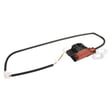
| Won’t lock or won’t start | Lid/lock system | Washer lid lock assembly W10404050 |
| Fills slowly or not at all | Water inlet valve/screens | Washer water inlet valve |
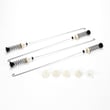
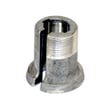
| Agitates poorly | Agitator drive components | Agitator dog |
A reset clears a “stuck” control state after a power glitch, but it will not fix a mechanical or electrical failure (like a lid lock that will not engage). Leveling and proper power connection also prevent repeat interruptions.
Last updated: February 2026
What is the average lifespan of a Kenmore washer?
A Kenmore washer typically lasts 10 to 15 years with normal household use. For Kenmore model 11020022014, consistent maintenance (level installation, correct loading, and periodic cleaning) is what most often determines whether you land closer to 10 years or push past 15.
Most washers wear based on cycle count, load size, and vibration. These factors have the biggest impact:
- Overloading or consistently washing heavy items (accelerates drive and suspension wear)
- Poor leveling (increases vibration, noise, and drivetrain stress)
- Hard water and detergent buildup (can affect valves, hoses, and wash performance)
- Hot, humid laundry rooms (can speed corrosion on metal components)
- Skipping basic care like cleaning and checking hoses
A washer is usually near the end of its service life when repairs become frequent or involve major drive components.
| Symptom | Common area involved | What we do next |
|---|---|---|
| Won’t spin or slips under load | Belt and drive system | Inspect belt condition and pulley alignment |
| Loud grinding or banging | Drive, basket, or tub support | Check for looseness, wear, or damage |
| Won’t fill or fills slowly | Water supply and inlet valve | Verify faucet flow, screens, and valve operation |
| Won’t start or stops mid-cycle | Lid lock or controls | Confirm lid lock engagement and power supply |
These steps are simple and make a measurable difference:
- Keep the washer level; the installation guide calls for a level floor with a maximum slope of 1 inch under the washer
- Use correct load sizes; avoid packing the basket tight
- Use the right detergent amount; too much causes residue and odors
- Check fill hoses periodically and replace if cracked or bulging
- Protect against freezing; the installation guide warns not to install or operate below 32°F
For model-specific care and winterizing guidance, follow the 11020022014 installation guide.
A washer that is level, not overloaded, and kept clean runs with less vibration and strain. That reduces wear on the drive system, lid lock, and water inlet components, which are common sources of mid-life breakdowns.
Last updated: February 2026
How many cubic feet is a Kenmore model 11020022014 washer?
The exact tub capacity (cubic feet) for Kenmore washer model 11020022014 is listed in the product specifications in the 11020022014 owner's manual. For Kenmore 110-series top-load washers of this design, capacity is typically in the 3.2 to 3.5 cu. ft. range.
We recommend using the spec section in the manual first, then confirming on the machine label if needed.
- Check the Specifications section in the 11020022014 owner's manual.
- Look for a model and serial tag under the lid or along the lid opening.
- Compare the washer’s basket size to typical top-load capacities (smaller baskets are usually closer to 3.2 cu. ft.).
- If you are matching loads, use the washer’s cycle and water level behavior as a practical guide (bulky cycles generally assume larger capacity).
Even without the exact number in front of you, capacity affects what you can wash effectively.
| Capacity range (cu. ft.) | Typical load size | Common examples |
|---|---|---|
| 3.2 to 3.5 | Medium to medium-large | Everyday mixed loads, towels |
| 3.6 to 4.3 | Large | Comforters, bulky items |
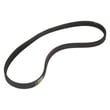
Using the right capacity helps prevent overloading, which reduces poor cleaning, out-of-balance spinning, and extra wear on drive components like the washer drive belt and gear case. If your washer struggles to agitate or spin when loaded, inspecting wear items such as the washer drive belt WPW10006384 can also be part of a good maintenance plan.
Last updated: February 2026
How to identify a Kenmore washer model?
Your Kenmore washer model number is printed on the appliance’s model and serial tag. For Kenmore washers, we most often see it under the lid on top-load models or around the door opening on front-load models; it commonly starts with 110 (like 11020022014) and is what we use to match the correct parts and manuals.
Check these common tag locations first:
- Top-load washer: under the lid, along the rim of the opening
- Front-load washer: inside the door opening, on the door frame
- Back panel: near the power cord or where the hoses connect
- Console area: behind the control panel or along a side edge
Kenmore model numbers are usually 10 to 12 characters and may include only numbers or a mix of letters and numbers. For this model page, the correct model number format is:
| Item | Example | Used for |
|---|---|---|
| Model number | 11020022014 | Choosing exact-fit parts and diagrams |
| Serial number | (varies) | Manufacturing date and service history |
Using the exact model number prevents ordering a look-alike part that does not fit, especially for fit-critical items like a lid lock, water inlet valve, or drive belt.
- Write the model number exactly as shown (include all digits)
- Do not use only the first 3 digits (for example, 110) when searching parts
- If the tag is worn, take a photo and zoom in; the serial number is not a substitute
- Confirm the model number before ordering electrical parts such as a control board
- Use the 11020022014 owner's manual to confirm where the model/serial tag is shown for your exact configuration.
- Use the 11020022014 installation guide for installation notes and location requirements that also reference the model/serial information.
Last updated: February 2026
Does my Kenmore top load washer have a filter?
Yes. Kenmore top load washer model 11020022014 uses drain-path filtering rather than a big, front-access “lint filter” like some front-load washers. Most routine “filter” cleaning on this style is checking the drain hose and inlet valve screens, and keeping the tub clean; see the 11020022014 owner's manual for the exact maintenance steps.
On this washer, filtering is handled in a few common places:
- Water inlet valve screens: small mesh screens where the hot and cold fill hoses connect
- Drain path: the drain hose and pump area catch debris that can restrict draining
- Wash basket/tub: residue buildup can mimic “filter” problems (odor, poor rinsing)
You typically will not find a removable, user-cleanable lint trap inside the tub like older designs.
- Unplug the washer.
- Turn off both water faucets.
- Inspect and straighten the drain hose; replace it if it is split or collapsing.
- Remove the fill hoses and rinse the inlet screens (catch water in a towel or shallow pan).
- Run a cleaning cycle or hot wash with an empty tub to reduce residue.
If the drain hose is damaged or restricted, replacing it is often the fastest fix; the correct part for this model is the washer drain hose W11244231.
| Symptom | Most likely cause | What to check first |
|---|---|---|
| Slow or no drain | Drain restriction | Drain hose routing and clogs |
| Long fill or no fill | Clogged inlet screens | Screens at the inlet valve |
| Musty odor | Residue buildup | Tub cleaning routine |
| Poor rinse | Low water flow or oversudsing | Inlet screens; detergent amount |
Restricted water flow or draining can cause longer cycles, poor cleaning, and extra strain on the drive system. Keeping the inlet screens and drain path clear helps the washer fill and drain at the correct rate.
Last updated: February 2026
What size washer is Kenmore model 11020022014?
Kenmore washer model 11020022014 is a full-size top-load washer; most units in this Kenmore 110 platform are about 27 inches wide and roughly 42 to 43 inches tall. For the exact cabinet dimensions and clearance requirements for your installation, use the 11020022014 installation guide.
These are the common planning dimensions for a full-size Kenmore top-load washer like model 11020022014:
- Width: ~27 in.
- Height: ~42 to 43 in.
- Depth: commonly ~27 to 28 in. (varies with console and hose routing)
- Side clearance: can be 0 in. in some installs, but extra space helps service access
- Noise control spacing: adding 1 in. around the washer helps reduce noise transfer
The installation guidance for this washer allows tight placement, but we recommend planning for serviceability and airflow.
| Location | Minimum approach | Better practice (recommended) |
|---|---|---|
| Sides | 0 in. possible | +1 in. each side for noise and access |
| Rear | As needed for hoses | Extra room to prevent kinks and rubbing |
| Closet door | Must have openings if louvered/closet install | Ensure top and bottom ventilation openings |
Washer “size” affects more than fit. Correct spacing helps prevent drain hose kinks, inlet hose strain, vibration noise, and makes it easier to service parts like the drive belt or lid lock later.
- Measure width at the widest point (usually the cabinet top).
- Measure height to the highest point (often the console).
- Measure depth including any rear hose bend radius.
- Confirm your drain setup (laundry tub, standpipe, or floor drain) matches the install requirements.
Last updated: February 2026