Owner’s manual


How do I tell what model my Kenmore dryer is?
To tell what model your Kenmore dryer is, we look for the model and serial number plate on the dryer itself. On Kenmore model 11070932990, the plate is typically in the door opening area; once you have that full model number, you can match the correct parts and the right 11070932990 owner's manual.
Where to find the model number plate
Check these common locations on Kenmore dryers (starting with the most likely):
- Inside the dryer door opening on the cabinet frame (often the easiest spot)
- On the back panel of the dryer cabinet
- Near the lint screen housing area (depending on the design)
- On the inside of the front panel (visible after removing the lower access panel on some models)
What the model number looks like (and why it matters)
Kenmore model numbers are usually a long string of digits. For this dryer, the model number is 11070932990. Using the exact model number helps us pull the correct diagrams and parts list, especially for common repairs like a no-heat issue (igniter, gas valve coils, thermal fuse) or a noisy drum (rollers, idler pulley).
Quick examples
| What you see | What it means for parts lookup |
|---|---|
| 11070932990 | Exact match; use this for all parts and manual info |
| 110.70932990 (with a dot) | Same model family; use the full digits when ordering |
| Missing digits or partial number | Can lead to the wrong Kenmore parts list |
Tips to copy the number correctly
- Write down the full model number and serial number exactly as shown
- Take a clear photo of the plate before ordering parts
- Use only the model number (not cycle names like “Heavy Duty” or “Normal”) for parts matching
- If the label is worn, try a flashlight at an angle to make the print easier to read
Related parts you might see referenced during repairs
If you are troubleshooting symptoms after identifying the model, these are common part types for this gas dryer:
- Dryer thermal fuse WP3390719 (no heat or dryer stops)
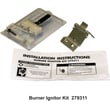
- Igniter 279311 (no heat, burner will not light)
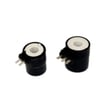
- Dryer valve coil kit 279834 (heats briefly, then stops heating)
Why it matters
Kenmore dryers can look similar across series, but internal components and wiring can differ. Using the exact model number ensures we guide you to the correct Kenmore diagrams, compatible parts, and the right operating details in the manual.
Last updated: February 2026
How much does it cost to replace a heating element in a Kenmore dryer?
For the Kenmore 11070932990 gas dryer, a “heating element” is not the typical heat source; heat is produced by the gas burner system. Most no-heat repairs on this model land in the $25 to $350 range total, depending on which ignition or safety part is needed and whether you hire service.
Typical cost ranges (parts and labor)
Here are common price ranges we see for gas-dryer heat problems like “runs but won’t heat”:
- DIY parts only: about $25 to $200
- Professional labor: about $100 to $250 (varies by area and access)
- Total typical repair: about $150 to $350
| Repair scenario (gas dryer) | Common parts involved | Typical total cost |
|---|---|---|
| Ignition parts replacement | Igniter, radiant sensor, valve coils | $150 to $350 |
| Safety cutout opened | Thermal fuse, high-limit thermostat | $125 to $300 |
| Airflow restriction caused overheating | Vent cleaning, fuse/thermostat | $150 to $350 |
Parts that commonly fix “no heat” on model 11070932990
If your dryer tumbles but doesn’t heat, these are the most common fixes:
- Dryer valve coil kit 279834 (often fails after warming up)
- Igniter 279311 (glow-bar style igniter)
- Dryer radiant sensor WP338906 (flame sensing)
- Dryer thermal fuse WP3390719 (opens if overheating occurs)
- Dryer high-limit thermostat W11050897 (temperature safety control)
Why it matters (and what to check first)
On a gas dryer, poor airflow can overheat the burner area and open a safety device, which stops heat until the failed part is replaced and the venting issue is corrected.
Before buying parts, we recommend:
- Clean the lint screen and confirm strong airflow at the outside vent hood
- Check that the gas supply valve is fully open
- Run a timed cycle and listen for burner ignition (click, whoosh)
- Inspect the vent duct for kinks, crushing, or heavy lint buildup
For model-specific operating and cycle details (including temperature and cool-down behavior), use the 11070932990 owner’s manual.
Last updated: February 2026
What size is a Kenmore Model 11070932990 dryer?
Kenmore gas dryer model 11070932990 is a full-size (standard-width) dryer; most units in this Kenmore 110 platform measure about 27 inches wide, 27 to 29 inches deep, and 43 to 44 inches tall. For the exact cabinet dimensions for your specific configuration, use the 11070932990 owner's manual.
Typical dimensions you can plan around
These are the most common exterior size ranges customers use for fit checks (doorway, alcove, and vent clearance):
- Width: ~27 inches
- Height: ~43 to 44 inches
- Depth (cabinet): ~27 to 29 inches
- Depth (with door closed): often slightly more than cabinet depth
- Clearance: leave space behind for the gas line and vent elbow
How to confirm the exact size on your unit
We recommend verifying with the manual and a quick tape-measure check so you account for handles, door curvature, and hookups.
- Measure width at the widest point of the cabinet
- Measure height from floor to the top of the cabinet
- Measure depth from the back panel to the front edge (then re-check including the door)
- Confirm the model on the model and serial number plate (commonly inside the door opening)
Quick planning guide (what to allow)
| What you’re fitting | What to allow | Why |
|---|---|---|
| Dryer body | ~27 in W x ~44 in H | Standard Kenmore full-size footprint |
| Depth in a tight closet | 29 in+ | Door and vent connection add depth |
| Rear clearance | A few inches | Vent elbow and gas hookup space |
Why it matters
Correct sizing prevents crushed venting, kinked gas connections, and doors that cannot fully open. It also helps airflow stay strong, which improves drying performance and reduces overheating risk.
Last updated: February 2026