Owner’s manual
 Error Codes


How to replace light bulb in Kenmore refrigerator?
On Kenmore model 10651132210, you typically replace the interior light by removing the light lens/cover, unscrewing the old bulb counterclockwise, and installing a new bulb clockwise. Use the bulb type and wattage listed in the 10651132210 owner's manual to avoid damage.
Quick steps (most Kenmore side-by-side models)
- Unplug the refrigerator or switch off power at the breaker.
- Open the door and locate the light lens (usually in the fresh food section ceiling or side wall).
- Release the lens tabs (a small flat-blade screwdriver can help) and lower/remove the lens.
- Unscrew the bulb counterclockwise.
- Screw in the replacement bulb clockwise until snug (do not overtighten).
- Reinstall the lens, restore power, and confirm the light turns on.
Choose the right replacement bulb
Using the correct bulb matters because the wrong wattage can overheat the lens or socket.
| What to match | What to look for | Why it matters |
|---|---|---|
| Base type | Same screw base as the original | Prevents poor contact or stripped socket |
| Wattage | Same as listed in the manual | Avoids overheating and lens warping |
| Appliance rating | “Appliance” or “refrigerator” bulb | Handles cold temps and vibration better |
If the new bulb still does not work
This points to a door switch, socket, or control issue rather than the bulb.
- Make sure the bulb is fully seated.
- Press the door switch; the light should turn off and on.
- Check for a loose or corroded socket.
- If multiple lights are out, suspect a control or light circuit issue.
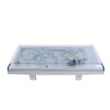
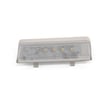
Model 10651132210 uses an electronic light system on some configurations; if your unit has LED lighting, the serviceable part may be a board such as the refrigerator light board WPW10515057 instead of a screw-in bulb.
Why it matters
A working interior light helps you spot airflow blockages, spills, and door-left-open issues quickly, which protects food temperatures and reduces compressor run time.
Last updated: February 2026
What is the cubic foot of my Kenmore refrigerator model 10651132210?
Your Kenmore side-by-side refrigerator model 10651132210 has a total capacity of about 26 cu. ft. (combined refrigerator and freezer volume). For the exact published capacity and any compartment breakdown, confirm it in the 10651132210 owner's manual.
How to confirm the exact capacity for your unit
Capacity is listed in the specifications section of the manual and sometimes on the model and serial tag.
- Check the “Specifications” or “Product data” section for “Total capacity”
- Look for a separate refrigerator and freezer capacity split (some manuals list both)
- Verify the model number on the rating label inside the fresh food compartment
- If you have an in-door ice maker, remember it reduces usable freezer space even when total cu. ft. stays the same
What “26 cu. ft.” represents
“Cubic feet” is a standardized measurement of interior volume, not a promise of how much food fits comfortably once shelves, bins, and the ice system are installed.
| Measurement | What it includes | What changes day to day |
|---|---|---|
| Total capacity (cu. ft.) | Refrigerator + freezer interior volume | Shelf positions, door bins, ice bin space |
| Usable space | What you can practically store | Ice production, bulky items, organization |
Why it matters
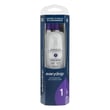
Knowing the correct cubic feet helps you compare replacement refrigerators, plan kitchen clearances, and set expectations for storage. It also helps when choosing accessories such as a replacement Kenmore refrigerator water filter 9081 and organizing around the ice bin and door storage.
Last updated: February 2026
What's the average lifespan of a Kenmore refrigerator?
Most Kenmore refrigerators average 10 to 15 years of service life. For a Kenmore side-by-side like model 10651132210, consistent maintenance (airflow, clean seals, and timely part replacement) is what most often determines whether it lands closer to 10 years or keeps running well beyond that; see the 10651132210 owner's manual for model-specific care steps.
Typical lifespan ranges (what we see most often)
- 10 to 15 years: common for many household refrigerators
- 15 to 20 years: achievable with good airflow and sealed doors
- Under 10 years: more likely with poor ventilation, dirty coils, or chronic ice and water issues
| Usage and care level | Typical outcome | What to focus on |
|---|---|---|
| Basic care | 10 to 15 years | Temperatures, door closing, filter changes |
| Proactive care | 15 to 20 years | Coils, seals, fan noise, defrost performance |
| High stress (hot garage, packed vents) | Shorter life | Airflow, condenser cleaning, door alignment |
Maintenance that extends life the most
- Keep condenser area clean and ensure good airflow around the cabinet
- Confirm doors close fully and gaskets seal all the way around
- Replace the water filter on schedule (a restricted filter can reduce dispenser flow)
- Address unusual noises early (often tied to the evaporator fan area)
- Keep vents inside the refrigerator and freezer clear of food packages
Parts that commonly support long-term reliability
These are not “lifespan parts,” but they are frequent maintenance or repair items that help prevent bigger problems:
- Kenmore refrigerator water filter 9081 for water quality and flow
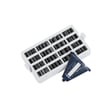
- Refrigerator air filter W10311524 to help control odors and airflow
- Refrigerator evaporator fan motor WP2315549 if you lose airflow or hear grinding/squealing
- Refrigerator defrost bi-metal WPW10225581 if frost buildup starts affecting cooling
Why it matters
A refrigerator usually fails early for practical reasons: restricted airflow, warm air leaks at the door gasket, or ignored cooling symptoms that force the compressor to run longer than it should. Keeping temperatures stable and airflow unobstructed is the simplest way to protect the sealed system.
Last updated: February 2026
Why is my Kenmore side by side refrigerator leaking water?
Water leaking from your Kenmore 10651132210 side-by-side refrigerator is usually caused by a clogged defrost drain, a water supply connection issue, or a problem in the ice maker or dispenser water circuit. We recommend checking for ice buildup at the drain first, then inspecting the filter and inlet valve.
Quick checks (most common causes)
- Defrost drain clogged or frozen: Water backs up and spills into the fresh food section, then leaks to the floor.
- Water filter not seated or overdue: A loose or restricted filter can cause drips at the filter head or reduce flow and stress the valve.
- Cracked or loose water line: Look behind the unit and under the hinge area for wet tubing.
- Inlet valve seeping: A valve that does not fully close can slowly feed water to the ice maker or dispenser.
- Door left ajar or gasket leak: Excess frost can melt and overflow during defrost.
For model-specific access points and panel removal, follow the 10651132210 owner's manual.
Step-by-step troubleshooting
- Unplug the refrigerator and pull it out enough to inspect the back.
- Check inside for drain backup: look for water under crisper drawers or a sheet of ice on the freezer floor.
- Clear the defrost drain: flush with hot water (a turkey baster works well) until it flows freely to the drain pan.
- Inspect the filter area: remove and reinstall the Kenmore refrigerator water filter 9081 to ensure it is fully seated.
- Inspect the valve and tubing: if you see dripping at the valve body or fittings, test/replace the refrigerator water inlet valve WPW10341320.
What you see vs. what it usually means
| Symptom | Most likely cause | Where to look |
|---|---|---|
| Water under crisper drawers | Defrost drain clogged/frozen | Drain trough and drain hole |
| Water on freezer floor | Frozen drain or ice buildup | Bottom of freezer, drain area |
| Puddle behind fridge | Supply line or inlet valve leak | Back lower area |
| Drips near filter housing | Filter not seated or damaged | Filter head compartment |
Why it matters
Leaks can lead to ice buildup, warm temperatures, and floor damage. Fixing the root cause (drain, filter seating, or inlet valve seepage) restores normal defrost drainage and stabilizes ice maker and dispenser performance.
Last updated: February 2026