 Installation guide
 Owner’s manual
 Error Codes




How to find a Frigidaire dishwasher part number?
For your Frigidaire dishwasher model FDBB4365FC0, the fastest way to find the correct part number is to start with the model number, then match the part by name and location on the parts diagram; this prevents ordering a look-alike part that will not fit.
Step-by-step: get the right part number
- Find the full model number on the dishwasher (use the exact characters, including any ending digits).
- Open the parts list and diagram in the FDBB4365FC0 owner's manual.
- Identify the part by where it sits on the dishwasher (door, tub, sump, rack, or base).
- Match the part name to a listed item, then record the manufacturer part number.
- Double-check you are selecting the correct variation (for example, left vs. right, front vs. rear).
Common parts people look up on FDBB4365FC0
If you already know what is failing, these are examples of parts that are commonly searched by name:
| What you need | Example part name | Example ID | When it’s usually needed |
|---|---|---|---|
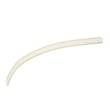
| Door leak seal | Gasket | 809006501 | Water leaking at the bottom of the door |
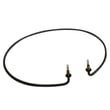
| Not drying or heating | Heater | 154825001 | Dishes stay cool, poor drying |
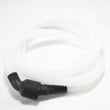
| Not draining | Hose | 807117001 | Standing water, slow drain |
| Poor cleaning | Dishwasher filter | 5304532206 | Debris buildup, gritty residue |
Why it matters
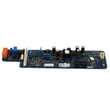
Dishwasher parts are model-specific; using the exact FDBB4365FC0 model number ensures the correct fit for items like the door seal, heating element, drain hose, and control board.
Helpful tip when symptoms point to a specific part
If you are tracking a leak at the bottom edge of the door, start by inspecting the lower door seal and consider the gasket 809006501 if the seal is torn, hardened, or no longer sits flat.
Last updated: February 2026
What is the average lifespan of a Frigidaire dishwasher?
A Frigidaire dishwasher typically lasts about 10 years. For the Frigidaire FDBB4365FC0, consistent cleaning, correct detergent use, and fixing small leaks or draining issues early helps you reach (and often exceed) that average; see the FDBB4365FC0 owner’s manual for care and cleaning guidance.
Typical lifespan range (what we see most often)
Most residential dishwashers fall into a predictable range based on use and maintenance:
- Average: ~10 years
- Common range: 7 to 12 years
- Heavy use or hard water: often closer to 7 to 9 years
- Light use with good maintenance: often 10 to 12 years
| Usage pattern | What it usually means | Typical outcome |
|---|---|---|
| 1 load/day | Normal wear | Around 10 years |
| 2+ loads/day | Faster wear on pump, heater, seals | 7 to 9 years |
| Hard water, no softening | More scale buildup | Shorter life unless maintained |
What shortens dishwasher life fastest
These are the most common “lifespan killers” we see on dishwashers like the FDBB4365FC0:
- Hard water scale on the heater and in the sump area
- Clogged filter or restricted drain path that makes the pump work harder
- Door leaks that go unchecked and damage components
- Overloading that blocks spray and strains racks/rollers
- Skipping rinse aid when spotting and poor drying are present (it increases rewash cycles)
Parts that often matter as the unit ages
If performance drops, these model-specific parts are common checkpoints:
- Dishwasher filter 5304532206 (helps prevent recirculating debris)
- Gasket 809006501 (helps stop door leaks at the bottom)
- Heater 154825001 (supports drying and proper wash temperature)
Why it matters
Knowing the typical lifespan helps you decide whether to maintain and repair (filter cleaning, leak prevention, proper loading) or plan for replacement when major items like the pump motor or control board start failing.
Last updated: February 2026
What is the most common problem with a Frigidaire dishwasher?
For the Frigidaire FDBB4365FC0 dishwasher, the most common day-to-day problems are poor cleaning (food left on dishes) and drainage issues, usually caused by loading problems, low water temperature, or a restriction in the wash or drain path. Our FDBB4365FC0 owner's manual lists these as common experiences to check before service.
Most common symptoms and what to check first
- Food soils left on dishes: confirm nothing blocks spray arm rotation and avoid nesting items.
- Not draining properly: check for a kinked drain hose and confirm the cycle is complete (not paused).
- Won’t run: verify the door is fully closed and latched; check for delay start.
- Long cycle times: a water-heating delay or selected options can extend run time.
- Poor results with hard water: adjust detergent use and consider water hardness impacts.
Quick checks that solve the majority of complaints
We see the fastest improvements when you focus on the basics the manual calls out:
- Run hot water at the sink until it is hot before starting (incoming water should be at least 120°F).
- Confirm home water pressure is in the typical dishwasher range (20 to 120 psi).
- Reload to prevent blocking the spray arms; keep tall items from stopping rotation.
- Use fresh detergent and the right cycle for soil level.
- If draining is slow, inspect the drain hose routing for kinks and verify the disposer inlet knockout (if connected).
When it points to a part instead of usage or water conditions
If the checks above do not change anything, a failed component becomes more likely.
| Symptom | Common area involved | Example model-matched part to consider |
|---|---|---|
| Water left in tub | Drain path or drain pump | Hose 807117001 |
| Leaks at the bottom of the door | Door sealing surface | Gasket 809006501 |
| Not drying well or no heat | Heating circuit | Heater 154825001 |
Why it matters
Poor cleaning and draining are often connected: when water cannot circulate freely or drain correctly, detergent performance drops and soils redeposit. Getting water temperature, loading, and flow right prevents repeat issues and reduces wear on the pump and heater.
Last updated: February 2026
Can I replace dishwasher parts myself?
Yes. On the Frigidaire FDBB4365FC0 dishwasher, we can replace many common wear parts ourselves if we shut off power and water first and follow the step-by-step procedures in the FDBB4365FC0 owner’s manual and the FDBB4365FC0 installation guide.
What you can usually DIY (and what to be careful with)
Many repairs are straightforward because they involve access from the door or lower front area.
- Good DIY candidates: door seals, rack rollers, filters, door springs and cables
- More advanced: drain hose routing, pump and motor work, leak diagnosis
- Highest caution: electrical troubleshooting and control board replacement (shock risk)
- Always disconnect power at the breaker before opening panels
- Turn off water supply before disconnecting any hose
Model-specific tips from the documentation
The installation instructions for this dishwasher include safety warnings and a checklist that helps prevent leaks and fit issues after a repair.
- Confirm the dishwasher is level and securely fastened before running a cycle
- Verify the drain hose is assembled to the drain pump and not kinked
- Check that water supply is on and joints are leak-free
- If you remove the outer door, support it and reattach it using the documented screw locations
- Door balance matters; spring tension should let the door stay horizontal when open, then lift closed with light finger pressure
Parts that commonly get replaced on FDBB4365FC0
| Symptom | Common part to inspect | Example part for this model |
|---|---|---|
| Water leaking at the door | Door seal / gasket area | Gasket 809006501 |
| Dishes not drying well | Heating circuit | Heater 154825001 |
| Rack won’t roll smoothly | Rack rollers | Dishwasher dishrack roller, lower 5304532229 |
| Poor wash performance | Filter and spray path | Dishwasher filter 5304532206 |
Why it matters
DIY replacement can restore cleaning and drying performance and stop leaks quickly, but doing the shutdown steps and post-repair checks correctly helps prevent electrical shock, water damage, and repeat failures.
Last updated: February 2026





