Owner’s manual
 Error Codes


Do all refrigerators have wheels on the bottom?
No. Many refrigerators, including bottom-mount designs like the Jenn-Air JFI2089WES9, use rollers or wheels to help you move the cabinet into place, but some models use fixed leveling legs (or a mix of rollers and legs) and do not “roll” freely once leveled.
What you’ll typically find under a refrigerator
Most refrigerators use one of these setups:
- Front leveling legs + rear rollers: common; rolls when legs are raised, stays put when legs are lowered
- Four rollers/wheels: easier to move, but still needs leveling to prevent shifting
- Fixed feet (no rollers): relies on lifting or sliding pads for movement
- Rollers plus anti-tip/stop features: helps prevent the unit from creeping forward
For model-specific leveling and moving guidance, follow the steps in the JFI2089WES9 owner's manual.
How to tell if your JFI2089WES9 has rollers or just leveling legs
Use these quick checks before you try to pull the refrigerator out:
- Look at the front bottom corners for adjustable leveling legs or leveling bolts
- Check for a toe grille/kick plate that may hide the leveling points
- Gently try to roll the unit forward after turning the leveling legs up (if equipped)
- If it drags instead of rolling, stop and re-check for legs still contacting the floor
- Confirm the correct procedure in the JFI2089WES9 owner's manual
Why refrigerators “roll forward” and how leveling prevents it
If the front is not leveled down firmly, door opening and closing can slowly pull the cabinet forward. Proper leveling also helps doors self-close and improves gasket sealing.
| Symptom | Common cause | What to do |
|---|---|---|
| Refrigerator creeps forward | Front not leveled down | Lower/adjust front leveling legs until stable |
| Doors do not close on their own | Cabinet not level | Re-level side-to-side and slightly tilt back |
| Vibration or rattling | Uneven floor or loose stance | Re-level and confirm all feet contact the floor |
Why it matters
A refrigerator that is not stable can strain door hinges, reduce door gasket sealing, and make the unit harder to service or clean behind. Correct leveling is a simple step that protects cooling performance and everyday usability.
Last updated: January 2026
Is JennAir considered high end?
Yes. Jenn-Air is widely considered a high-end (luxury) appliance brand, and it’s positioned above mainstream lines in features, styling, and price. For owners of the Jenn-Air JFI2089WES9 bottom-mount refrigerator, that typically means premium fit and finish, more design-forward options, and higher-cost replacement parts.
What “high end” usually means for Jenn-Air owners
- Premium materials and finishes (often built to match upscale kitchen design)
- Feature sets aimed at performance and convenience (cooling management, storage design)
- Higher typical purchase price than mid-tier brands
- Replacement parts can cost more than comparable mainstream models
- Service and repair decisions often focus on preserving performance and appearance
How Jenn-Air compares to other common brands
| Tier | Typical positioning | Examples |
|---|---|---|
| Mainstream | Value and basic features | Amana, Hotpoint |
| Mid-tier | More features and styling | Whirlpool, GE |
| Premium | Higher-end features and design | KitchenAid, Bosch |
| Luxury | Design-forward, premium pricing | Jenn-Air, Sub-Zero, Wolf |
Why it matters when you’re buying parts for JFI2089WES9
A “high-end” refrigerator is still repaired the same way, but the parts and expectations are different. For example, cosmetic and sealing components (like door gaskets) and refrigeration-system components (like the compressor) can be higher-cost, and correct part matching by model number is critical.
Parts examples you may see on this model
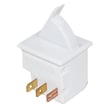
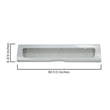
- If the interior light stays on or won’t turn on, a door-activated switch may be involved (example: refrigerator light switch W11396033)
- If temperatures won’t hold, sealed-system components may be involved (example: refrigerator compressor W10233960)
- If you see air leaks, frost, or moisture around doors, a gasket may be the fix (example: refrigerator door gasket, right (black) W11378944)
Where to confirm features and care details
For model-specific features, controls, and care recommendations, use the JFI2089WES9 owner's manual.
Last updated: January 2026
What are common problems with JennAir refrigerators?
Common problems we see on the Jenn-Air JFI2089WES9 bottom-mount refrigerator include weak or uneven cooling, ice maker or dispenser issues, water leaks, and unusual noises. These symptoms are often tied to airflow restrictions, dirty condenser coils, door sealing problems, or a failed cooling or defrost component; use the JFI2089WES9 owner's manual to match symptoms to the correct checks.
Most common symptoms and what they usually point to
- Freezer cold but fresh food warm: blocked vents, frost buildup on the evaporator cover, or airflow problems
- Not cooling at all: sealed system or compressor-related failure, or a control/power issue
- Water leaking: clogged/iced drain, cracked water tube, or reservoir issues
- No ice or slow ice production: water supply restriction, filter/bypass setup, or ice maker/dispenser problems
- Noisy operation: fan blade interference, condenser area vibration, or ice buildup
Quick checks we recommend before replacing parts
- Confirm doors close fully and gaskets seal all the way around.
- Make sure food packages are not blocking air vents inside the refrigerator.
- Clean dust from condenser coils and the condenser fan area.
- If you see ice or heavy frost on the back wall, suspect a defrost or airflow issue.
- If the dispenser water flow is weak, verify the filter or bypass is installed correctly.
Parts that commonly relate to these problems (for this model)
| Symptom | Common area | Example part for JFI2089WES9 |
|---|---|---|
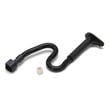
| Water under crisper or on floor | Defrost drain system | Refrigerator drain tube kit W10619951 |
| Fresh food temps swing | Temperature sensing | Refrigerator thermistor 12002355 |
| Rattling or scraping noise | Fan airflow path | Refrigerator fan blade WP67006337 |
| No cooling or warm freezer | Sealed system/cooling | Refrigerator compressor W10233960 |
Why it matters
Catching the pattern early protects food, reduces energy use, and prevents secondary damage (like ice buildup that blocks airflow or leaks that damage flooring). A simple airflow or drain issue can look like a major failure, so the basic checks save time and cost.
Last updated: January 2026
What is the life expectancy of a JennAir refrigerator?
A Jenn-Air refrigerator typically lasts 12 to 18 years. For your JENN-AIR JFI2089WES9 bottom-mount refrigerator, lifespan depends most on compressor health, clean condenser airflow, and door seal condition; with routine care, many units reach the upper end of that range.
Typical lifespan and what affects it most
- Condenser cleanliness and airflow (dust buildup makes the compressor work harder)
- Door gasket seal quality (warm air leaks increase run time and frost)
- Ice maker and water system use (mineral buildup and leaks shorten component life)
- Ambient conditions (hot garages and tight enclosures reduce life)
- Power quality (frequent outages or surges stress control boards and motors)
Quick “repair vs replace” guide
Use this as a practical rule of thumb for a JFI2089WES9:
| Refrigerator age | If it needs… | Usually makes sense to… |
|---|---|---|
| 0 to 7 years | minor parts (switches, tubes, gaskets) | Repair |
| 8 to 12 years | repeated cooling or defrost issues | Compare repair cost to replacement |
| 13+ years | sealed system or compressor work | Replace unless repair is clearly cost-effective |
Parts that commonly influence longevity
If you are trying to extend life, these are the types of parts we see tied to performance and efficiency:
- Door sealing parts such as the refrigerator door gasket, right (black) W11378944
- Defrost protection parts such as the refrigerator defrost bi-metal WP627985
- Drain and moisture management such as the refrigerator drain tube kit W10619951
- Cooling system components such as the compressor (sealed system repairs are typically the biggest decision point)
Why it matters
A refrigerator near the end of its expected lifespan often shows higher energy use, wider temperature swings, and more frequent icing or leaking. Addressing airflow, sealing, and defrost drainage early helps the JFI2089WES9 cool more consistently and reduces wear on major components.
For model-specific operating and care guidance, follow the maintenance and cleaning recommendations in the JFI2089WES9 owner's manual.
Last updated: January 2026