 Installation guide
 Owner’s manual


How big of an opening for a 24 dishwasher?
For a standard 24-inch dishwasher like Kenmore model 66515824000, plan on a cabinet opening that is 24 inches wide (minimum at the narrowest point) and at least 34 inches high (minimum) under the countertop. Your opening also needs room for the water line, drain hose, and power connection; confirm the exact cutout details in the installation guide.
Recommended opening and clearances
Use these common targets when measuring your cabinet cutout:
- Width: 24 inches minimum (measure the narrowest point)
- Height: 34 inches minimum (measured from the lowest point under the countertop)
- Depth: Most 24-inch dishwashers fit a standard 24-inch cabinet depth; make sure hoses and wiring stay routed to the side, not in front of the motor or legs
- Corner installs: Allow 2 inches minimum between the dishwasher door side and the adjacent wall or cabinet
- Flooring: Keep 1/4 inch minimum clearance between the motor and flooring; do not install over carpet
Quick measurement checklist
Before you buy parts or start an install, we recommend checking:
- Measure width at the front and back of the opening (use the tightest measurement)
- Measure height from the floor to the lowest underside point of the countertop
- Confirm the opening is square and the cabinet front is perpendicular to the floor
- Verify the floor is level front-to-back (use shims if needed)
- Confirm water, drain, and electrical access are available next to the opening
Typical cutout holes (for lines and wiring)
These are common hole sizes used for routing utilities through the cabinet wall or floor:
| Opening for | Typical hole diameter |
|---|---|
| Water line | 1/2 inch |
| Drain line | 1-1/2 inches |
| Direct wire | 3/4 inch |
| Power supply cord | 1-1/2 inches |
Why it matters
A correct opening size helps your Kenmore 66515824000 sit level, seal properly, and avoid issues like door rubbing, vibration, or overheating from poor clearance. Proper routing of the drain hose and wiring also prevents contact with moving parts.
Last updated: February 2026
What are common problems with Kenmore dishwashers?
Common problems on the Kenmore 66515824000 dishwasher are no-start or stopping mid-cycle (door not latched, power issue), poor cleaning (low water temperature, loading issues, clogged spray paths), not filling, and spotting or residue from detergent or hard water. Our 66515824000 owner's manual troubleshooting steps cover the fastest checks.
Most common symptoms and what usually causes them
- Dishwasher won’t run or stops: door not closed and latched, wrong cycle selection, tripped breaker or blown fuse, motor overload reset
- Won’t fill: water shut-off valve closed, overfill protection float stuck
- Runs too long: incoming water not hot enough; the dishwasher extends time while heating
- Poor cleaning (food soil left): incorrect loading, water temperature below 120°F (49°C), not enough fresh detergent, spray arm or pump path blocked by labels
- Spots/film or white residue: hard water, too much detergent, excess suds from the wrong detergent type
- Odor: infrequent washing; needs rinse cycles between full loads
Quick checks we recommend first (in order)
- Confirm the door closes firmly; if it feels loose or won’t latch, inspect the dishwasher door latch WP3380854.
- Verify power at the dishwasher (breaker/fuse) and re-try the cycle after a few minutes if the motor overloaded.
- Make sure the water shut-off valve is fully open.
- Press the overfill protection float down to ensure it moves freely.
- Improve wash performance basics: load correctly, use fresh detergent, and ensure 120°F (49°C) water entering the dishwasher.
Specs and targets that matter for performance
| Item | Target | Why it matters |
|---|---|---|
| Incoming water temperature | 120°F (49°C) minimum | Prevents long cycles and improves cleaning |
| Home water pressure | 20 to 120 psi | Ensures proper fill and spray strength |
| Detergent type | Dishwasher detergent only | Prevents high suds that slow spray arms |
Why it matters
Most “dishwasher problems” are really fill, heat, or spray issues. When water is hot enough, pressure is adequate, and spray paths are clear, the Kenmore 66515824000 typically cleans well and finishes cycles on time.
For model-specific cycle and troubleshooting details, use the 66515824000 owner's manual.
Last updated: February 2026
Does a Kenmore dishwasher model 66515824000 have a filter?
Yes. Your Kenmore dishwasher model 66515824000 uses an internal soil removal system (Ultra Wash) that includes a filter-style screen area in the bottom of the tub; it is designed to stay in place and be cleaned by checking for debris and rinsing the area as needed. See the owner's manual for the exact cleaning steps for your version.
Where the “filter” is on this model
On 66515824000, the filter area is part of the sump and soil removal system at the bottom of the dishwasher tub, near the lower spray arm and Ultra Wash module.
Common signs that this area needs attention:
- Grit or food particles left on dishes
- Poor wash performance on the lower rack
- Standing water or slow draining
- Spray arm not spinning freely
- New rattling or grinding noises during wash
How we recommend checking and cleaning it
Always turn off power at the breaker before reaching into the sump area.
- Remove the lower rack.
- Inspect around the lower spray arm and sump opening for labels, glass, bones, or twist ties.
- Wipe and rinse the screen area with warm water.
- Confirm the overfill protection float moves up and down freely.
- Run a rinse cycle to flush loosened debris.
If you are also seeing odor or film buildup, using a dishwasher cleaner can help; glisten W10282479 is a common maintenance option.
What’s “normal” vs. what points to a problem
| What you notice | Usually means | What to do next |
|---|---|---|
| Light debris in the sump | Normal over time | Rinse and wipe the screen area |
| Heavy debris repeatedly | Pre-rinsing issues or loading issues | Scrape dishes, avoid labels, load correctly |
| Not draining well | Drain path restriction | Check sink drain/air gap and drain hose routing |
| Poor drying plus wet dishes | Heat or venting issue | Check settings and inspect vent area |
Why it matters
When the sump screen area is clogged, water flow to the spray arms drops and the pump can struggle. That leads to dirty dishes, redepositing soil, and sometimes drainage problems.
Last updated: February 2026
Why is water standing in the bottom of my Kenmore dishwasher?
Water standing in the bottom of your Kenmore 66515824000 dishwasher almost always means the drain path is restricted or the cycle did not fully complete. We recommend confirming the cycle is complete, then checking the drain air gap (if your setup has one), drain hose routing, and the drain pump area.
Quick checks that fix most standing-water problems
- Make sure the cycle is actually finished; some water can remain if the cycle was interrupted.
- Press Cancel/Drain (if your model has it) and listen for a strong drain sound.
- Check the sink drain and garbage disposer for a clog that can slow dishwasher draining.
- If you have a countertop drain air gap, clean it; the manual notes to check it anytime the dishwasher is not draining well.
- Verify the drain hose is not kinked, crushed, or routed too low (a low loop can contribute to backflow).
Step-by-step troubleshooting (in a good order)
- Confirm the cycle completed: The manual calls out “Water remains in the dishwasher” and starts with checking whether the cycle is complete. See the owner's manual.
- Clean the drain air gap (if installed): Remove the cap and clear debris; a clogged air gap can cause water to back up into the tub.
- Inspect the drain hose: Look for kinks and check for grease or food buildup inside the hose.
- Check the tub sump area: Remove the lower rack and look for labels, glass, or food that can block the pump intake.
- Rule out an overfill issue: Make sure the overfill protection float (front right of the tub) moves up and down freely; objects under it can affect normal operation.
Parts that commonly relate to draining symptoms
If you find damage, cracking, or a loose connection during inspection, these model-matched parts are common fixes:
| Symptom you notice | What it often points to | Model-matched part to consider |
|---|---|---|
| Water backs up after sink use | Drain restriction or backflow | Drain hose routing and air gap cleaning |
| Slow drain, gurgling | Partial clog in drain path | Dishwasher drain hose WP3374077 |
| Won’t fill correctly or odd water level behavior | Float sticking | Dishwasher float assembly WP3376397 |
Why it matters
Standing water can redeposit soil on dishes, create odor, and strain the drain pump. Restoring normal drain flow protects wash performance and helps prevent repeat clogs.
Last updated: February 2026
What are the commonly replaced parts in a dishwasher?
In a Kenmore dishwasher like model 66515824000, the most commonly replaced parts are the ones that handle water fill, washing action, heating, draining, and door closing. These parts wear from heat, detergent, hard water, and normal movement; our owner's manual also lists key components and features.
Commonly replaced dishwasher parts
These are the parts we see replaced most often across dishwashers, including Kenmore models with an ULTRA WASH wash system:
- Door latch and door seals: help the door close securely and prevent leaks
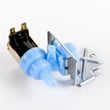
- Water inlet valve: controls water entering the tub
- Spray arms and spray arm hardware: deliver wash water; can clog from debris
- Heating parts (heater, thermostat, element seals): heat water and support drying
- Drain hose and drain path parts: move water out; can clog or kink
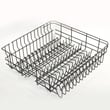
- Racks, rollers, and baskets: wear from loading, rust, and broken wheels
- Vent and rinse aid dispenser: affect drying and spotting
Model 66515824000 parts on this page that match those “usual suspects”
Here are examples of commonly replaced items available for this model:
- Dishwasher door latch WP3380854
- Dishwasher water inlet valve W10844024
- Spray arm WP8268874
- Dishwasher drain hose WP3374077
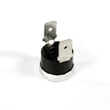
- Dishwasher thermostat WP661566
- Dishwasher rinse-aid dispenser WP8052028
Quick symptom-to-part guide
| Symptom | Most likely part areas | Example part on this page |
|---|---|---|
| Won’t start or stops mid-cycle | Door latch, controls | WP3380854 door latch |
| Not filling or fills slowly | Water inlet valve, supply line | W10844024 inlet valve |
| Poor cleaning, food left behind | Spray arms, pump, filters | WP8268874 spray arm |
| Water left in bottom | Drain hose, air gap, drain path | WP3374077 drain hose |
| Dishes not drying well | Heater/thermostat, vent, rinse aid | WP661566 thermostat, WP3379674 vent |
Why it matters
Replacing the correct “high-wear” part restores cleaning and drying performance and helps prevent leaks and overfilling. For example, the manual notes the overfill protection float must move freely for the dishwasher to operate properly, and the ULTRA WASH system relies on the pump and spray action to clean effectively.
Last updated: February 2026







