Owner’s manual
 Error Codes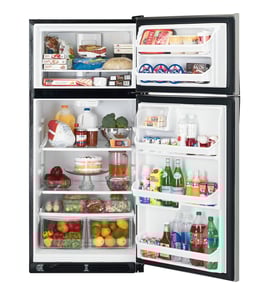




What are the disadvantages of a top mount fridge?
Top-mount refrigerators like the Whirlpool WRT1L1TZYW00 are reliable and efficient, but the main disadvantages are convenience and storage layout: you bend more to reach fresh-food items, the freezer can be harder to organize, and premium features (like in-door ice and water) are less common.
Common drawbacks (what you will notice day to day)
- More bending for fresh food: the refrigerator section sits lower, so produce drawers and lower shelves take the most reaching.
- Freezer organization can be limited: many top-mount freezers have fewer bins and dividers than bottom-freezer designs.
- Less room for tall fresh-food items: shelf spacing and door bin layout can feel tighter depending on how you store gallons, pitchers, and leftovers.
- Fewer built-in dispenser options: top-mount models often skip external water and ice features.
- Door swing and clearance matters more: in smaller kitchens, the upper freezer door can feel “in the way” when loading.
Quick comparison: top mount vs bottom freezer
| Feature | Top mount (like WRT1L1TZYW00) | Bottom freezer |
|---|---|---|
| Fresh-food access | Lower, more bending | Eye-level, easier access |
| Freezer access | Eye-level | Lower drawer, easier sorting |
| Organization | Often simpler | Often more flexible |
| Typical cost | Usually lower | Usually higher |
What to check on your specific model
Use the owner's manual to confirm the exact shelf positions, door bin adjustments, and any optional ice maker or water supply setup for the WRT1L1TZYW00.
Why it matters
Most shoppers choose a top-mount refrigerator for value and straightforward cooling. If you access fresh food many times per day, the lower refrigerator compartment is the biggest tradeoff; if you use the freezer most often, the top freezer can be a plus.
Last updated: February 2026
Which is better, top mount or bottom mount refrigerator?
A top-mount refrigerator like the Whirlpool WRT1L1TZYW00 is usually the better pick if you want lower upfront cost, simple reliability, and strong energy efficiency. A bottom-mount is usually better if you want everyday fresh-food access at eye level and easier organization, but it often costs more.
Quick comparison (what most homeowners notice)
| Feature | Top mount (freezer on top) | Bottom mount (freezer on bottom) |
|---|---|---|
| Fresh-food access | You bend more | More at eye level |
| Freezer access | Easier to reach | Often a pull-out drawer |
| Price | Usually lower | Usually higher |
| Complexity | Simpler design | More moving parts (drawers, slides) |
| Space/organization | Straightforward shelves | Often more “zoned” storage |
Choose a top-mount if you want
- A simpler refrigerator layout with fewer mechanisms to maintain
- A freezer you use often (it is higher and easier to reach)
- A budget-friendly replacement that still cools well
- A design that is typically easier to service over time
For model-specific features and care tips, use the owner's manual.
Choose a bottom-mount if you want
- Fresh-food items (milk, produce, leftovers) at a more comfortable height
- A freezer drawer that can hold bulky items and stack better
- More “grab-and-go” convenience for daily refrigerator use
Why it matters
“Better” depends on how you use your refrigerator. If you open the refrigerator section far more than the freezer, a bottom-mount can feel more convenient day to day. If you want a straightforward, efficient design with a classic layout, a top-mount like the WRT1L1TZYW00 is usually the best value.
Last updated: February 2026
What is the life expectancy of a top freezer refrigerator?
A top-freezer (top-mount) refrigerator like the Whirlpool WRT1L1TZYW00 typically lasts 10 to 15 years. With consistent basic maintenance and good airflow around the cabinet, many units reach the upper end of that range before major sealed-system or control issues become more likely.
What affects lifespan most
- Condenser cleanliness: dust buildup makes the compressor work harder
- Door seal condition: air leaks force longer run times
- Temperature settings: overly cold settings increase wear and energy use
- Vent blockage: packed shelves can restrict airflow and cause warm spots
- Power quality: frequent outages or surges can stress electronics
Maintenance that helps you hit 15 years
Use the owner's manual for model-specific care and cleaning guidance, then focus on these high-impact items:
- Vacuum or brush condenser areas regularly (especially with pets)
- Keep doors closing squarely; avoid slamming
- Clean and dry door gaskets; check for gaps with a paper-strip test
- Leave space for airflow inside the freezer and fresh-food sections
- Level the refrigerator so doors self-close and seals seat evenly
Common wear items and what they do
| Part | What it impacts | Typical symptom when failing |
|---|---|---|
| Door gasket | Temperature stability, run time | Moisture, frost, warm temps |
| Evaporator fan motor | Cold air circulation | Warm fridge, noisy freezer |
| Electronic control board | Cooling control logic | Erratic temps, no-cool events |
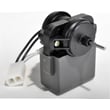
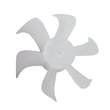
If you’re seeing airflow or temperature problems, the refrigerator evaporator fan motor WP2315539 is a common fix when the fan is noisy, intermittent, or not running.
Why it matters
A top-freezer design is mechanically simpler than many feature-heavy refrigerators, so it often delivers strong long-term reliability. Keeping airflow and seals in good shape reduces compressor run time, which is the biggest driver of overall wear.
Last updated: February 2026
What is the most common problem with whirlpool refrigerators?
The most common Whirlpool refrigerator problem is a cooling complaint: the fridge is warm, the freezer is warm, or temperatures swing. On the Whirlpool WRT1L1TZYW00, the usual causes are restricted airflow (dirty condenser coils), a failing evaporator fan, or a defrost system issue that lets frost block the evaporator.
What you should check first (fast, no parts)
- Confirm the controls are set to normal mid-range, then allow 24 hours for temperatures to stabilize.
- Make sure vents inside the fresh food section and freezer are not blocked by food packages.
- Clean the condenser coils and the area around the condenser fan (unplug the refrigerator first).
- Check that the doors close fully and the gasket seals all the way around.
- Listen for the evaporator fan in the freezer; it should run when the compressor is running.
Common symptoms and the most likely cause
| Symptom | Most likely cause | What to do next |
|---|---|---|
| Freezer cold, fridge warm | Airflow problem from freezer to fridge | Check vents, listen for fan, inspect for frost buildup |
| Frost on back freezer panel, weak cooling | Defrost system problem | Inspect for heavy frost; defrost components may be needed |
| Clicking, humming, then stops cooling | Start/run electrical issue | Check start components; consider a technician for sealed system |
| Water under fridge or in fridge | Defrost drain issue | Clear drain and confirm drain pan position |
Parts that commonly fix “not cooling” complaints
If your checks point to a failed component, these are common fixes for this model family:
- Refrigerator evaporator fan motor WP2315539 (no/weak airflow, warm fresh food section)
- Refrigerator bi-metal thermostat WPW10392132 (defrost not terminating correctly)
- Refrigerator defrost heater WPW10316428 (frost buildup on evaporator)
- Refrigerator electronic control board WPW10352689 (erratic cooling or defrost control)
Why it matters
Cooling problems can spoil food quickly and force the compressor to run longer than normal. Catching airflow and defrost issues early helps restore stable temperatures and reduces strain on major components.
For model-specific diagrams, access points, and troubleshooting steps, use the owner's manual.
Last updated: February 2026