Installation guide
 Owner’s manual
 Error Codes


Will my dryer work without the moisture sensor?
Yes. Your Whirlpool WED9400SU1 dryer will still run and heat without a working moisture sensor, but Automatic/Sensor cycles can end too soon or run too long. To dry reliably, use Timed Dry and set the time manually (then add time as needed). See the owner's manual for cycle behavior and options.
What changes when the moisture sensor is missing or not working
On this dryer, the moisture sensor helps Automatic cycles decide when to stop. If the sensor is disconnected, broken, or not being contacted by the load, you can expect:
- Automatic cycles may stop early with clothes still damp
- Automatic cycles may run longer than needed and overdry items
- Dryness level adjustments may not behave normally
- Mixed loads can dry unevenly
- Timed Dry remains the most consistent workaround
Quick steps to get normal drying results
We recommend these steps first because many “bad sensor” symptoms are actually airflow, leveling, or contact issues:
- Use Timed Dry for now; start with 30 to 50 minutes for a medium load and adjust
- Level the dryer; the manual notes Automatic sensor cycles may not operate correctly if the dryer is not level
- Avoid very small loads in sensor cycles; items may not contact the sensor strips consistently
- Clean the lint screen and confirm strong airflow at the outside vent
- Keep the laundry room above 45°F; below that, Automatic cycles may not shut off properly
When a part replacement is the right fix
If Timed Dry works but Automatic cycles are consistently inaccurate, a sensor circuit issue is possible. Common related causes include control sensing problems or temperature feedback issues.
| Symptom | Most likely category | What to try first |
|---|---|---|
| Sensor cycle ends early | Sensor contact or leveling | Level dryer; try larger load |
| Runs too long, poor drying | Airflow restriction | Check vent length, clogs, crushed duct |
| Heat seems erratic | Temperature sensing | Check/replace thermistor |
If you’re diagnosing temperature sensing, the dryer thermistor WP8577274 is a common component involved in temperature feedback.
Why it matters
Running without accurate sensor drying usually means more time, more energy use, and more fabric wear. Using Timed Dry prevents surprise shutoffs, and restoring sensor operation brings back consistent, efficient Automatic cycles.
Last updated: February 2026
What's the life expectancy of a whirlpool WED9400SU1 dryer?
A Whirlpool WED9400SU1 dryer typically lasts about 10 years with normal household use. With consistent vent cleaning, proper airflow, and timely replacement of wear items (like rollers and the idler pulley), many dryers reach 12 to 15 years.
What affects how long your WED9400SU1 lasts
The biggest life-shorteners are heat stress and restricted airflow. We see the longest-lasting dryers when these basics are kept in check:
- Keep the lint screen clean every load (and wash it occasionally to remove residue)
- Clean the entire vent run regularly to prevent overheating and long dry times
- Avoid overloading; it strains the drive system and drum supports
- Use the right cycle and temperature for the fabric load
- Fix new noises early (squeal, thump, rumble) before they damage other parts
Common wear parts that often decide “repair vs. replace”
If your dryer is otherwise in good shape, replacing a few wear parts can extend its service life significantly.
| Symptom | Most common wear area | Example part for this model |
|---|---|---|
| Squealing or rumbling | Drum support rollers | Support WPW10314173 |
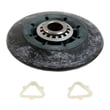
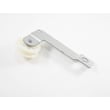
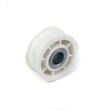
| High-pitched squeal, belt slack | Idler pulley system | Dryer idler pulley 279640 |
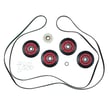
| Thumping, vibration | Drum support and drum components | Dryer repair kit 4392067 |
| No heat or weak heat | Heating circuit | Dryer heating element WP8544771 |
Why it matters
A dryer that runs hot because of poor ventilation can shorten the life of the heating system and safety thermostats, and it can also increase dry times and energy use. Following the spacing and ventilation guidance in the installation guide helps protect performance and longevity.
Last updated: February 2026
What is the capacity of the WED9400SU1?
The Whirlpool WED9400SU1 dryer capacity is measured in cubic feet (cu. ft.) and refers to how much laundry the drum can hold per load. For the exact capacity rating for your specific model, we recommend confirming it in the specifications section of the owner's manual.
How to confirm capacity for WED9400SU1
Capacity is typically listed with other key specs (electrical requirements, dimensions, and cycle features). Check these common spots:
- Specifications or Features pages in the manual
- The model and serial tag area (often inside the door opening) for model identification
- Any tech sheet stored inside the cabinet (commonly behind the lower front panel on many Whirlpool dryers)
Why capacity matters
Capacity affects drying performance and fabric care. Using the right load size helps the moisture sensor work correctly and prevents long dry times.
- Overloading restricts airflow and increases dry time
- Underloading can cause uneven tumbling and wrinkling
- Correct load size helps reduce wear on drum supports, rollers, and the belt system
Quick load-size guide (typical for full-size Whirlpool dryers)
These are practical load guidelines that work well for most full-size electric dryers like the WED9400SU1:
| Load type | What it looks like in the drum | Best practice |
|---|---|---|
| Small | Drum about 1/4 full | Good for delicates, quick cycles |
| Medium | Drum about 1/2 full | Best everyday performance |
| Large | Drum about 3/4 full | Leave space for tumbling |
| Bulky | 1 comforter or 2 pillows | Use bulky/bedding cycle if available |
If drying seems slow even with normal loads
Before assuming a capacity issue, check airflow and heat related items:
- Clean the lint screen every load (your model uses a lint screen such as screen W10120998)
- Make sure the vent run is not crushed or clogged
- If the dryer tumbles but does not heat, common suspects include the heating circuit components (for example, dryer heating element WP8544771, thermal cut-off, or high-limit thermostat)
Why it matters
Most “capacity” complaints are actually airflow or heat problems; fixing venting and lint buildup restores normal dry times and helps protect the heater and motor.
Last updated: February 2026