Owner’s manual
 Error Codes


How wide is a 25.6 cubic foot refrigerator?
A 25.6 cubic foot refrigerator is typically about 35 to 36 inches wide. For your GE PSS25NGNAWW side-by-side, the exact cabinet width and required installation clearances are listed in the owner's manual.
Typical width ranges (what you’ll see most often)
Refrigerator width depends more on style than cubic feet alone.
- Side-by-side (like PSS25NGNAWW): usually 35 to 36 in. wide
- French door: usually 35 to 36 in. wide
- Top freezer: usually 28 to 33 in. wide
- Bottom freezer: usually 29 to 33 in. wide
Installation space you should plan for
Even if the cabinet is 35 to 36 inches wide, you need extra room for airflow and door swing.
From the GE installation guidance for these side-by-side sizes, common minimum clearances include:
| Clearance area | Typical minimum clearance |
|---|---|
| Sides | 1/8 in. |
| Top | 1 in. |
| Back | 1 in. |
How to measure width the right way
Use a tape measure and confirm both the refrigerator and the opening.
- Measure the cabinet width (main box, not the doors)
- Measure the widest point (often the doors or handles)
- Measure the opening width between cabinets
- Confirm you have room to pull the unit out for service
- Verify the water line and electrical do not pinch behind the unit
Why it matters
Width affects whether the refrigerator fits your kitchen opening and whether it can cool properly. Tight installs can restrict airflow, cause warmer temperatures, and make leveling and door alignment harder.
Last updated: February 2026
What is the average lifespan of a GE refrigerator?
Most GE refrigerators, including the GE PSS25NGNAWW side-by-side, typically last 12 years. With consistent maintenance (clean condenser coils, good door seal, correct temperatures), a realistic lifespan range is 10 to 15 years.
What affects lifespan the most
- Condenser coil cleanliness: dust buildup makes the compressor run hotter and longer.
- Door gasket condition: air leaks cause longer run times and moisture problems.
- Defrost system health: failures can lead to frost buildup and warm temperatures.
- Airflow and fan operation: weak evaporator airflow can cause uneven cooling.
- Water and ice system upkeep: clogged filters and valves strain the dispenser and icemaker.
Maintenance checklist (best return on effort)
- Vacuum and brush the condenser area every 6 to 12 months.
- Keep freezer at 0°F and fresh food at 37°F to 40°F.
- Replace the water filter on schedule; use the refrigerator water filter MWFP.
- Inspect and clean door gaskets; replace if torn or not sealing.
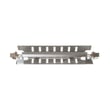
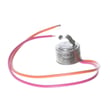
- If you see heavy frost or warming, check defrost components such as the refrigerator defrost heater WR51X10055 and refrigerator defrost thermostat WR50X10068.
Common “end-of-life” symptoms and what they usually mean
| Symptom | Most common cause | Typical fix type |
|---|---|---|
| Fridge warm, freezer OK | Air damper stuck, airflow issue | Damper or fan service |
| Heavy frost on freezer back wall | Defrost failure | Heater/thermostat diagnosis |
| No ice or slow ice | Water supply, valve, icemaker issue | Water system troubleshooting |
| Clicking, won’t start cooling | Start components or compressor circuit | Electrical diagnosis |
Why it matters
A refrigerator that runs longer than normal uses more energy and wears out key components faster. Simple upkeep, especially coil cleaning and filter changes, is the most reliable way to reach the full 10 to 15 year service life.
For model-specific care and cleaning steps, use the owner's manual.
Last updated: February 2026
Are GE side-by-side refrigerators good?
Yes. GE side-by-side refrigerators like model PSS25NGNAWW are a solid, long-lasting design with strong day-to-day usability: easy organization, consistent cooling when airflow is kept clear, and convenient ice and water features when the water supply and filter are maintained (see the owner's manual).
What “good” means for this GE side-by-side
A side-by-side is usually a good fit when you want dependable access to both fresh food and frozen items without bending for a bottom freezer.
Common strengths
- Adjustable shelves and door bins make organization easier.
- Through-the-door ice and water adds convenience.
- Separate compartments help keep temperatures more stable than many single-door designs.
- Routine maintenance is straightforward (filter changes, condenser cleaning, door gasket checks).
What to watch for (typical side-by-side tradeoffs)
These are normal considerations for this refrigerator style, not necessarily defects.
- Ice makers can be noisy during harvest cycles.
- Ice production can slow if the freezer temperature is too warm or the water filter is restricted.
- Narrow freezer section can limit storage of wide items (pizza boxes, large trays).
Quick maintenance checklist that keeps performance “good”
Use these steps to prevent the most common cooling and dispenser complaints.
- Keep vents inside both compartments unblocked for proper air circulation.
- Replace the water filter on schedule; use the correct refrigerator water filter MWFP.
- Clean condenser areas periodically to help the compressor run efficiently.
- Inspect door seals for gaps or tears; warm, moist air leaks cause frost and temperature swings.
- If temperatures seem off, test the sensor circuit; a failed GE profile refrigerator temperature sensor WR55X10025 can cause inconsistent cooling.
Symptoms and likely causes (fast reference)
| Symptom | Most common cause | What we recommend first |
|---|---|---|
| Ice maker slow or no ice | Filter restriction, warm freezer, water supply issue | Replace filter, confirm freezer setpoint, verify water line is on |
| Fresh food too warm | Airflow blockage, damper issue, sensor problem | Clear vents, check for frost buildup, consider sensor testing |
| Frost buildup | Door not sealing, frequent door openings | Check gasket contact, reduce humidity exposure |
Why it matters
A “good” refrigerator is one that holds safe temperatures with reasonable run time. On a side-by-side like PSS25NGNAWW, airflow, door sealing, and water filtration have the biggest impact on cooling consistency, ice production, and operating noise.
Last updated: February 2026
What is the most common problem with a GE refrigerator?
The most common GE refrigerator complaint is not cooling correctly (fresh food warm, freezer not cold enough, or temperatures swinging). On the GE PSS25NGNAWW, many “not cooling” calls are caused by control settings, doors left ajar, or normal defrost operation before a failed part is involved; use the PSS25NGNAWW owner's manual troubleshooting chart to narrow it down.
Quick checks we recommend first (no parts)
- Confirm both temperature controls are set to a normal cooling setting (not OFF).
- Make sure doors fully close and nothing is holding a door open.
- After plugging in or changing settings, allow 24 hours for temperatures to stabilize.
- If the unit seems to stop cooling briefly, wait about 30 minutes to rule out a normal defrost cycle.
- If the refrigerator is in “showroom mode,” unplug it and plug it back in.
Common symptoms and the most likely causes
| Symptom | Most common cause | What to do first |
|---|---|---|
| Fresh food warm, freezer OK | Door left open, controls too warm, airflow blocked | Close door, adjust 1 step colder, clear vents |
| Freezer too warm | Recent power loss, frequent openings, warm load | Wait 24 hours, reduce openings |
| Ice maker not making ice | Water supply off, bin issues, cubes stuck | Turn on water, level cubes, clear jam |
| Slow water or small cubes | Clogged filter | Replace the refrigerator water filter MWFP |
When a part is the likely fix
If the basic checks do not change anything after a full day, these model-matched parts are commonly involved in cooling or defrost complaints:
- GE profile refrigerator temperature sensor WR55X10025 (bad readings can cause poor temperature control)
- Refrigerator defrost heater WR51X10055 (frost buildup can restrict airflow)
- Refrigerator defrost thermostat WR50X10068 (defrost system not cycling correctly)
- Refrigerator evaporator motor WR60X10185 (weak or stopped airflow)
Why it matters
A refrigerator that is not cooling can spoil food quickly, and repeated warm-ups often point to airflow or defrost issues. Starting with door, control, and “wait time” checks prevents unnecessary part replacement and gets you to the right repair faster.
Last updated: February 2026
How to find discontinued refrigerator parts?
For a GE PSS25NGNAWW side-by-side refrigerator, the fastest way to track down a discontinued part is to search by the exact model number and the exact part number, then confirm fit using the diagrams and part descriptions in the owner's manual. If the exact part is no longer available, we match by function and compatibility (not just appearance).
Best way to search (in order)
- Use the refrigerator’s model number: PSS25NGNAWW.
- Pull the part number off the old part label when possible.
- Search the parts list for your model first; then search by part number.
- Compare the part’s description, notes, and where it installs (section/diagram callout).
- If multiple revisions exist, choose the one listed as the replacement or substitute for your original.
What to do when the exact part is discontinued
When an exact OEM part is discontinued, the practical options are to use an approved substitute, replace the related assembly, or repair the underlying failure so you do not replace the wrong component.
Common examples on this model include:
- Cooling issues: check sensors and airflow parts such as the GE profile refrigerator temperature sensor WR55X10025.
- No ice or no water: verify the filter and valve path such as the refrigerator water inlet valve assembly WR57X33326.
- Frost buildup: confirm defrost system components such as the refrigerator defrost heater WR51X10055 and refrigerator defrost thermostat WR50X10068.
Quick compatibility checklist
| What you have | What to match | Why it matters |
|---|---|---|
| Old part number | Replacement/substitute number | Prevents ordering a look-alike that will not fit |
| Connector style | Plug shape, wire count, mounting | Avoids wiring and mounting mismatches |
| Location in unit | Same section (freezer, fresh food, dispenser) | Ensures correct temperature and moisture rating |
| Symptom | Part function (sensor, heater, valve) | Stops repeat failures and wrong-part returns |
Why it matters
Discontinued parts are most often mis-ordered because the model number is close but not exact, or because a part was superseded. Using the model-specific parts breakdown and manual steps helps you confirm you are replacing the correct component before you spend time and money.
Last updated: February 2026