Owner’s manual


What is the most common problem with Whirlpool washers?
The most common Whirlpool washer problems are “won’t drain,” “won’t spin,” and “won’t agitate,” and they often trace back to simple causes like an unbalanced load, a kinked/clogged drain hose, or the lid not fully closing. For your Whirlpool LSR7233DQ0, our first step is always the quick checks listed in the LSR7233DQ0 owner's manual.
Before replacing parts, we recommend these basics because they solve a large share of no-spin/no-drain complaints:
- Confirm the lid is fully closed.
- Make sure the cycle control knob is set and pulled out.
- Verify the power cord is firmly plugged into a live outlet.
- Check for a tripped breaker or blown fuse.
- Confirm both hot and cold water faucets are turned on.
- Inspect fill hoses for kinks or clogs.
- Verify the drain hose is routed correctly (not too low).
These are the issues we see most often on top-load Whirlpool washers like the LSR7233DQ0.
| Symptom | Most common causes | Parts that often fix it |
|---|---|---|
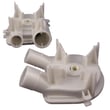
| Won’t drain | Clogged pump, jammed impeller, restricted drain hose | Washer drain pump WP3363394 |
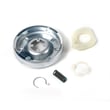
| Won’t spin or spins weakly | Lid not closed, drive coupling worn, clutch worn | Coupling 285753A, clutch 285785 |
| Won’t agitate | Worn agitator dogs, stripped agitator components | Agitator dog 80040 |
| Loud noise or burning smell | Slipping clutch, failing drive components | Clutch 285785, coupling 285753A |
Drain and spin problems can leave clothes soaking wet and can also strain the drive system over time. Catching a simple hose restriction or a worn coupling early often prevents bigger repairs like gearcase or basket-drive damage.
If the quick checks are good and the symptom repeats across multiple loads, these are common next steps:
- No drain: inspect the pump area and hoses; replace the pump if it is seized or leaking.
- Motor runs but no spin/agitate: the direct-drive coupling is a frequent wear item.
- Agitator moves poorly: worn agitator dogs are a common, low-cost fix.
Last updated: February 2026
How do I reset the lid lock on my Whirlpool washer?
On the Whirlpool LSR7233DQ0, there is no electronic lid lock to reset. This is a mechanical, lid-switch style top-load washer; if the washer will not run or spin, the fix is usually confirming the lid is fully closed, then doing a simple stop and restart using the Cycle Control Knob as shown in the LSR7233DQ0 owner's manual.
- Push in the Cycle Control Knob to stop the washer.
- Wait until all basket motion stops.
- Close the lid firmly.
- Pull out the Cycle Control Knob to restart.
- If the washer still will not start, unplug the power cord for 5 minutes, then plug it back in and try again.
Because LSR7233DQ0 uses a lid switch (not a lock), symptoms that look like a “lid lock problem” are usually one of these:
- Lid not fully closed or lid strike not lining up with the switch
- Cycle Control Knob not set and pulled out
- Power issue (tripped breaker, blown fuse, loose cord)
- Drain problem preventing spin (water not pumping out)
- Drive system issue that stops agitation or spin
If the motor runs but the washer will not agitate or spin, these are common wear items for this direct-drive style design:
| Symptom | Common cause | Example part on this model page |
|---|---|---|
| Won’t agitate, may still drain/spin | Worn agitator dogs | Agitator dog 80040 |
| Won’t spin or agitate, motor runs | Broken motor coupling | Coupling 285753A |
| Spins weakly or slips under load | Worn clutch | Clutch 285785 |
| Won’t drain, won’t spin with water in tub | Failed drain pump | Washer drain pump WP3363394 |
The lid switch is a safety feature; the washer is designed not to run with the lid open. Using the correct stop and restart method also prevents reaching into a moving basket and helps avoid damage to the drive system.
Last updated: February 2026
How to calibrate Whirlpool washer suspension rods?
The Whirlpool LSR7233DQ0 is a direct-drive top-load washer and it does not use “suspension rods” that require calibration. If the washer is shaking, banging, or walking, the fix is leveling the cabinet and correcting worn suspension components, not running a calibration cycle (see the LSR7233DQ0 owner's manual).
- Confirm the washer sits solidly on the floor; adjust the front leveling legs until it does not rock.
- Make sure the load is balanced; wash bulky items with a few towels to stabilize the spin.
- Avoid overloading; heavy, dense loads can force the basket to slam the cabinet.
- Check for a worn drive system that can cause rough spin engagement (clutch or motor coupling).
- Inspect the suspension support under the tub; worn pads or springs can increase vibration.
If leveling and load balance are good, these model-matched parts are common next checks:
| Symptom | Common cause | Example part for LSR7233DQ0 |
|---|---|---|
| Banging during spin, tub feels loose | Worn suspension support | Suspension pad 285744 |
| Washer “walks”, harsh spin start | Worn clutch | Clutch 285785 |
| Agitation/spin feels jerky or intermittent | Worn motor coupling | Coupling 285753A |
- Empty-spin test: Run a spin with an empty basket. If it still bangs, it is usually not a loading issue.
- Push test: With the lid open, press down on the basket rim and release. It should rebound smoothly, not clunk.
- Under-washer inspection: Look for worn, missing, or slick suspension pads and signs the base has been shifting.
Excessive vibration can damage the drive block, basket, tub gasket, and even the outer tub over time. Fixing leveling and suspension issues early helps the washer spin smoothly and protects major components.
Last updated: February 2026
What does F33 mean on a washer?
On a Whirlpool washer, an F33 code points to a drain problem: the washer is not pumping water out as expected (commonly from a blocked drain path or a failing drain pump). For model LSR7233DQ0, use the troubleshooting and safety guidance in the LSR7233DQ0 owner's manual.
- Unplug the washer for 1 minute, then retry a Drain/Spin cycle.
- Confirm the drain hose is not kinked, crushed, or frozen.
- Make sure the drain hose is not shoved too far down the standpipe (helps prevent siphoning and slow drain).
- Check the standpipe or laundry tub for a clog where the washer drains.
- Listen during drain: a loud hum or grinding with little water flow points to a pump blockage or failure.
- Clogged pump inlet or drain hose: clear debris (coins, lint, small socks).
- Failing drain pump: replace the washer drain pump WP3363394 if it leaks, binds, or will not move water.
- House drain restriction: clear the standpipe or trap so water can flow freely.
| What you notice | Most likely cause | What to do |
|---|---|---|
| Pump hums but little or no water drains | Pump jam or blocked inlet | Clear blockage; replace pump if damaged |
| Drains slowly | Partial clog or weak pump | Clear hose/standpipe; replace pump if flow stays weak |
| Water backs up at the standpipe | House drain restriction | Clear the plumbing restriction |
| Drains then refills or seems to drain continuously | Siphoning from drain hose setup | Correct hose height and keep an air gap |
A true drain fault leaves water in the tub, stops the cycle, and can lead to odors and poor spin performance. Restoring proper draining protects the drive system and helps the washer finish cycles normally.
Last updated: February 2026