Installation guide
 Owner’s manual
 Error Codes



Are bottom mount fridges better?
Bottom-mount refrigerators like the Frigidaire FGHB2868TD4 are better for many kitchens because the fresh-food section sits at eye and waist level, so you reach less for everyday items. The tradeoff is that frozen foods are stored lower in pull-out drawers.
- More ergonomic fresh-food access: milk, produce, and leftovers are easier to see and grab.
- Better organization for fresh foods: shelves, deli drawer, and crisper drawers are front-and-center.
- Freezer storage is drawer-based: great for stacking, but you bend down more.
- Door swing and clearance matter: plan space so doors and drawers open fully.
- Leveling is critical: a bottom freezer drawer and French doors work best when the cabinet is properly leveled.
| Feature | Bottom-mount (like FGHB2868TD4) | Top-freezer |
|---|---|---|
| Fresh-food access | Higher, easier reach | Lower, more bending |
| Freezer access | Lower drawer | Upper door |
| Organization style | More drawers and bins | Simpler layout |
| Space planning | Needs good door and drawer clearance | Usually less demanding |
Your experience depends heavily on setup. For this Frigidaire design, we recommend:
- Leave clearance for door opening and full drawer extension.
- Keep the toe grille unblocked for proper airflow.
- Level the refrigerator so it does not rock and doors close correctly.
For the exact clearance and leveling steps, follow the FGHB2868TD4 installation guide.
A refrigerator can be “better” on paper but frustrating if it is tight to a wall, not level, or the freezer drawer cannot open fully. Proper placement and leveling help prevent door closing issues and improve day-to-day usability.
Last updated: January 2026
What is the most common problem with a Frigidaire refrigerator?
Cooling performance problems are the most common issue we see with Frigidaire refrigerators, including the FGHB2868TD4. Typical symptoms are warm fresh food, soft ice, or temperature swings caused by restricted airflow, dirty coils, weak fan airflow, or doors not sealing tightly.
- Confirm the controls are set to 37°F (fresh food) and 0°F (freezer), which are the recommended kitchen settings in the FGHB2868TD4 owner's manual.
- Make sure food is not blocking air ports; keeping items about 1 inch away helps prevent freezing near the vents.
- Listen for the evaporator fan running; poor airflow can cause warm temperatures and uneven cooling.
- Check door closing and alignment; doors that do not close fully can cause constant running and warm temps.
- If ice or water issues are also happening, verify the water line is not kinked and the shutoff valve is fully open.
| Symptom | Most common cause | What to do next |
|---|---|---|
| Fresh food warm, freezer OK | Airflow problem in fresh food section | Clear vents, check fan operation |
| Freezer warm, little or no ice | Cooling system not moving enough cold air | Check fan, frost buildup, condenser cleanliness |
| Frost buildup, weak airflow | Defrost problem | Look for heavy frost on the evaporator cover |
| Doors pop open or do not seal | Leveling or gasket issue | Level cabinet, inspect gasket contact |
If troubleshooting points to a failed component, these are common cooling-related parts for this model:
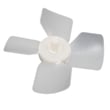
- Frigidaire refrigerator evaporator fan motor 809069206 (moves air across the evaporator for consistent cooling)
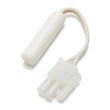
- Refrigerator temperature sensor 5303918775 (helps the control maintain correct temperatures)
- Frigidaire refrigerator freezer door gasket (gray) 5304537408 (prevents warm air leaks into the freezer)
A small airflow restriction or a door seal leak can quickly turn into bigger issues: longer run times, higher energy use, thawing in the freezer, and ice maker complaints. Getting temperatures and airflow right first prevents unnecessary part replacement.
Last updated: January 2026
How to fix a Frigidaire bottom ice maker?
For a Frigidaire FGHB2868TD4 bottom-mount refrigerator, most bottom ice maker issues come from water supply problems, a clogged water filter, stuck ice in the bin, or the ice maker being turned off. We fix it fastest by confirming freezer temperature, water flow, and a clean, dry ice bin.
- Confirm the ice maker is turned ON.
- Set the freezer to 0°F (-18°C) for proper ice production.
- Dump the ice bin, then dry it completely before reinstalling.
- If cubes are clumped after a power outage, remove the bin and shake loose or wash it.
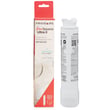
- Replace the water filter if it is overdue, then purge air from the system.
A weak or blocked water supply stops ice production even when the ice maker motor runs.
- Flush the household water line into a bucket until water runs clear before reconnecting.
- Use copper or stainless steel braided flexible tubing (¼ inch); avoid plastic tubing.
- Make sure the shutoff valve is fully open and the line is not kinked.
- If you have a water softener, keep it maintained; softener chemicals can damage the ice maker.
- Replace the filter using the steps in the FGHB2868TD4 owner’s manual.
If the unit has good water pressure and correct temperature but still will not cycle, replacing the ice maker assembly is a common next step: refrigerator ice maker 243297613.
| What you notice | Usually means | What we do next |
|---|---|---|
| Water valve clicks, ice drops | Normal operation | Monitor production for 24 hours |
| No valve sound, no fill | No water to ice maker or valve issue | Check supply, filter, then valve |
| Ice clumps in bin | Melt/refreeze or moisture | Clean and fully dry bin |
An ice maker depends on steady water flow and a cold freezer. Fixing the supply line, filter, and bin issues first prevents repeat clogs, leaks, and poor ice quality.
Last updated: January 2026