Installation guide
 Owner’s manual
 Error Codes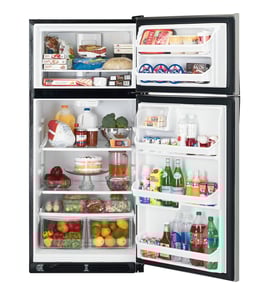


What is the upper part of a fridge called?
On the Frigidaire FRT17B3AWA top-mount refrigerator, the upper section is the freezer compartment. It’s the coldest area of the appliance, designed to keep foods frozen and to support features like ice storage on models equipped with an automatic ice maker (see the FRT17B3AWA owner’s manual).
What you’ll typically find in the upper (freezer) compartment
In a top-mount refrigerator like the FRT17B3AWA, the freezer area commonly includes:
- Freezer shelves or a wire rack for frozen foods
- Freezer door bins for smaller items (these run warmer than the interior)
- An ice bin or ice tray area (some models)
- Cold air circulation paths that help freeze food evenly
- A freezer light (some models)
Freezer vs. fresh food section: quick comparison
| Section | Common name | Main purpose | Temperature behavior |
|---|---|---|---|
| Upper section | Freezer compartment | Long-term frozen storage | Coldest, most stable inside the compartment |
| Lower section | Fresh food (refrigerator) compartment | Short-term chilled storage | Warmer than freezer; controlled for produce, dairy, leftovers |
Why it matters
Knowing the correct name helps when you’re troubleshooting cooling problems, organizing food for best temperature stability, or ordering parts. For example, airflow issues in the freezer can affect refrigerator temperatures, since cold air is routed down into the fresh food section.
Helpful tips for better freezer performance
We recommend these basics for most top-mount freezers:
- Leave space between packages so cold air can circulate
- Avoid overloading with warm food all at once (it slows freezing)
- Store temperature-sensitive items (like ice cream) toward the interior, not the door
- Keep the doors level so they close tightly (good sealing improves efficiency)
- Follow the temperature control guidance in the FRT17B3AWA owner’s manual
Last updated: January 2026
How to fix a Frigidaire refrigerator door alignment?
On the Frigidaire FRT17B3AWA, door alignment is corrected by leveling the cabinet and, if needed, adjusting the hinges so the door sits square on the hinge pins and closes evenly. The manual procedure focuses on loosening hinge screws, repositioning the hinge, and tightening while the door is closed for proper alignment.
Quick checks before you adjust hinges
- Confirm the refrigerator is level front-to-back and side-to-side; a tilted cabinet makes doors look “crooked.”
- Make sure the door is not overloaded with heavy items that pull it down.
- Check that the toe grille is seated correctly and not interfering.
- Inspect hinge areas for missing plastic washers or loose screws.
Hinge alignment steps (manual-based)
Use the hinge and door-handling steps in the FRT17B3AWA owner’s manual. In general, we align the door like this:
- Unplug the refrigerator for safety.
- Remove the toe grille and access the hinge area.
- With the door supported, loosen the appropriate hinge screws just enough to let the hinge shift.
- Close the refrigerator door to “square” it to the cabinet, then tighten the hinge screws while the door is held in the correct position.
- If the door was removed for service or reversal, ensure the plastic washer stays on the hinge pin during reassembly.
What you should see when it’s aligned
| Check | Correct result | What it prevents |
|---|---|---|
| Door gaps | Even gap along the side and top | Warm air leaks, frosting |
| Door swing | Door closes smoothly without rubbing | Liner damage, noise |
| Seal contact | Gasket touches cabinet all the way around | Moisture, poor cooling |
If the door still won’t seal after alignment
A worn or warped gasket can mimic an alignment problem. If you see gaps, tears, or hardened sections, replacing the gasket is the next step; use the correct door gasket for your model, such as the refrigerator gasket 241872504 (fresh food door) when applicable.
Why it matters
Proper door alignment protects temperature stability, reduces frost buildup, and helps the compressor run less often. Even a small gap at the gasket can cause moisture, odors, and inconsistent cooling.
Last updated: January 2026
Why is my Frigidaire top mount freezer not freezing?
If your Frigidaire FRT17B3AWA top-mount freezer is not freezing, the most common causes are incorrect control settings, blocked airflow, dirty condenser coils, or a failed evaporator fan. Set the freezer for 0°F or lower, then give temperatures time to stabilize after small adjustments (see the FRT17B3AWA owner’s manual).
Quick checks we recommend first
- Confirm the freezer control is turned slightly toward Colder if the freezer is too warm.
- Avoid blocking cold air vents with food; airflow is required to maintain temperature.
- Do not overload the freezer with warm food; it slows freezing and raises temperatures.
- Keep the freezer at least 2/3 full for best efficiency (use water bottles if needed).
- Clean condenser coils; heavy dust reduces cooling performance.
What the symptoms usually point to
| What you notice | Most likely issue | What to do next |
|---|---|---|
| Freezer warm and fridge also warm | Poor heat removal or sealed-system issue | Clean coils; verify condenser fan (if equipped); check for steady compressor run |
| Freezer warm but fridge cool | Airflow/defrost problem | Check evaporator fan operation; look for frost buildup on rear freezer panel |
| Frost wall in freezer, weak airflow | Defrost system problem | Inspect defrost timer and defrost components |
Parts that commonly fix “not freezing” on this model
If airflow is weak or you do not hear the fan running in the freezer, the evaporator fan system is a top suspect.
- Refrigerator evaporator motor 5303918549: drives the evaporator fan to circulate cold air
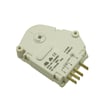
- Refrigerator defrost timer 215846602: controls defrost cycles; a failure can lead to heavy frost and poor cooling
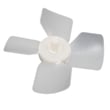
- Refrigerator evaporator fan blade 5308000010: a damaged blade can reduce airflow and cooling
Why it matters
A freezer that runs warm can cause food spoilage and can also force the compressor to run longer than normal. Fixing airflow and temperature control issues early helps restore proper 0°F performance and reduces strain on the cooling system.
Last updated: January 2026
What is the most common problem with a Frigidaire refrigerator?
The most common Frigidaire refrigerator problem is a cooling complaint: the fresh food section gets warm, the freezer ices up, or temperatures swing. On the Frigidaire FRT17B3AWA, we see this most often tied to airflow restrictions (frost buildup, blocked vents), fan issues, or a door that is not sealing tightly.
Quick checks we recommend first
- Confirm the temperature control is not set to “0” (off).
- Allow 24 hours after any setting change for temperatures to stabilize.
- Reduce door openings and avoid overcrowding shelves (air must circulate).
- Listen for the evaporator fan moving air; a failed fan can cause warm fridge temps.
- Check for heavy frost on the freezer back panel (a defrost system issue).
- Make sure the unit is plugged in firmly and the breaker or fuse is OK.
Common causes and what they look like
| Symptom | Most likely area | What you can do now |
|---|---|---|
| Fridge warm, freezer OK | Airflow from freezer to fridge | Clear blocked vents; check damper operation |
| Freezer packed with frost | Defrost system | Inspect for frost pattern; test defrost components |
| Clicking or “clock-like” sounds | Defrost timer cycling | Normal cycling; investigate only if temps are off |
| Fan noise missing, temps rise | Evaporator fan | Check fan blade for damage or ice obstruction |
Parts that commonly relate to cooling problems
If troubleshooting points to a failed component, these model-matched parts are commonly involved:
- Refrigerator evaporator motor 5303918549 (moves cold air through the compartments)
- Refrigerator defrost timer 215846602 (controls defrost cycling on timer-based systems)
- Refrigerator air damper 241542001 (helps regulate cold air into the fresh food section)
Why it matters
Cooling problems are usually fixable when caught early. Running warm can spoil food, and heavy frost can block airflow so the refrigerator section warms even if the freezer still seems cold.
For model-specific operating guidance and the built-in troubleshooting list, use the FRT17B3AWA owner’s manual.
Last updated: January 2026