Owner’s manual
 Error Codes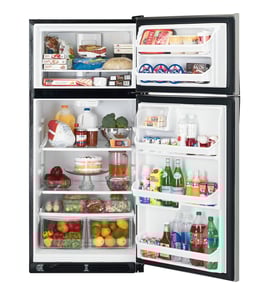




What are the common problems with Kenmore Elite refrigerators?
Common problems on the Kenmore Elite 10674902401 top-mount refrigerator include weak or no cooling, frost or ice buildup, doors that do not seal or close well, interior moisture, and unusual fan or compressor noises. Many issues trace back to airflow, door gaskets, or the defrost system.
Most common symptoms and what they usually mean
- Not cooling or warm temperatures: blocked air vents, controls not set correctly, or a failed evaporator fan motor
- Frost or ice buildup: defrost system trouble (defrost thermostat, heater, or airflow restriction)
- Interior moisture buildup: doors opened often, humidity, or blocked vents
- Doors will not close completely: food packages blocking the door, unit not level, or sticky/dirty gaskets
- Noises (buzzing, clicking, rattling): fan blade hitting ice, failing fan motor, or sealed-system/compressor related issues
Quick checks we recommend first
- Confirm nothing is blocking interior air vents and that food is not packed against vent openings.
- Verify temperature controls are set appropriately for the room conditions.
- If your model has digital controls, power-cycle the refrigerator (turn it off, then back on) to reset.
- Clean and dry the door gaskets and the surfaces they touch; if gaskets stick, apply a thin coat of paraffin wax after cleaning.
- Level the refrigerator if it wobbles or the doors swing open or won’t stay shut.
Parts that commonly fix these problems
| Symptom | Common part involved | Example part for this model |
|---|---|---|
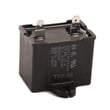
| Warm fridge/freezer, weak airflow | Evaporator fan motor | Evaporator motor WP2315539 |
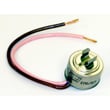
| Frost buildup, defrost failures | Defrost thermostat (bi-metal) | Defrost bi-metal WP4387503 |
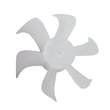
| Rattling or fan noise | Fan blade | Fan blade WP2163777 |
Why it matters
Cooling and frost issues usually get worse quickly because restricted airflow and poor door sealing force longer run times, raise temperatures, and can lead to heavy ice buildup that blocks circulation.
Where to find model-specific troubleshooting steps
For control settings, airflow guidance, door adjustment tips, and the built-in troubleshooting chart, use the 10674902401 owner's manual.
Last updated: January 2026
What is a top mount refrigerator?
A top-mount refrigerator is a classic fridge layout where the freezer compartment is on top and the fresh-food (refrigerator) compartment is below. Your Kenmore Elite 10674902401 uses this design to move cold air between sections through built-in vents for even cooling.
How the top-mount design cools both sections
In a top-mount refrigerator, the freezer is the primary cold source. Cold air circulates from the freezer into the refrigerator section through vents, then returns to keep temperatures stable.
Key airflow points to know:
- Cool air enters the freezer section and moves upward.
- Air recirculates under the freezer floor and through freezer vents.
- Some air enters the refrigerator section through the top vent.
- Air then flows down the back wall and out through multiple vents.
- Blocking vents with food can cause warm spots, frost, or moisture issues.
What you get with a top-mount refrigerator (pros and tradeoffs)
Top-mount models are popular because they are simple, efficient, and easy to service.
| Feature | Top-mount refrigerator | What it means for you |
|---|---|---|
| Freezer location | Top | Frozen foods are at eye level |
| Fresh-food location | Bottom | You bend more for everyday items |
| Airflow style | Freezer-to-fridge venting | Vent blockage affects both sections |
| Typical maintenance | Straightforward | Common parts are accessible |
Setup tips that matter for performance
Proper placement helps the refrigerator cool correctly and prevents door and airflow problems.
We recommend:
- Leave about 1/2 inch of space on each side and at the top for ventilation.
- Leave at least 2 inches of clearance next to a fixed wall so doors can swing open.
- Keep the refrigerator away from heat sources (oven, radiator).
- Avoid installing where temperatures drop below 55°F.
For model-specific installation and airflow diagrams, use the 10674902401 owner's manual.
Why it matters
Because a top-mount refrigerator circulates air between the freezer and refrigerator sections, airflow and venting directly affect temperature, humidity, and odor transfer. Keeping vents clear and doors sealing well helps food stay fresh and prevents frost buildup.
Last updated: January 2026
What is the average lifespan of a Kenmore Elite refrigerator?
Most Kenmore Elite refrigerators, including model 10674902401, typically last 10 to 15 years. With good care (cleaning, proper airflow, and good door sealing), it’s common to reach the upper end of that range before major sealed-system or cooling-component repairs become more likely.
Typical lifespan and what usually ends it
In our experience with top-mount refrigerators, the most common “end-of-life” issues are cooling-system wear and airflow failures.
- 10 to 15 years is the normal service-life range for a full-size refrigerator
- Sealed refrigeration system problems (compressor or refrigerant tubing) are often the most expensive repairs
- Airflow components (evaporator fan motor, air baffle) can fail earlier but are usually repairable
- Door gasket sealing issues can shorten lifespan by forcing longer run times
- Dirty condenser coils can raise temperatures and stress the compressor
Maintenance that helps you get the full lifespan
Use these habits to reduce compressor run time and prevent temperature swings.
- Keep vents clear for proper air circulation (don’t block return vents with food)
- Clean condenser coils regularly (more often with pets)
- Keep door gaskets clean; if they stick, clean and apply a thin coat of paraffin wax as described in the 10674902401 owner's manual
- Confirm the refrigerator is level so doors close fully
- Replace failed airflow parts promptly if you notice warm temps or weak airflow
Common repair parts that affect longevity (examples)
These are model-matched examples that often relate to cooling performance.
| Symptom | Likely system | Example model-matched part |
|---|---|---|
| Freezer cold, fridge warm | Airflow from freezer | Evaporator motor WP2315539 |
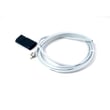
| Temps fluctuate | Temperature sensing/control | Refrigerator temperature sensor (model-matched options vary) |
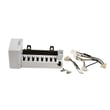
| Ice production stops | Ice maker system | Ice maker assembly 4317943 |
Why it matters
A refrigerator that runs longer to maintain temperature (from poor airflow, dirty coils, or leaky door seals) puts extra load on the compressor and sealed system. That added stress is one of the biggest reasons a unit fails closer to 10 years instead of 15.
Last updated: January 2026