Error Codes




Is Magic Chef a good washer brand?
Magic Chef washers, including model CAV2000AWW, are a solid value brand for basic washing needs, especially when you want simple controls and affordable repairs. For long-term satisfaction, reliability depends most on correct installation, load size, and keeping common wear parts in good shape.
When customers ask if a washer brand is “good,” we look at a few practical factors:
- Parts availability: Can you still get key replacement parts like a water valve or drain hose?
- Repairability: Are common failures straightforward to diagnose and fix?
- Cost to own: Reasonable part prices and fewer major repairs over time.
- Fit for your household: Capacity and cycle options that match how you do laundry.
- Noise and vibration control: Often tied to leveling and suspension condition.
For CAV2000AWW, we stock several core washer parts that typically drive real-world reliability. If your washer fills slowly, overfills, leaks, or will not fill at all, the inlet system is a common place to start, including the water valve WP21001932.
| Symptom | Common area to check | Example part on this model |
|---|---|---|
| Will not fill or fills slowly | Inlet valve, inlet hoses, screens | Water valve, inlet hose |
| Will not drain | Drain hose, pump, clogs | Drain hose |
| Loud during spin or shakes | Suspension, leveling, load balance | Suspension kit |
| Stops when lid opens or will not start | Lid switch/actuator area | Lid switch actuator |
A “good” washer brand is the one you can keep running without major surprises. With routine care (proper loading, leveling, and quick attention to leaks), value brands like Magic Chef can deliver dependable performance, and having access to key replacement parts helps extend the washer’s lifespan.
Last updated: February 2026
Why is my Magic Chef washer leaking from the bottom?
A bottom leak on your Magic Chef CAV2000AWW washer is usually caused by a failing tub seal, a loose or cracked drain hose, or a leaking pump. Fixing it starts with pinpointing whether the water appears during fill, wash/agitate, or drain/spin, then replacing the leaking part.
Unplug the washer, then run a short cycle while watching for the first sign of water (use a flashlight and look from the front and sides).
- Leaks during fill: check inlet hoses and the water inlet valve area
- Leaks during wash/agitate: check tub-to-pump hoses, clamps, and the tub seal area
- Leaks during drain/spin: check the drain hose and pump for drips or spray
- Only a small puddle: check for a loose clamp or a pinhole hose crack
- Oily residue with water: often points to a tub seal leak that can also affect bearings
A loose clamp or split hose can drip steadily and collect under the cabinet.
- Inspect the full length of the hose for rub-through or cracks
- Confirm the hose is fully seated on its ports
- Tighten or replace clamps as needed
Helpful parts for hose-related leaks:
If you see water dripping directly from the pump body or shaft area, the pump typically needs replacement.
If water appears near the center bottom of the tub, a worn tub seal can let water reach the bearings. Replacing the seal promptly helps prevent louder spin noise and bearing damage.
| When you see water | Most likely area | What to inspect first |
|---|---|---|
| During fill | Inlet hoses, valve | Hose connections, valve body |
| During agitation | Tub seal, internal hoses | Center bottom, hose joints |
| During drain/spin | Pump, drain hose | Pump housing, drain hose outlet |
Even a slow leak can damage the motor area, wiring, and floor. Catching a worn hose, clamp, or pump early is usually a simpler repair than waiting until secondary damage occurs.
Last updated: February 2026
What is the most expensive part to replace on a washing machine?
On most washers (including the Magic Chef CAV2000AWW), the most expensive repairs usually involve the drive system or major assemblies: the drive motor, the main control, or the tub and bearing assembly. These jobs cost the most because parts are pricey and labor is high.
- Drive motor replacement: common high-dollar part plus installation time (your model has a listed washer drive motor WP21001950).
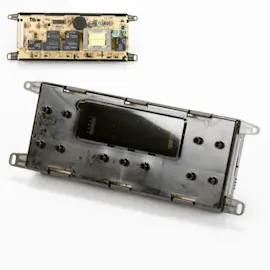
- Main control or control panel issues: parts can be expensive and diagnosis matters (your model has a listed control panel 21001549).
- Tub, spin basket, and bearing-related repairs: often the highest labor because the washer must be heavily disassembled.
- Water inlet valve replacement: usually mid-range, but can add up if troubleshooting is involved (your model has a listed water valve WP21001932).
- Drain system repairs: typically less than motor/control, but still meaningful if multiple parts are involved (your model has a listed drain hose WP21001872).
Actual totals vary by region and service rates, but this is the usual pattern for top-load washers.
| Repair area | Why it gets expensive | Typical “pain point” |
|---|---|---|
| Motor/drive system | Higher part cost; alignment and testing | Parts cost plus labor time |
| Control/electronics | Expensive assemblies; diagnosis time | Paying for the wrong part if misdiagnosed |
| Tub/bearings | Major teardown | Labor can exceed the part cost |
| Valves/hoses | Moderate parts; straightforward access | Multiple leaks or restricted screens |
- If the washer is otherwise in good shape, motor or valve repairs are often reasonable.
- If you suspect tub/bearing damage (loud roaring in spin, heavy vibration, water at the center seal), the repair commonly approaches the value of an older washer.
- If you have intermittent symptoms, confirm basics first: power supply, lid switch function, and wiring connections.
The “most expensive part” is not always the priciest item on the parts list; it is the part plus the labor and diagnostic time. On the CAV2000AWW, the drive motor and control panel are two of the most cost-significant listed components.
Last updated: February 2026
What usually breaks on a washing machine?
On the Magic Chef CAV2000AWW washer, the parts that most often fail are the ones that move water, sense water level, or control safety and spinning. The most common symptoms are leaking, not filling, not draining, not spinning, or loud vibration, and they usually trace back to hoses, clamps, the water inlet valve, the drain system, or the drive system.
- Won’t fill or fills slowly: clogged inlet screens, kinked fill hose, or a failing water valve WP21001932
- Leaks: loose or worn hose connections, damaged drain hose, or a failing seal such as washer lower lip seal 207843
- Won’t drain: drain hose restriction, pump issue, or a blockage in the tub-to-pump path (often shows up as standing water)
- Won’t spin or stops mid-cycle: lid switch/actuator problems, drive motor issues, or out-of-balance conditions
- Loud banging or walking: unlevel washer, overloaded tub, or worn suspension components
- Unplug the washer and turn off both water supply valves.
- Confirm the washer is level and the load is balanced.
- Inspect fill and drain hoses for kinks, cracks, or rubbing.
- Check hose connections for seepage; tighten clamps or replace a worn clamp such as hose clamp WP285655.
- If you suspect an electrical issue, use safe testing practices and follow a basic meter procedure like how to use a multimeter to test electrical parts video.
| Symptom | Most likely area | Parts to check first (examples) |
|---|---|---|
| No fill / slow fill | Water inlet | Water valve WP21001932, inlet hose WP89503 |
| Won’t drain | Drain path | Drain hose WP21001872 (also check for clogs) |
| Leaks at hose joints | Hose connections | Clamp, pressure switch hose WP596669, hose clamp WP285655 |
| No agitation / weak spin | Drive system | Washer drive motor WP21001950, spring motor WP22004376 |
Catching a failing hose, clamp, or valve early prevents water damage and reduces strain on the pump and drive motor. Many “major” washer problems start as a simple restriction, loose connection, or worn seal.
Last updated: February 2026