Owner’s manual
 Error Codes


How to identify a Kenmore washer model?
Your Kenmore washer model number is printed on the model and serial number plate; on model 11026901691, use that exact number when ordering parts or looking up troubleshooting steps. On most Kenmore top-load washers, the plate is typically under the lid or on the cabinet rim near the opening.
Where to look on Kenmore washers
Check these common locations first:
- Under the lid, along the top rim of the washer opening
- On the back panel near the power cord entry
- Behind the control panel area (varies by design)
- Inside the cabinet on a metal plate (visible when the lid is open)
For the official reference and how the plate is described, use the 11026901691 owner's manual.
What the model number looks like (and why it matters)
Kenmore washer model numbers are often 11 characters or more and may start with 110 (common on many Kenmore-built-by-Whirlpool designs). Using the full model number helps us match the correct diagrams and parts like a lid switch, drain pump, or motor coupling.
Quick examples
| What you see | What it means | What to do |
|---|---|---|
| 11026901691 | Full model number | Use it to match parts and manuals |
| 110.26901691 (with a dot) | Same model, formatted differently | Ignore punctuation; use the digits |
| Serial number only | Production identifier | Keep it for service records, but use the model for parts |
Tips to avoid ordering the wrong part
- Write down the model number exactly as shown on the plate
- Take a clear photo of the plate before you start shopping
- Match the model first, then confirm the part by name and symptom
- If the washer will not spin or drain, a common check is the washer lid switch WP3949238
Why it matters
Kenmore washers share many similar-looking parts across model families; the model number is what ensures the right fit, correct wiring style, and proper mounting for components like the timer, inlet valve, and drive system.
Last updated: February 2026
Is it worth repairing a Kenmore washing machine?
Yes, repairing a Kenmore washer is worth it when the fix restores reliable washing and spinning for far less than replacing the machine. For Kenmore model 11026901691, common wear items (like the lid switch, drain pump, or motor coupling) are often straightforward repairs that extend service life.
How we decide if repair makes sense
Use these practical checkpoints before spending money on parts or labor:
- Symptom severity: no spin, no drain, or won’t start usually points to a specific part.
- Cost vs. replacement: if the repair is a fraction of a comparable new washer, repair wins.
- Part availability: if key parts are in stock, downtime stays low.
- Condition of tub and cabinet: heavy rust, chronic leaks, or severe vibration can shift the decision.
- Confidence in diagnosis: a clear diagnosis prevents repeat repairs.
High-value repairs for this model (common culprits)
These parts commonly solve “dead,” “won’t spin,” or “won’t drain” complaints on direct-drive Kenmore top-load designs:
| Problem you see | Often-related part | What it affects |
|---|---|---|
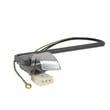
| Won’t start or won’t spin with lid closed | Washer lid switch WP3949238 | Safety interlock for motor/spin |
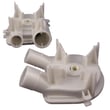
| Won’t drain or leaves water in tub | Washer drain pump WP3363394 | Pumps water out during drain |
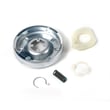
| Agitates but won’t spin (or vice versa), loud grinding | Coupling 285753A | Connects motor to transmission |
| Weak agitation (clothes not moving well) | Agitator dog 80040 | Helps the agitator “grab” and move |
Why it matters
A targeted repair keeps a proven Kenmore washer running, avoids the learning curve of a new machine, and often fixes the exact failure point instead of replacing the whole appliance.
What to check first (quick, no-tools steps)
- Confirm the washer is level and the front leg nuts are tight (reduces vibration).
- Verify water faucets are fully on.
- If it will not spin, test by closing the lid firmly and listening for a click at the lid switch area.
- If it will not drain, listen for pump noise during drain.
- Review operating and troubleshooting guidance in the 11026901691 owner's manual.
Last updated: February 2026
What is the average lifespan of a Kenmore washer?
A Kenmore washer typically lasts 10 to 15 years. For Kenmore model 11026901691, staying within the rated load size, using the right water level, and following the care steps in the 11026901691 owner's manual helps you reach the upper end of that range.
What affects washer lifespan most
- Overloading (stresses the drive system, clutch, and gearcase)
- Out-of-balance loads (increases vibration and tub wear)
- Water quality (sediment can shorten inlet valve life)
- Drain restrictions (overworks the drain pump)
- Lid switch wear (can stop spin and cause repeated restarts)
Common wear items we see on this style of Kenmore top-load washer
If performance changes over time, these parts are frequent culprits on direct-drive Kenmore washers like 11026901691:
| Symptom | Often related part | What you notice |
|---|---|---|
| Won’t spin or stops mid-cycle | Lid switch | Lid must be closed to spin; cycle may stall |
| Won’t drain or drains slowly | Drain pump | Water left in tub, humming, slow emptying |
| Agitates poorly | Agitator dog | Agitator “slips” or only moves one direction |
| No agitation/spin but motor runs | Coupling | Burning rubber smell, intermittent drive |
Helpful model-matched parts:
Maintenance steps that extend life
- Level the washer and keep all feet firmly on the floor.
- Use HE detergent only if your detergent label calls for it; avoid oversudsing.
- Don’t pack the basket tight; allow clothes to move freely.
- Periodically check fill hoses for bulges or leaks and replace as needed.
- Keep the lid area and top of the tub clean to reduce residue and odors.
Why it matters
A washer that is overloaded or forced to run with draining or balance problems wears out the drive components faster. Catching early symptoms helps prevent secondary damage to higher-cost parts like the gearcase.
Last updated: February 2026