 Owner’s manual


How do I tell what model my GE washer is?
For your GE washer, the model number is printed on the appliance ID label; on model GTW680BSJ4WS, you can find the model and serial numbers under the lid. Write the full model number exactly as shown so you can match the correct parts, manual, and troubleshooting steps.
Where to look on GE washers
For GTW680BSJ4WS, check these common label locations:
- Under the lid (primary location for this model)
- Along the top rim of the cabinet opening
- On the back of the control panel area
- On the side of the main cabinet near the bottom
If you have a GE front-load washer (different style), the label is often:
- Behind the door
- In the door jamb
What to copy from the label
Use the label to capture the exact identifiers we use for parts lookup:
- Model number (example format: GTW680BSJ4WS)
- Serial number
- Any revision letters or suffixes shown with the model
- The brand (GE)
Quick check: model number vs. serial number
| Item | What it tells you | Why it matters |
|---|---|---|
| Model number | The exact washer design | Ensures parts fit and diagrams match |
| Serial number | Production info for your unit | Helps confirm version and service details |
Why it matters
GE often uses similar-looking washer designs across multiple model numbers. Using the exact model number helps us point you to the right diagrams, compatible parts, and the correct procedures in the GTW680BSJ4WS owner's manual.
Last updated: February 2026
What is the average lifespan of a GE washing machine?
A GE washing machine typically lasts 10 to 14 years with normal household use. For your GE GTW680BSJ4WS top-load washer, consistent care (correct load size, good leveling, and hose replacement) is what most often determines whether you land closer to 10 years or closer to 14.
What affects washer lifespan the most
- Overloading (extra strain on the drive system and suspension)
- Out-of-balance loads (more vibration and wear)
- Water quality (hard water can increase buildup)
- Hose condition (old hoses can fail; GE recommends replacement every 5 years)
- Leveling and floor stability (reduces cabinet rub, squeaks, and movement)
Maintenance that helps you reach the high end of the range
We recommend following the care and troubleshooting guidance in the GTW680BSJ4WS owner’s manual. Key habits that extend life include:
- Replace water supply hoses every 5 years (GE guidance)
- Keep the washer level by adjusting the leveling legs if it rocks or squeaks
- Use the right detergent amount and run periodic cleaning cycles (helps reduce residue)
- Avoid consistently washing single heavy items (comforters, rugs) without balancing items
- Address drain issues quickly (slow draining can overwork the pump)
Quick reference: what “normal” looks like
| Usage pattern | Typical lifespan expectation | What to watch |
|---|---|---|
| Light (few loads/week) | 12 to 14 years | Hoses, basic cleaning |
| Average (most households) | 10 to 14 years | Leveling, balance, detergent |
| Heavy (daily loads) | 8 to 12 years | Suspension wear, draining, vibration |
Why it matters
Most major washer repairs (drain, spin, vibration) trace back to stress and wear. Simple steps like keeping the unit level and replacing hoses on schedule reduce strain on core components and help prevent disruptive breakdowns.
Last updated: February 2026
What voids a GE washer warranty?
For a GE GTW680BSJ4WS washer, warranty coverage is typically voided (or denied) when a failure is caused by improper installation, delivery, maintenance, misuse, abuse, accidents, or unauthorized alterations rather than a defect in materials or workmanship. For the exact coverage terms and exclusions, use the GTW680BSJ4WS owner’s manual.
Common reasons warranty service gets denied
We see these issues most often when a washer needs repair during the warranty period:
- Improper installation (incorrect hookups, unstable leveling, wrong drain setup)
- Poor maintenance (heavy buildup, blocked drain path, neglected cleaning)
- Misuse or abuse (overloading, repeated unbalanced loads, using non-washer-safe chemicals)
- Damage from accidents or external events (impact damage, water intrusion from outside the washer)
- Unauthorized modifications or non-approved repairs (including damage caused during DIY work)
Quick checklist before you schedule service
These steps help you avoid a “not covered” outcome and speed up diagnosis:
- Keep your proof of purchase available (receipt or order confirmation)
- Confirm the washer is installed correctly and level
- Use the correct detergent type and amount for your cycle and load size
- Check for obvious installation-related issues (kinked hoses, loose connections)
- If the washer is not draining, check the drain path before replacing parts
What’s usually covered vs. not covered
| Situation | Typically covered? | Notes |
|---|---|---|
| Factory defect in a specified part (within the limited warranty period) | Yes | Parts, and often labor during the initial limited warranty period (see manual) |
| Motor failure within the extended motor coverage window | Yes | Labor may be your responsibility during extended coverage |
| Failure caused by improper installation or maintenance | No | Consider correcting setup first |
| Damage caused during a DIY repair attempt | No | Use a qualified service provider when in doubt |
Why it matters
Warranty coverage is designed to address defects in materials or workmanship. When a problem is traced to installation, maintenance, or usage conditions, the repair cost typically becomes out-of-pocket, even if the washer is still within the warranty timeframe.
Last updated: February 2026
What is the most common problem with GE washers?
For the GE GTW680BSJ4WS washer, the most common service issues we see are drain and spin problems (water left in the tub, wet loads, or a cycle that stops), plus lid-related start issues and out-of-balance shaking. These symptoms usually trace back to drainage restrictions, lid lock faults, or suspension wear.
Most common symptoms and what they usually mean
- Won’t drain / water left in tub: clogged drain path, failing drain pump, or a kinked drain hose
- Won’t spin / clothes still wet: lid not locking, load out of balance, shifter or speed-sensing issue
- Stops mid-cycle or won’t restart: control lockout after an error or lid opened during start-up sequence
- Excessive shaking or banging: worn suspension rods, uneven leveling legs, or consistently unbalanced loads
- Poor cleaning or too many suds: too much detergent or non-HE detergent
Quick checks we recommend first (no parts needed)
- Confirm the lid fully closes and the washer recognizes it; the display can show a lid-related message if cycles are started repeatedly without opening the lid.
- Reduce detergent and use HE detergent; excess suds can hurt wash and spin performance.
- Rebalance the load (mix items, avoid washing one heavy item alone).
- Check that the drain hose is not kinked or shoved too far down the standpipe.
- Level the washer; uneven legs can cause rocking, squeaking, and out-of-balance spin.
Common parts involved when the problem is drain or spin
| Symptom | Likely part area | Example part for this model |
|---|---|---|
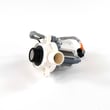
| Won’t drain, humming, slow drain | Drain pump or drain hose | Washer drain pump assembly WH23X28418 |
| Won’t start or won’t spin with lid issue | Lid lock | Washer lid lock WH08X37938 |
| Banging, walking, out-of-balance | Suspension | Washer suspension rod and spring assembly WH16X26911 |
Why it matters
Drain, spin, and balance problems can leave clothes soaked, trigger repeated cycle interruptions, and increase wear on the drive system. Addressing leveling, load size, and drainage early often prevents bigger repairs.
For model-specific operating details (start-up behavior, detergent guidance, and troubleshooting messages), use the GTW680BSJ4WS owner’s manual.
Last updated: February 2026
Why is my GE front load washer leaking from the front?
A front leak is almost always caused by water escaping at the door opening (door boot/gasket area) or by oversudsing and overflow from the dispenser. For your GE GTW680BSJ4WS, start with a quick seal and loading check, then confirm the drain and hose setup in the GTW680BSJ4WS owner's manual.
Quick checks that fix most front leaks
- Wipe the door gasket area and the mating surface on the door; remove coins, hair, and lint.
- Check for a small sock or garment caught at the door opening.
- Reduce detergent amount (especially HE detergent); too much can cause suds to push water out.
- Make sure the washer is level and stable; rocking can let water slosh toward the front.
- Look for drips that start only during drain or spin; that often points to a drain path issue.
Drain and hose setup issues that can mimic a “front leak”
If the drain hose is pushed too far down the standpipe or fits too tightly, the washer can siphon and behave unpredictably. The manual guidance is to keep an air gap and limit how far the hose goes into the drain (commonly no more than about 5 inches). Use the routing and tie-down method shown in the GTW680BSJ4WS owner's manual.
| What you see | Most likely cause | What to do next |
|---|---|---|
| Water at the very front edge early in cycle | Door seal area dirty or not sealing | Clean gasket area; re-close lid/door firmly |
| Suds or foam, then water | Too much detergent or wrong type | Cut dose; use HE detergent only |
| Leak shows up during drain/spin | Drain hose routing, siphoning, or drain component leak | Verify standpipe depth/air gap; inspect drain path |
Parts that commonly relate to leaking symptoms
If you confirm the water is coming from underneath and tracking forward, inspect the drain components for seepage and cracks.
- Washer drain pump assembly WH23X28418 (leaks during drain, water under tub)
- Washer drain hose (splits, loose clamp, or rubbing)
- Water inlet valve area (drips can run down the cabinet and appear “front”)
Why it matters
Even a small front leak can lead to floor damage and can also indicate oversudsing or a drain setup problem that affects wash performance. The manual also recommends replacing fill hoses about every 5 years to reduce hose-failure leaks.
Last updated: February 2026


