 Installation guide
 Owner’s manual


Does my Kenmore 11027062602 washing machine have a filter?
Yes. Your Kenmore Elite washer model 11027062602 uses a drain pump system that can trap debris; many owners treat the pump inlet area and drain path as the washer’s “filter” even when there is not a simple, front-access cleanout. For model-specific care steps, use the 11027062602 owner's manual.
Where the “filter” is on this washer
On this style of Kenmore top-load washer, the most common place lint, coins, and small items collect is in the drain system.
Common debris-collection points include:
- The drain pump inlet and pump housing
- The drain hose and any bends or restrictions
- The tub-to-pump hose (if equipped)
- The standpipe or household drain (outside the washer)
If you suspect a drain restriction, the drain pump is the first component we check.
Signs the drain system needs cleaning
Look for these symptoms:
- Washer will not drain or drains slowly
- Standing water left in the tub at the end of the cycle
- Humming sound during drain with little or no water movement
- Intermittent draining (works sometimes, not others)
- Wet loads because the washer cannot spin out properly
What we recommend (safe, practical steps)
- Unplug the washer.
- Turn off both water faucets.
- If there is water in the tub, plan for spill control (shallow pan and towels).
- Inspect the drain hose for kinks, crushing, or clogs.
- If draining problems continue, inspect the pump area and hoses for debris.
Parts that are commonly involved
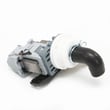
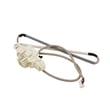
If the pump is jammed, leaking, or electrically failed, replacement is often the fix. For this model, the drain pump is pump-water W10536347.
| Symptom | Most likely area | Typical fix |
|---|---|---|
| Hums but won’t drain | Pump jam or blockage | Clear debris; replace pump if damaged |
| Drains slowly | Hose restriction | Clear/replace hose; correct routing |
| Leaks during drain | Pump or clamp issue | Replace pump; tighten/replace clamp |
Why it matters
A restricted drain path can prevent proper spinning, leave clothes soaking wet, and strain the pump. Keeping the drain path clear helps protect the motor and reduces cycle interruptions.
Last updated: February 2026
Is Kenmore 11027062602 high end?
Yes. Kenmore Elite model 11027062602 is part of the Kenmore Elite line, which is positioned above standard Kenmore washers and typically includes upgraded wash performance, higher-capacity designs, and more cycle and option flexibility. For the exact features and cycle set on your unit, use the owner's manual.
What “high end” means for this Kenmore Elite washer
In practical terms, “high end” usually shows up as better cleaning options, more convenience features, and a more robust drive and suspension design than entry-level models.
Common high-end traits you’ll see on many Kenmore Elite washers include:
- High Efficiency (HE) wash system that uses HE detergent
- More specialized cycles and modifiers for different fabric loads
- Higher spin performance to remove more water before drying
- Added convenience features such as “Add a garment” during certain points in the cycle
- More advanced components (drive, lid lock, suspension) compared with basic models
Quick check: is your washer operating like a “high end” model?
Use this checklist to confirm you are getting the performance this washer is designed for:
- Use only HE detergent and avoid overdosing
- Do not load above the top of the basket
- Select the cycle that matches the load (Normal vs Heavy Duty vs Whites)
- Level the washer and confirm it is stable on the floor
- If the lid will not lock or the cycle will not start, inspect the washer lid lock WPW10619844
Parts that most affect “premium” performance
If performance has dropped (noise, vibration, poor spin, draining issues), these parts are often involved:
| Symptom | Common area to check | Example part on this model page |
|---|---|---|
| Won’t start or lid won’t lock | Lid lock system | Washer lid lock WPW10619844 |
| Not draining or slow drain | Drain pump and hoses | Pump-water W10536347 |
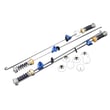
| Excess vibration or banging | Suspension support | Suspension W10820048 |
Why it matters
A high-end washer like the Kenmore Elite 11027062602 delivers its best cleaning and spin results when it is loaded correctly, uses HE detergent, and has a stable suspension and reliable lid lock. Small setup or part issues can make it feel “low end” fast.
Last updated: February 2026
Is it worth repairing a Kenmore washing machine?
Yes, repairing a Kenmore Elite washer like model 11027062602 is worth it when the fix restores safe, reliable operation for less than the cost of replacing the washer. Most repairs are especially worthwhile when the problem is isolated to a common wear part (drain pump, lid lock, suspension) rather than major tub or drive damage.
How we decide if repair makes sense
Use these practical checkpoints before you spend money on parts or labor:
- Age vs. condition: If the cabinet and tub are solid (no heavy rust, no chronic leaks), repair is usually the better value.
- Symptom type: No-drain, no-start, or out-of-balance issues are often straightforward.
- Part cost vs. replacement cost: If parts and labor stay well below a comparable new washer, repair wins.
- Safety and usability: The washer must start only with the lid closed and lock correctly during operation.
- Repeat failures: Frequent repeat breakdowns point to a bigger underlying issue.
Common repairs that are usually “worth it” on this model
These are frequent failure points on Kenmore top-load platforms and are typically cost-effective to address:
| Symptom | Likely area | Example part on this model page |
|---|---|---|
| Won’t drain or leaves water in tub | Drain pump or drain path restriction | Pump-water W10536347 |
| Lid won’t lock, won’t start, stops mid-cycle | Lid lock system | Washer lid lock WPW10619844 |
| Banging, walking, off-balance spins | Suspension/leveling | Suspension W10820048 |
For operating and cycle details (including lid-lock behavior and how Stop/Start works), follow the owner's manual.
When replacement is the better call
Replacement is typically the better value when you see one or more of these:
- Outer tub or bearing/shaft damage with loud roaring, grinding, or persistent leaks
- Multiple major systems failing at once (drive, tub, controls)
- Severe corrosion or structural damage
- Repair cost approaches replacement cost for a similar-capacity washer
Why it matters
A targeted repair can restore proper draining, lid locking, and balance, which protects clothing, reduces vibration/noise, and helps prevent secondary damage (like motor strain from a no-drain condition).
Last updated: February 2026
How to force a Kenmore 11027062602 washer to drain?
To force your Kenmore Elite washer model 11027062602 to drain, we recommend canceling the cycle and selecting a Drain/Spin (or Spin) option first. If it still will not drain, the most common causes are a clogged drain path or a failed drain pump, and you will need to clear the blockage or replace the pump.
Fast ways to get the water out
- Try a Drain/Spin cycle: Select Drain/Spin (or Spin) and start the washer.
- Reset power: Unplug the washer for 1 minute, plug it back in, then try Drain/Spin again.
- Check the drain hose routing: Make sure the hose is not kinked, crushed, or pushed too far down the standpipe.
- Verify the standpipe height: The installation instructions call for a standpipe at least 39 in. (99 cm) high.
- If the tub is full: Bail out water into a bucket first so you can safely access the drain hose and pump area.
What to check if it still will not drain
A drain problem is usually one of these issues:
| What you notice | Most likely cause | What to do next |
|---|---|---|
| Hums but no draining | Pump jam or blockage | Check for sock/coin debris in the drain path; replace pump if damaged |
| Drains slowly | Partial clog or restricted hose | Straighten hose, clear standpipe, inspect hose for internal blockage |
| Stops and will not spin | Lid lock not engaging | Check lid lock operation and wiring |
If you suspect the pump is not moving water, the correct replacement for this model is the pump-water W10536347.
Why it matters
Running a washer that cannot drain can leave clothes soaking wet, trigger out-of-balance spinning, and strain the drain pump and motor system. Correct drain hose setup and a clear drain path prevent repeat clogs.
Helpful reference
For drain hose setup details (including standpipe height and securing the hose), follow the installation guide.
Last updated: February 2026
How many cubic feet is my Kenmore 11027062602 washer?
The exact cubic foot capacity for your Kenmore Elite washer model 11027062602 is listed in the product specifications for that model. Use the 11027062602 owner's manual to find the published capacity value (often shown as “capacity” or “basket volume”).
Where to find the capacity in the manual
Look in these common sections so you get the official spec for your exact configuration:
- Specifications or Product specifications
- Dimensions and capacity
- Features (sometimes lists basket size)
- Any page that lists multiple models; match 11027062602 exactly
What “cubic feet” means on a washer
Cubic feet is the washer’s basket volume. It helps you judge how much laundry the tub can handle without overloading.
- Larger capacity handles bulkier items (blankets, comforters) more easily
- Proper loading improves wash and rinse performance
- Correct load size reduces out-of-balance spinning and vibration
- Capacity is different from exterior dimensions; two washers can be the same size outside but different inside
Quick load-sizing guide (works for most top-load washers)
Use this as a practical way to load while you confirm the exact cu. ft. spec.
| Load type | How full to load | Result you want |
|---|---|---|
| Everyday mixed load | About 1/2 to 2/3 full | Good turnover and rinsing |
| Towels/jeans | About 1/2 full | Better balance in spin |
| Bulky items | 1 large item at a time when possible | Even distribution |
Why it matters
Knowing the published capacity for 11027062602 helps you compare replacement washers accurately and prevents chronic overloading that leads to poor cleaning, vibration, and premature wear on suspension and drive components.
Last updated: February 2026





