Owner’s manual
 Error Codes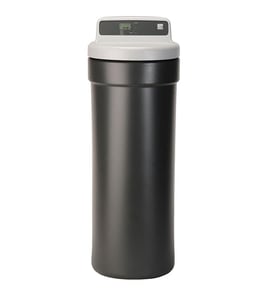




How long does a 40 lb bag of water softener salt last?
For the GE GXSHC40N00 water softener, a 40 lb bag of salt typically lasts about 4 to 6 weeks in an average home. Actual usage depends most on your water hardness, household water use, and how often the demand-initiated regeneration (D.I.R.) system needs to recharge.
Salt use is driven by how many grains of hardness the softener has to remove and how often it regenerates.
- Water hardness (GPG): harder water uses more salt
- Household size and water use: more showers, laundry, and dishes means more regeneration
- Iron in the water: iron can reduce capacity and increase maintenance needs
- Salt level setting accuracy: the control estimates “days to empty” based on your salt level input
- Leaks or running toilets: constant water flow can trigger extra regeneration
This model can estimate how many days remain before the brine tank reaches Level 0. During the first several weeks, that estimate can be erratic; after a couple of months it learns your usage pattern and becomes much more accurate. Use the setup and display guidance in the GXSHC40N00 owner’s manual.
| Household and water conditions | Typical 40 lb bag lasts |
|---|---|
| 1 to 2 people, moderate hardness | 6 to 10 weeks |
| 3 to 4 people, moderate hardness | 4 to 6 weeks |
| Very hard water and/or high use | 2 to 4 weeks |
When salt gets too low, the softener may not fully recharge, and you can start getting hard water again (spotting, scale buildup, reduced soap performance). Keeping the salt level consistent also helps the GXSHC40N00’s efficiency features work as intended.
If your water has higher iron content, GE recommends cleaning the resin bed using a resin bed cleaner as preventive maintenance and following the procedure in the GXSHC40N00 owner’s manual.
Last updated: January 2026
What are the most common issues with GXSHC40N00?
The most common issues we see with the GE GXSHC40N00 water softener are no soft water, salt bridging or mush, leaks at seals or fittings, and regeneration problems caused by restricted flow or a worn drive system. Use the GXSHC40N00 owner's manual to match symptoms to checks and settings.
- No soft water: incorrect hardness setting, unit in bypass, resin exhausted, or restricted nozzle/venturi.
- Softener not regenerating: timer/control issue, valve motor not driving, or rotor/switch problem.
- Low water pressure at fixtures: clogged screens or flow restriction.
- Leaking water: worn O-ring seals, loose ferrule nuts, or valve body sealing issues.
- Salt tank issues: salt bridging, salt mush, or brinewell problems.
- Confirm the bypass is set to “service” (not bypass); a failed bypass can also cause symptoms.
- Verify the time of day and hardness settings.
- Break up salt bridges and remove salt mush; refill with clean salt.
- Inspect and clean inlet screens and filter screens.
- Run a manual regeneration cycle and listen for the valve motor advancing.
| Symptom | Common part to inspect | What it affects |
|---|---|---|
| No soft water or weak brine draw | Water softener nozzle and venturi assembly WS15X24701 | Creates suction to pull brine during regen |
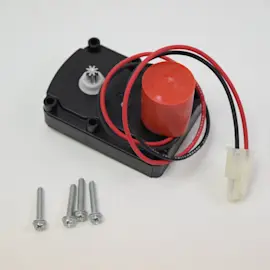
| Stuck in cycle or won’t advance | Water softener valve motor WS26X25021 | Drives the valve through regen positions |
| Leaks at valve area | O-ring seal 7170319 | Seals internal valve passages |
| Low flow or intermittent operation | Filter screen WS31X10044 | Protects valve from debris |
| Hard water everywhere (unit isolated) | Water softener bypass valve WS15X10078 | Routes water through or around softener |
A softener that is bypassed, restricted, or not regenerating wastes salt and water while letting hard water damage plumbing, water heaters, and appliances. Catching screen clogs and seal leaks early prevents bigger valve body and resin tank problems.
For display messages or fault indicators, use GE error codes to pinpoint the failure path before replacing parts.
Last updated: March 2026
What is the life expectancy of a GE water softener?
A GE water softener like model GXSHC40N00 typically lasts 10 to 15 years. Actual life depends most on water quality (chlorine and iron), correct setup, and routine maintenance such as keeping salt in the tank and cleaning the resin bed when needed.
- Chlorine level: Resin can degrade faster when chlorine is above 2 ppm.
- Iron in the water: Higher iron can foul the resin and reduce softening performance if not cleaned.
- Water pressure and flow: The system needs at least 3 GPM flow at the inlet and must stay under 125 psi inlet pressure.
- Maintenance habits: Regular salt use and periodic resin cleaning help prevent premature wear.
- Sediment conditions: The built-in sediment basket helps, but it is not a replacement for pretreatment filtration on problem water.
- Keep the salt level above the water line in the brine tank.
- Break up salt bridges and remove salt mush if you see it.
- Clean the nozzle and venturi area if brine draw seems weak.
- If you have iron, clean the resin bed on a schedule (many owners do this at least every 6 months when iron is present).
- Verify settings and regeneration schedule using the GXSHC40N00 owner’s manual.
| Component | Typical expectation | What you’ll notice |
|---|---|---|
| Resin bed | Often the first major wear item | Hard water returns sooner, higher salt use |
| Valve and seals | Mid-life service item | Leaks, poor regeneration, constant running |
| Electronics | Can last many years | No display, erratic operation, lost settings |
Once a softener gets near the end of its service life, you often spend more on salt, cleaning chemicals, and valve repairs while still getting inconsistent soft water. Knowing the 10 to 15 year range helps you decide whether to repair (valve, motor, seals) or plan a full replacement.
Last updated: January 2026