Owner’s manual
 Error Codes


How many cubic feet is my Kenmore refrigerator model 79575546401?
Your Kenmore Elite refrigerator model 79575546401 has 21.9 cubic feet of total capacity (about 15.4 cu. ft. fresh food plus 6.5 cu. ft. freezer). We list the same capacity in the 79575546401 owner's manual.
Capacity breakdown for model 79575546401
| Compartment | Capacity |
|---|---|
| Refrigerator (fresh food) | 15.4 cu. ft. |
| Freezer (bottom mount) | 6.5 cu. ft. |
| Total | 21.9 cu. ft. |
How to confirm it on the appliance
- Check the rating label inside the fresh food section (commonly on a side wall near the crisper drawers).
- Look for wording such as “Total capacity” or “cu. ft.”
- Compare the label to the specs in the 79575546401 owner's manual.
- Use the full model number 79575546401 when searching parts and specifications.
Why it matters
Capacity helps us match the right-fit parts and accessories (such as shelves, baskets, and door gaskets) and helps you plan food storage and kitchen fit for your Kenmore Elite bottom-mount refrigerator.
Last updated: February 2026
How to tell if a Kenmore refrigerator compressor is bad?
On Kenmore Elite model 79575546401, a “bad compressor” usually shows up as poor cooling with long run times, unusual compressor noises, or repeated start failures (clicking and stopping). Before condemning the compressor, we confirm airflow, condenser cleanliness, and power to the sealed system using the checks in the 79575546401 owner's manual.
Quick signs that point to a compressor problem
- Refrigerator and freezer temperatures stay warm even after 24 hours of operation
- Compressor tries to start but you hear repeated clicking (start device cycling)
- Compressor runs but cooling is weak and never stabilizes
- Loud buzzing, knocking, or high-pitched pulsating that is new and persistent
- Compressor shell is extremely hot and the unit still is not cooling
What to check first (most common non-compressor causes)
Many “compressor symptoms” are caused by airflow or heat rejection issues. Start here:
- Condenser coils: clean dust and pet hair from coils and the grille area
- Condenser fan: verify it runs when the compressor is running
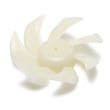
- Evaporator fan: confirm air is moving in the fresh food section; inspect the refrigerator evaporator fan blade 5901JA1021A for damage if the fan motor runs but airflow is weak
- Door sealing: check gaskets for gaps and heavy frost patterns
- Controls and usage: frequent door openings and warm room temps increase run time (normal on modern units)
Normal vs. not normal sounds
Your 79575546401 can make new sounds compared to older refrigerators. Use this as a quick guide:
| Sound | Often normal? | What it can mean |
|---|---|---|
| Gurgling or whooshing | Yes | Refrigerant moving during cycles |
| Clicking occasionally | Yes | Defrost timer or control cycling |
| Rattling | Sometimes | Water line vibration or items on top |
| Repeated click every few minutes | No | Start device failing or compressor not starting |
| Loud buzzing with no cooling | No | Compressor struggling to start or mechanical issue |
Why it matters
A compressor is part of the sealed refrigeration system; misdiagnosing it can lead to unnecessary cost. Ruling out airflow, coil blockage, and fan issues first helps you target the right repair and restore proper cooling faster.
Last updated: February 2026
What are the common problems with Kenmore Elite refrigerators?
On the Kenmore Elite 79575546401 bottom-mount refrigerator, the most common problems we see are cooling issues (often tied to airflow or dirty condenser coils), ice maker and water supply problems, and door sealing or alignment problems that cause frost and temperature swings. Use the 79575546401 owner's manual troubleshooting tables to match symptoms to the right fix.
Most common symptoms (and what they usually point to)
- Not cooling well or running a lot: dirty condenser coils, restricted airflow, or a failing sealed-system component (compressor or related parts)
- Frost buildup or ice crystals on food: door not closing fully, door opened frequently, or gasket sealing issues
- Ice tastes bad or smells: old ice, unwrapped food odors, or water quality issues (a filter can help)
- Ice production is slow: freezer not cold enough yet, door left open, or recent hook-up (allow time)
- Doors hard to open: sticky/dirty gaskets or pressure equalization after closing
Quick checks you can do first
- Clean the condenser coils (this is a top cause of poor cooling and long run times).
- Confirm doors close completely: remove food packages blocking shelves and bins; reseat baskets and drawers.
- Inspect and clean door gaskets: clean the gasket and the surface it seals against; then apply a thin coat of wax/polish as the manual recommends.
- Give ice maker time after changes: after hook-up or temperature adjustments, allow about 24 hours for normal ice production.
- Reset your ice quality: discard the first few batches after installation or service; replace old stored ice.
Parts that commonly relate to these problems
| Symptom | Common area | Example part for this model |
|---|---|---|
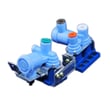
| No water to dispenser/ice maker, weak fill | Water inlet system | Refrigerator valve assembly 5221JB2006K |
| Door light issues, dispenser behavior changes | Door switch circuit | Refrigerator door push-button switch 6600JB1010A |
| Frost from poor sealing, door not shutting right | Door alignment and gasket sealing | Check gasket condition and door leveling per manual |
Why it matters
Small issues like dirty condenser coils or a door that does not seal can create big symptoms: warmer temperatures, frost, slow ice production, and higher energy use. Fixing airflow and sealing problems first prevents unnecessary part replacement.
Last updated: February 2026
What does DH mean on Kenmore Elite refrigerator?
On a Kenmore Elite refrigerator model 79575546401, DH indicates a defrost-heater related problem (commonly a defrost heating error). We focus troubleshooting on the defrost circuit: the defrost heater, wiring connections, and the electronic control’s ability to power the heater; see the 79575546401 owner's manual.
What to check first (safe, quick checks)
- Confirm the doors fully close and the door gaskets seal all the way around.
- Make sure food packages are not blocking air vents; blocked vents can cause cooling and moisture issues that lead to heavy frost.
- Set temperatures to typical starting points: 37°F for the fresh food section and 0°F for the freezer, then allow 24 hours to stabilize.
- Unplug the refrigerator for 5 minutes, then restore power to see if the code clears.
- Listen for the evaporator fan; unusual noise or no airflow can contribute to frost buildup.
Defrost system troubleshooting steps
- Unplug power before removing panels.
- Inspect the freezer evaporator area for heavy frost on the evaporator cover or coils.
- Check wiring connectors to the heater and sensors for loose pins or corrosion.
- Test the defrost heater circuit with a meter (continuity/resistance) and inspect for visible damage.
- If the heater and wiring test good, the issue commonly points to the control not energizing the heater.
Common symptoms and what they usually mean
| What you notice | What it points to | What to do next |
|---|---|---|
| Frost builds up, freezer warms, fridge warms | Defrost not working | Check heater circuit and connectors |
| Code returns soon after reset | Ongoing defrost fault | Test heater and control output |
| Water/ice under crisper or freezer drawer | Defrost drain issue | Clear drain and check for ice blockage |
Why it matters
When the defrost heater is not melting frost off the evaporator, airflow drops and temperatures rise in both sections. That can cause warm food temps, ice buildup, and longer compressor run times.
Related help
For model-family code definitions and troubleshooting flow, use our Kenmore 795 model bottom freezer refrigerator error codes guide.
Last updated: February 2026
What is the average lifespan of a Kenmore Elite refrigerator?
Most Kenmore Elite refrigerators, including model 79575546401, typically last 10 to 15 years with normal household use and basic maintenance. Keeping airflow clear, cleaning condenser coils, and staying on top of water and door-seal issues helps you reach the high end of that range; see the 79575546401 owner's manual for care and cleaning guidance.
Typical lifespan range (what to expect)
- Average: 10 to 15 years
- Common “good run” with solid upkeep: 12 to 16 years
- Long life: up to about 20 years when conditions are ideal (steady temps, clean coils, good door seals)
| Lifespan range | What it usually means | What to do now |
|---|---|---|
| 0 to 5 years | Early-life issues are usually isolated component failures | Address symptoms quickly to prevent secondary damage |
| 6 to 10 years | Wear items and airflow problems become more common | Clean coils, verify fans run, check door sealing |
| 10 to 15 years | Typical end-of-life window for many modern refrigerators | Compare repair cost vs. age and condition |
| 15+ years | Above-average longevity | Prioritize preventive maintenance and temperature stability |
Maintenance that extends refrigerator life
- Clean the condenser coils regularly (dust buildup raises compressor workload).
- Keep vents inside the fresh food section and freezer unblocked for proper air circulation.
- Confirm doors close and seal fully; a leaking gasket forces longer run times.
- Replace clogged water filters on schedule to protect the water system.
- Fix water leaks promptly to prevent ice buildup and airflow restrictions.
When a repair is worth it (quick rule of thumb)
A repair is usually worth doing when cooling performance is otherwise good and the issue is limited to a serviceable part (switch, valve, fan blade, gasket). For example, a failed door switch can affect lights and sometimes fan operation; the refrigerator door push-button switch 6600JB1010A is a common fix for door-activated electrical problems.
Why it matters
Refrigerators often fail “early” from heat and airflow stress, not just age. Simple upkeep reduces compressor run time, stabilizes temperatures, and helps your Kenmore Elite 79575546401 reach its expected service life.
Last updated: February 2026