Owner’s manual

Which ice makers do not require a drain?
Most ice makers that do not require a drain are countertop “portable” units that hold water in an internal reservoir and reuse meltwater. By contrast, the Edgestar IB1000SS freestanding ice maker is designed to be connected to a water supply and a drain for normal installation (free-standing, recessed, or built-in). See the owner's manual for the drain setup details.
Quick rule of thumb (drain vs. no drain)
- No drain needed: countertop/bullet-ice machines with a refillable reservoir
- Drain needed: plumbed-in undercounter or freestanding ice makers that continuously make ice
- Sometimes optional: some plumbed units can use a condensate pump to reach a distant drain
- Always check: whether the unit is “gravity drain” or “pump drain” capable
What the IB1000SS requires
The IB1000SS includes a drain line and is intended to route water to a household drain. For best results, plan the install so the drain point is close to the unit.
| Setup type | Water supply | Drain connection | Typical use case |
|---|---|---|---|
| Countertop reservoir ice maker | Not required | Not required | Occasional, portable ice |
| Plumbed freestanding/undercounter (like IB1000SS) | Required | Required | Steady daily ice production |
| Plumbed unit with condensate pump | Required | Required (pump-assisted) | Drain is farther away |
Drain planning tips (what we recommend)
- Place the ice maker near a floor drain or standpipe; the provided drain hose is typically about 4.5 feet long.
- Keep horizontal drain runs sloped downward about 1/4 inch per foot.
- Use an air gap between the drain hose and the drain/waste receptacle when required.
- After hookup, pour water into the bin to confirm it drains properly.
Why it matters
A proper drain prevents water from backing up into the cabinet area, reduces leak risk, and helps the ice maker run consistently during long production cycles.
Last updated: February 2026
Is it worth repairing an ice maker?
Yes, repairing an Edgestar freestanding ice maker like model IB1000SS is worth it when the problem is a basic power, water-supply, airflow, or cleaning issue and the unit is otherwise in good condition; it is less worth it when the sealed cooling system or compressor is failing.
Quick decision checklist
- Repair first if it will not power on, will not fill with water, or stops because the bin is full.
- Repair first if the condenser is dirty or airflow is blocked (common causes of poor production).
- Repair first if the unit is leaking at a water connection or is out of level.
- Replace if you have repeated breakdowns and the repair cost is close to the cost of a new unit.
- Replace if a technician confirms a sealed-system issue (compressor or refrigerant system).
What we check first on the IB1000SS
The IB1000SS manual troubleshooting section focuses on a few high-impact basics that often solve the problem without major parts replacement.
| Symptom | Most common cause | What to do first |
|---|---|---|
| Won’t operate | Unplugged, blown fuse, power switch off | Verify outlet power, check fuse/breaker, turn power switch on |
| Runs but makes little or no ice | Water supply off, dirty condenser, blocked airflow, high ambient temp | Turn on water tap, clean condenser, clear vents, move away from heat |
| Stops during operation | Room temperature out of range or power interruption | Restore power, confirm room conditions match the manual guidance |
| Water leaking | Water supply connection leaking, not level | Tighten/inspect connection, level and lock feet |
Why it matters
Freestanding ice makers often look “dead” when the real issue is water supply, ventilation, or maintenance. Fixing those basics restores ice production and protects the compressor from overheating, which is the expensive failure you want to avoid.
Helpful DIY troubleshooting
- Use the troubleshooting steps in the IB1000SS owner's manual to match your symptom to a likely cause.
- If the unit runs but does not produce ice, follow the workflow in ice maker runs but no ice.
Last updated: February 2026
Why is my free standing ice maker not making ice?
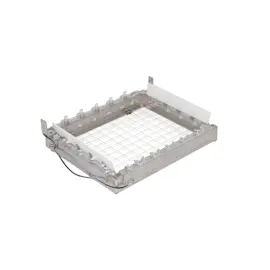
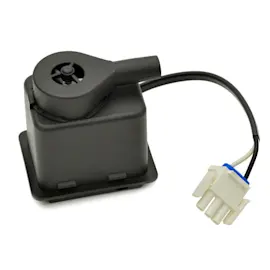
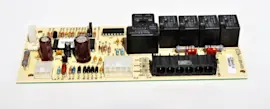
If your Edgestar IB1000SS freestanding ice maker is running but not making ice, the most common causes are no water supply to the unit, the bin-full sensor being blocked by ice, poor airflow from a dirty condenser, or a failed component such as the control board, recirculation pump, or cutter grid. Use the owner's manual checks first.
Quick checks (most fixes start here)
- Confirm the power switch is set to ON and the unit is plugged in.
- Make sure the main water supply and the tap are fully on.
- Verify the water supply line is connected securely and not kinked.
- Remove some ice and make sure the ice-full probe/sensor is not covered.
- Keep the door closed except when taking ice.
- Discard the first batch of ice after long storage or transport.
What to look for based on what the machine is doing
| What you notice | Likely cause | What we recommend |
|---|---|---|
| Runs, but no water sound/spray | Water tap off or supply line issue | Turn on the tap; reconnect/straighten the supply line |
| Stops making ice with a full bin | Ice-full sensor covered | Remove ice; clear the probe/sensor |
| Makes some ice, but bin does not fill | Dirty condenser, airflow blocked, warm room/water | Clean condenser; improve airflow; reduce heat around unit |
| LEDs flashing together and unit not working | Control box fuse issue | Stop using the unit and have it serviced |
Deeper causes when basics check out
If water and airflow are good but you still get no ice, these failures commonly stop ice production:
- Electronic control board not sending power to the ice-making cycle
- Recirculation pump not spraying water over the evaporator
- Sealed system problem (compressor or refrigerant system not cooling)
- Cutter grid problem (ice forms but will not harvest/cut properly)
For step-by-step symptom-based troubleshooting, use our guide: ice maker runs but no ice.
Why it matters
This model is designed to stop automatically when the bin is full and restart when the level drops; it also relies on steady water flow and good condenser airflow. A simple water tap or sensor issue can look like a major failure, so the quick checks save time before replacing parts.
Last updated: February 2026
Can you run a countertop ice maker 24 7?
Yes. The Edgestar IB1000SS is designed for automatic operation and can run continuously; it stops making ice when the storage bin is full and restarts when ice is removed. For safety and hygiene, we still recommend unplugging it for cleaning and when it will not be used for an extended period.
What “24/7” looks like in normal operation
Your IB1000SS cycles automatically:
- Turn the water tap on, then switch the unit ON; it starts making ice automatically.
- When the bin gets full and covers the ice-full sensor, the ice maker stops.
- When the ice level drops, it starts again.
- The first batch of ice should be discarded after long transit or storage.
When you should turn it off (and why)
Even though continuous operation is normal, we turn it off in these situations to prevent odors, scale buildup, and water issues:
- Before cleaning (always turn it off and unplug first)
- When leaving home for an extended period
- If you notice strange sounds, smells, or smoke (unplug immediately)
- If the unit will be moved or stored (drain the water system)
Quick checklist for safe continuous use
Use these setup basics to keep 24/7 operation reliable:
- Use a properly grounded 115 V, 60 Hz outlet (not controlled by a wall switch).
- Do not use extension cords or power strips.
- Keep ventilation clearance: about 4 inches at the rear and 1/2 inch at the top and sides.
- Keep water temperature roughly 41°F to 77°F; keep room temperature roughly 55°F to 90°F.
- Maintain water pressure in the typical operating range (about 20 to 80 psig).
Recommended routine (simple and effective)
| How often | What we do | Why it matters |
|---|---|---|
| Daily/weekly | Empty old ice and wipe the bin area | Fresher-tasting ice, less odor transfer |
| Monthly (typical) | Clean per the owner's manual | Reduces mineral scale and slime buildup |
| Before vacations/storage | Unplug and drain the unit | Prevents leaks and stagnant water odors |
Why it matters
Freestanding ice makers like the IB1000SS are built to cycle on and off automatically, but water, heat, and airflow drive performance. Good ventilation, correct water supply, and regular cleaning keep ice production steady and help protect the compressor, pump, and sensors.
Last updated: February 2026
Are under cabinet ice makers worth it?
Yes, under-cabinet (undercounter) ice makers are worth it when you use a lot of ice and want a steady supply without refilling trays. For the Edgestar IB1000SS specifically, it can be installed under a counter when you follow the recessed or built-in clearance, ventilation, water, and drain requirements in the owner's manual.
When an under-cabinet ice maker is worth it
- You entertain often or use ice daily.
- You want dedicated ice production instead of relying on a refrigerator ice maker.
- You have a continuous water supply and a drain location available.
- You can maintain ventilation space and service access under the counter.
- You are willing to do routine cleaning and condenser upkeep.
What the IB1000SS requires for under-counter installs
The IB1000SS is designed for free-standing, recessed, or built-in installation; in every case it needs adequate ventilation and access for service. The manual also notes the unit should be installed in a well-ventilated area between 55°F and 90°F and not next to high-heat sources.
Clearance targets called out in the manual:
| Location | Recommended clearance | Why it matters |
|---|---|---|
| Rear | More than 4 inches | Ventilation and service access |
| Sides | 1/2 inch | Prevents airflow restriction |
| Top | 1/2 inch | Helps heat escape and fit under counter |
Costs and tradeoffs to consider
- Upfront cost: Higher than countertop ice makers.
- Installation complexity: Water line plus drain routing; leaks and poor drainage cause problems.
- Maintenance: Dirty condenser or blocked airflow reduces ice production.
- Performance depends on setup: High ambient temperature, warm water, or restricted airflow leads to slow production and partial cubes.
Why it matters
Undercounter ice makers perform well only when ventilation, water supply, and drainage are set up correctly. When those basics are off, you can see symptoms like low ice output, leaking water, or the unit running but not making ice.
For day-to-day performance tips, use tips for better ice from an ice maker.
Last updated: February 2026