Owner’s manual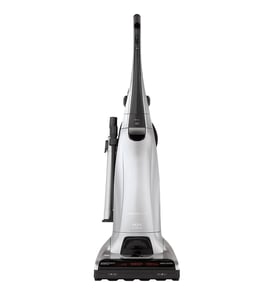


Why won't my Kenmore vacuum brush spin?
On your Kenmore upright vacuum model 11631200210, the brush (agitator) will not spin if the handle is locked upright, the switch is set to FLOOR, or the agitator overload protector has tripped due to a jam. Unplug the vacuum, clear the brush area, then reset the agitator.
- Make sure the handle is released; the agitator does not rotate when the vacuum is in the upright position.
- Set the OFF/FLOOR/CARPET switch to CARPET (FLOOR runs suction only, no brush rotation).
- Turn the vacuum OFF, unplug it, and remove hair, string, or debris from the brush area.
- If the brush stopped suddenly, wait at least 20 seconds, then press the AGITATOR RESET button.
- Check that the nozzle is not packed with debris that could stall the brush.
The agitator has built-in overload protection; if the brush jams, the brush motor shuts off while suction can keep running.
- Turn the vacuum OFF and unplug it.
- Clear the obstruction from the agitator and nozzle.
- Wait 20 seconds.
- Press the AGITATOR RESET button.
| Switch position | Suction motor | Brush/agitator | Best for |
|---|---|---|---|
| OFF | Off | Off | Stopping the vacuum |
| FLOOR | On | Off | Hard floors, delicate rugs, using tools |
| CARPET | On | On | Most carpet cleaning |
Running the vacuum with a jammed brush can repeatedly trip the overload protector and reduce cleaning performance. Clearing the brush area and using the correct switch position helps protect the brush motor and prevents carpet damage.
For the exact control locations (switch, handle release, and reset button) and the troubleshooting table for “Agitator does not turn,” use the owner's manual.
Last updated: February 2026
Where can I find the Kenmore vacuum model number?
Your Kenmore upright vacuum model number for model 11631200210 is printed on the model and serial number plate on the vacuum body. Use that full model number (and the serial number) when looking up parts, ordering bags and filters, or requesting service details in the owner's manual.
On Kenmore uprights, the model and serial number plate is typically on the main body in a spot that stays protected from wear. Check these common locations:
- Back of the vacuum body near the cord wrap
- Bottom of the vacuum near the nozzle or base plate
- Behind the dust bag cover or dust compartment door
- Near the wheels or rear housing
- On the lower body close to the headlight area
The plate is usually a small sticker or metal-look label that lists both numbers.
| What to record | Why it matters |
|---|---|
| Model number (example format: 116XXXXXXXX) | Matches the correct parts diagrams and part list |
| Serial number | Helps identify production details for service and documentation |
| Date of purchase | Useful for warranty and maintenance records |
Kenmore model numbers are the fastest way to avoid ordering the wrong vacuum cleaner parts. Even small design changes between similar-looking uprights can affect fit for items like filters, belts, and internal supports.
Last updated: February 2026
How to open Kenmore 11631200210 Vacuum?
To open your Kenmore 11631200210 upright vacuum, start by unplugging it, then release the bag cover and remove the dust bag from the bag mount inside the bag chamber. The cover should snap closed again once the bag is seated correctly (a safety stop prevents closing if it is not).
Before opening any covers or servicing the vacuum, we follow these basics:
- Turn the vacuum off and unplug it from the outlet
- Keep hands away from the agitator and nozzle openings
- Never service the vacuum while it is running
- If anything seems abnormal (burning smell, sparking, unusual noise), stop and unplug immediately
This is the most common “open the vacuum” task for this model.
- Open the bag cover to access the dust bag chamber
- Pull the cardboard tab on the dust bag straight out of the bag mount to release it
- Lift the bag out of the chamber
- When reinstalling, slide the bag opening fully onto the holder, tuck the bag into the chamber, then close the cover until it snaps
For the exact bag cover and bag installation steps and diagrams for model 11631200210, use the owner's manual.
This model also has a clean-out port at the nozzle for removing debris.
- Unplug the vacuum
- Use a flat screwdriver or small coin to gently pry the clean-out port cover open
- Remove debris and buildup
- Snap the cover back on until it clicks
| What you are opening | Where it is | Best for |
|---|---|---|
| Bag cover | Main body bag chamber | Bag replacement, checking motor safety filter area |
| Clean-out port cover | Nozzle area | Clearing clogs and blockages |
Opening the correct cover prevents broken latches and helps restore suction. A properly installed dust bag also allows the bag cover to close and helps protect airflow and filtration.
Last updated: February 2026
What model is my vacuum?
Your Kenmore upright vacuum’s model number is printed on the model and serial number plate; for this series it appears as 116.31200 (and the full Sears model number is 11631200210). Use that exact model number when looking up parts and the correct Use & Care information in the owner's manual.
Check these common locations on a Kenmore upright vacuum:
- On the back of the main vacuum body near the lower cord wrap
- On the underside (bottom) of the vacuum base or nozzle area
- Near the bag or dust compartment opening (inside the cover)
- Close to the motor housing area (rear or side panel)
Kenmore vacuums often show a shortened model on the label and a longer model used for parts lookup.
| You might see | Example for this vacuum | Best use |
|---|---|---|
| Short model format | 116.31200 | Identifying the product family in the manual |
| Full model number | 11631200210 | Ordering the correct replacement parts |
| Serial number | (varies) | Warranty records and service history |
- Match the full model number 11631200210 when selecting parts
- If the label is worn, use a flashlight and take a photo to zoom in
- Write down both the model and serial number for future reference
- Use the parts list for your exact model before buying filters, bags, or motor-area parts
Kenmore model numbers can look similar across different upright vacuums, but small design changes affect fit and performance (bags, exhaust filters, hoses, and motor supports). Using the exact model number helps ensure the replacement part installs correctly and restores proper suction and airflow.
Last updated: February 2026
What are the parts of the vacuum?
For the Kenmore upright vacuum model 11631200210, the main parts include the upright body and motor (suction), handle and power cord, hose and telescoping wand, and onboard tools like the crevice tool, combination brush, and Pet Handi Mate. The owner's manual shows the full “Parts and Features” layout.
These are the core assemblies called out in the use and care information and packing list:
- Upright vacuum cleaner body (base and housing)
- Handle assembly (with hose holder and cord storage)
- Power cord (wraps after the hose and wand are installed)
- Hose and telescoping wand (locks into the hose with a tab and “J” slot)
- Onboard tools: crevice tool, combination brush
- Pet Handi Mate attachment (stored on the vacuum)
This model uses a dust bag and filters to protect the motor and help keep exhaust air cleaner.
| Part type | What it does | Why you replace it |
|---|---|---|
| Dust bag | Collects dirt and debris | Loss of suction, odors, bag full |
| Exhaust filter | Traps fine dust before air exits | Reduced airflow, dusty exhaust |
| Carbon filter | Helps reduce odors | Persistent odors, reduced performance |
Knowing how the hose and wand mount helps you identify parts and avoid damage during use.
- The wand tab inserts into the hose “J” slot, then twists to lock
- The wand sits in the wand holder; the hose routes through the hose holder
- The hose snaps into the hose cuff on the side of the vacuum
- The hose release lever rotates upward to lock the hose in place
When you can name the parts (hose, wand, handle, filters, bag, tools), it is much easier to troubleshoot common issues like low suction, poor pickup, or a tool that will not stay seated, and to order the correct replacement parts for model 11631200210.
Last updated: February 2026