Owner’s manual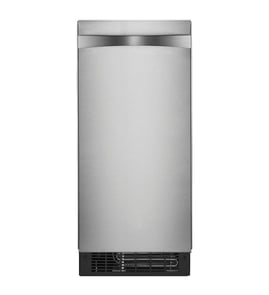



Is it worth replacing the ice maker on a refrigerator?
Replacing a refrigerator ice maker is usually worth it when the refrigerator is cooling well and the repair is limited to the ice-making system; it restores convenience for far less than replacing the whole fridge. For an Electrolux freestanding ice maker like model EI15IM55GS0, replacement decisions also depend on airflow, cleaning, and operating temperature. See the owner's manual for model-specific checks.
Quick decision checklist
- The refrigerator (or ice maker cabinet) cools normally and holds temperature
- Water supply is on and the inlet line is not kinked or frozen
- The unit is level; uneven leveling can affect ice release
- The condenser is clean (dirty coils commonly reduce production)
- The room temperature stays in the normal operating range (50°F to 110°F)
- The repair cost is reasonable compared with the appliance’s age and overall condition
Rule of thumb: repair vs replace
| Situation | Usually makes sense to | Why |
|---|---|---|
| Fridge cools well; ice maker is the only problem | Replace the ice maker/failed part | Lowest cost path to restore ice |
| Multiple symptoms (poor cooling, repeated leaks, loud compressor) | Consider replacing the appliance | More than one major system may be failing |
| Ice is slow to release or production is low | Troubleshoot and clean first | Cleaning and airflow fixes often restore output |
Before you buy parts: common fixes that change the answer
These steps often solve “no ice” or “low ice” without replacing the ice maker:
- Clean the condenser; the manual recommends cleaning about every 3 months for efficiency.
- Run the automatic cleaning cycle; mineral scale can reduce output and cause release issues.
- Confirm airflow at the front is not blocked.
- Verify the water supply is connected and turned on.
If you’re working on a freestanding unit like EI15IM55GS0, low production at high ambient temperatures is normal; performance drops when the surrounding air is over about 90°F.
Why it matters
An ice maker is a convenience feature, but it depends on stable cooling, clean condenser fins, and consistent water flow. Fixing the underlying cause first prevents repeat failures and helps you avoid replacing expensive components unnecessarily.
Last updated: February 2026
What causes a refrigerator ice maker to stop working?
On the Electrolux EI15IM55GS0 freestanding ice maker, the most common reasons it stops making ice are loss of power, the ICE/ON setting being off, low room temperature (below about 45°F), or no water supply to the unit. Dirty condenser coils and mineral scale can also reduce or stop ice production; see the owner's manual.
Quick checks that fix many “no ice” calls
- Confirm the power cord is fully plugged in; reset a tripped breaker or replace a blown fuse.
- Make sure the cycle selector is set to ICE/ON (not OFF).
- Verify the water supply valve is open and the supply line is not kinked.
- Check the room temperature around the unit; it needs at least about 45°F (7°C) to make ice.
- Look for restricted airflow at the front grille area.
- If the unit runs but makes very little ice, clean the condenser (maintenance is typically every 3 months).
Model-specific causes we see most often
The EI15IM55GS0 troubleshooting guidance points to these patterns:
| Symptom | Likely cause | What to do next |
|---|---|---|
| Unit does not operate | No electrical power | Restore power; verify ICE/ON setting |
| Runs but no ice | No water supply; room too cold | Turn on water; warm the space above ~45°F |
| Runs but very little ice | Dirty condenser; high ambient temp; scale buildup; poor airflow | Clean condenser; run cleaning cycle; improve airflow |
Parts that can be involved (when basic checks do not solve it)
If you confirm power, ICE/ON, temperature, and water supply are all correct, the issue is often in the cooling or water-circulation system. Common part categories include:
- Condenser fan components (airflow across the condenser)
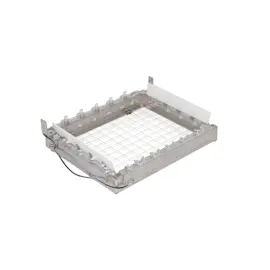
- Sealed-system components such as the evaporator 5304512262
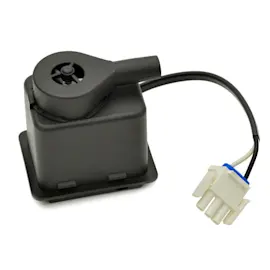
- Water circulation components such as the water complete pump 5304507373
- Compressor-related components such as the compressor a 5304507574
Why it matters
This model relies on proper airflow, correct ambient temperature, and steady water circulation to freeze clear ice on the evaporator and drop it into the bin. When airflow is restricted or scale builds up, the freeze cycle slows down or stops, and ice production can appear “dead” even though the unit still runs.
Last updated: February 2026
What is the average life of an ice maker?
Most freestanding ice makers like the Electrolux EI15IM55GS0 last about 5 to 10 years. Regular cleaning and basic maintenance (especially condenser cleaning and periodic self-cleaning) are what most often separate a shorter lifespan from a longer one; water quality and room temperature also matter.
Typical lifespan ranges (what to expect)
- Freestanding ice maker: 5 to 10 years
- Refrigerator ice maker module: 5 to 7 years
- Commercial-style undercounter units (well maintained): 7 to 15 years
| Ice maker type | Typical lifespan | Biggest life-shorteners |
|---|---|---|
| Freestanding (like EI15IM55GS0) | 5 to 10 years | Dirty condenser, scale buildup, poor airflow |
| Built-in refrigerator ice maker | 5 to 7 years | Freezer temp issues, water valve problems |
| Commercial-style | 7 to 15 years | Hard water, missed cleanings, heavy duty cycles |
Maintenance that extends life on EI15IM55GS0
Your manual calls out specific intervals that directly impact performance and longevity. Use the owner's manual as your schedule.
- Clean the condenser every 3 months (more often in dusty or pet-hair environments)
- Run self-cleaning every 6 months (more often with hard water)
- Clean the inlet screen yearly to maintain water flow
- Keep the unit in a proper ambient range; high heat reduces cooling ability and ice production
- Avoid harsh cleaners on stainless surfaces; use non-abrasive methods
Why it matters
A freestanding ice maker is a small refrigeration system. When the condenser is clogged or scale builds up inside, the unit runs hotter and longer, which accelerates wear on sealed-system components like the compressor and evaporator.
When replacement is usually more practical than repair
These symptoms often point to higher-cost repairs on freestanding units:
- Ice production steadily drops even after cleaning
- Unit runs constantly or struggles in normal room temperatures
- Repeated water leaks after drain and connection checks
- Loud, persistent mechanical or fan noise
For symptom-based troubleshooting steps, we use the guide for freestanding ice maker troubleshooting.
Last updated: February 2026