Owner’s manual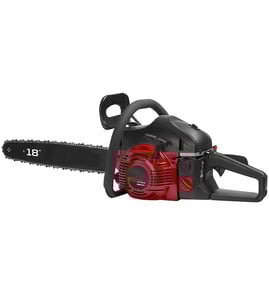




What does 33 mean on a chainsaw chain?
On the Poulan 3300 chainsaw, “33” on the chain commonly identifies the chain series used for this saw: a .325-inch pitch, low-kickback chain (often marked P33S) that matches the specifications listed in the owner's manual.
What “33” usually refers to
On this Poulan 3300 (16-inch chainsaw), the manual lists a low-kickback chain described as:
- .325-inch pitch
- .050-inch gauge (the drive link thickness that fits the guide bar groove)
- P33S chain type marking
- 66 drive links for the 16-inch setup
If your chain is stamped “33” (or “P33”), it is typically pointing to that .325 pitch P33-style chain family.
Quick spec check (match your chain to the saw)
Use this table to confirm you are reading the right markings:
| Spec | What it means | What Poulan 3300 commonly uses |
|---|---|---|
| Pitch | Spacing of the chain links | .325 in |
| Gauge | Drive link thickness | .050 in |
| Drive links | Chain length count | 66 (16-inch bar) |
How to confirm your chain is the correct one
We recommend verifying these before ordering or installing a replacement chain:
- Count the drive links (the teeth that ride in the bar groove)
- Check the gauge marking on the bar or chain package (.050 is common here)
- Confirm the pitch (.325) on the bar stamp or chain box
- Make sure the chain is labeled low-kickback if you want the same safety style
A common replacement that matches the 16-inch configuration listed for this model is the chain 20BPX066G.
Why it matters
Pitch and gauge must match the guide bar and drive sprocket. If they do not match, the chain can fit poorly, wear quickly, or derail, and that increases the risk of kickback and damage.
Last updated: February 2026
What old chainsaws are worth money?
Older chainsaws are worth the most money when they are from in-demand brands, are harder to find, and are complete and running. For the Poulan 3300 (model 3300), value goes up when it starts easily, oils the bar and chain correctly, and still has the safety features and cutting setup shown in the owner's manual.
What makes an old chainsaw valuable
Collectors and buyers typically pay more when these boxes are checked:
- Brand demand and reputation (pro-grade lines usually bring more)
- Rarity (discontinued models, unusual variants, limited production)
- Condition (clean plastics, readable labels, minimal corrosion)
- Completeness (covers, handles, fasteners, and correct hardware present)
- Safe operation (reduced-kickback bar, low-kickback chain, intact handguards)
Quick value checklist for a Poulan 3300
Use this to decide whether to sell as-is, repair, or part it out.
| Condition | What it means for value | Practical next step |
|---|---|---|
| Starts, idles, accelerates cleanly | Highest resale potential | Clean it, verify bar/chain fit, test cut |
| Runs but does not oil the chain | Value drops until fixed | Clean oil holes and check tank venting |
| Will not start, fuel system looks dry/cracked | Common, fixable issue | Replace fuel lines and refresh fuel supply |
| Missing bar/chain or drive parts | Value drops quickly | Replace key wear parts before listing |
Parts and issues that most affect resale
These are the items buyers notice first on a used gas chainsaw:
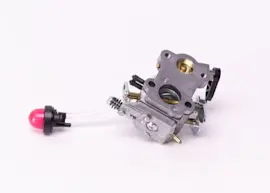
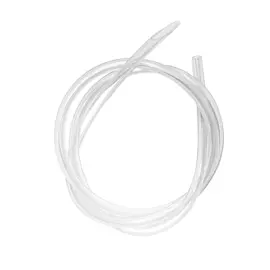
- Fuel delivery problems (cracked lines, air leaks); consider the line kit 530069216
- Cutting system wear (stretched chain, damaged cutters); replace with the correct size chain such as chain 20BPX066G
- Bar condition (worn groove, bent rails, clogged oil holes)
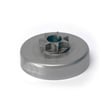
- Drive wear (sprocket wear can chew up a new chain); inspect the drum sprocket 530048084
Why it matters
A chainsaw that matches the original specifications and safety setup is easier to demonstrate, safer to run, and more appealing to buyers. The Poulan 3300 manual emphasizes reduced-kickback and low-kickback components; keeping those features intact supports both performance and resale.
Last updated: February 2026
What are the most common issues with 3300?
The most common issues on the Poulan 3300 gas chainsaw are no-start or poor running (fuel, spark, carburetor settings), overheating or smoking (fuel mix, airflow, carbon buildup), and cutting problems (dull chain, incorrect tension, worn bar or sprocket). Our owner's manual troubleshooting chart covers these symptoms and fixes.
Common problems we see (and what usually causes them)
- Engine will not start: switch off, empty tank, fouled/incorrect spark plug, flooded engine, fuel not reaching carburetor, low compression
- Won’t idle or idles poorly: idle speed set wrong, dirty air filter, carburetor needs adjustment, worn crankshaft seals, low compression
- Lacks power or dies in the cut: choke partially on, dirty air filter, oil-rich fuel mix, high-speed needle needs adjustment, crankcase leak
- Runs hot or smokes: incorrect fuel mixture, dirty fan housing, carbon buildup on spark arrestor screen or exhaust ports
- Chain issues: chain too tight/loose, dull cutters, damaged cutters from debris, worn sprocket, bent or burred guide bar
Quick checks before you buy parts
- Verify the on/off switch is in the Start position.
- Confirm fresh fuel mix (old fuel is a top cause of hard starting).
- Inspect and clean the air filter and spark arrestor screen.
- Check chain tension and bar oil level; chain should not move at idle.
- Look for obvious wear at the drive system (sprocket, bar rails, chain).
Parts that commonly relate to these symptoms
| Symptom | Likely wear item | Example part for model 3300 |
|---|---|---|
| Chain won’t pull well, chatters, cuts rough | Worn drive sprocket | Drum sprocket 530048084 |
| Poor cutting, won’t stay sharp | Worn/damaged chain | Chain 20BPX066G |
| Crooked cuts, uneven wear | Worn/bent bar rails | Chain bar 160PXBK041 |
Why it matters
Running a dull chain or incorrect tension makes the saw work harder, which increases heat, reduces cutting performance, and can accelerate wear on the clutch, sprocket, and guide bar.
Last updated: March 2026