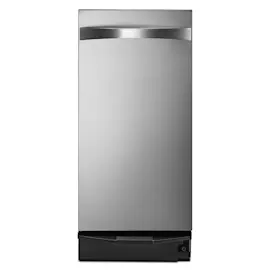
Owner’s manual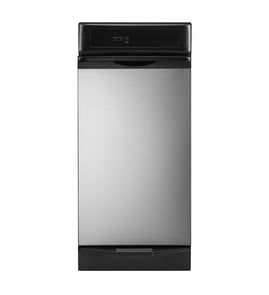


How much does it cost to fix a trash compactor?
For a Kenmore trash compactor like model 66513603000, repair cost is usually driven by the failed part (switch, latch, drive components) plus labor. Most fixes land in the $150 to $500 range; simple switch repairs are often lower, while motor or ram-related repairs run higher.
What typically affects the price
Repair totals usually come down to three buckets: diagnosis, parts, and labor time.
- Service call/diagnostic fee (often applied toward the repair)
- Part cost (switches and latches cost less than drive parts)
- Labor time (built-in compactors take longer to access)
- Electrical troubleshooting (testing switches and wiring adds time)
- Whether the drawer/ram is jammed (extra disassembly)
For model-specific operating and safety details (including unplugging before servicing), use the owner's manual.
Common repairs and typical cost range
These are the most common trash compactor repairs we see, with realistic total ranges (parts plus labor).
| Repair type | Common symptom | Typical total cost |
|---|---|---|
| Switch or interlock issue | Won’t start, stops mid-cycle | $150 to $300 |
| Drawer latch/lock issue | Drawer won’t stay shut, won’t run | $175 to $350 |
| Drive/ram problem | Loud noise, won’t compact, stuck ram | $300 to $500 |
Parts on this model that often solve “won’t run” problems
If your compactor will not start or only runs with the drawer held shut, these parts are frequent fixes:
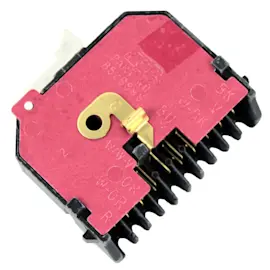
- Trash compactor top limit and directional switch WP777811
- Off switch 675382
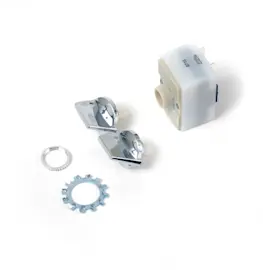
- Kenmore elite trash compactor drawer latch assembly 775665
Why it matters
A trash compactor has safety interlocks that must be engaged before the ram will move. When a switch, latch, or wiring connection fails, the unit can act completely dead even though it still has power. Fixing the correct interlock or switch first prevents unnecessary replacement of higher-cost drive parts.
Last updated: February 2026
How to find Kenmore Elite model number?
On Kenmore trash compactors like model 66513603000, the model and serial numbers are printed on the rating label behind the drawer, on the front of the compactor opening. Pull the drawer out to access the label, then record both numbers for parts lookup and service reference (see the 66513603000 owner's manual).
Where to look on the compactor
The rating label is not inside a refrigerator compartment; it is located at the compactor opening.
- Open the compactor drawer fully.
- Look behind the drawer area at the front frame of the compactor opening.
- Find the rating label that lists model and serial.
- Write the numbers down exactly as shown.
- Keep the numbers with your purchase information for future reference.
Quick checklist: model number vs. serial number
Use this to make sure you are capturing the right information.
| Item | What it’s used for | Example format (varies) |
|---|---|---|
| Model number | Matching the correct parts diagrams and parts list | 66513603000 |
| Serial number | Identifying the production unit for service history | Letters and numbers |
Why it matters
We use the model number to match your exact Kenmore compactor configuration so you get the right replacement parts the first time. Even small design changes across similar models can affect fit for items like a switch, latch, or drawer hardware.
After you find the model number
Once you have the model number, common parts customers look up for this compactor include:
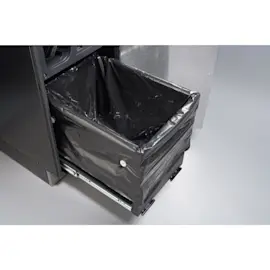
- Trash compactor bag, 15-pack W10165295RP for routine bag replacement
- Trash compactor top limit and directional switch WP777811 if the unit will not start or stop correctly
- Off switch 675382 if the compactor will not power on
Last updated: February 2026
What is a common problem with trash compactors?
A very common problem with the Kenmore 66513603000 trash compactor is that it will not run because a safety interlock is not satisfied, most often the drawer is not fully closed or the key-knob is not turned fully to START before releasing. Confirm the operating steps in the owner's manual.
Common problems and what they point to
- Does not run: drawer not fully closed, key-knob not fully turned to START, or no power
- Stops mid-cycle: drawer opened during compacting; close fully and restart
- Trash does not compact: drawer not about 1/3 full, or an item is between the ram and drawer
- Drawer will not open: ram not all the way up, or EXTRA PAC cycle is active
- Strong odors: bag left too long or drawer area needs cleaning
Quick checks we recommend first (no disassembly)
- Close the drawer firmly so the drawer monitor switches engage.
- Turn the key-knob all the way to START, then release.
- Verify the outlet has power; reset the breaker or replace a blown fuse.
- If the drawer will not open, run START to raise the ram fully (drawer opens only when the ram is up).
- Load bulky bottles or cans on their sides in the center; avoid overloading the bag with heavy glass.
What “normal” operation looks like
| What you notice | Normal behavior | What to do |
|---|---|---|
| Unit shuts off after a cycle | Ram goes down, returns up, then stops | No action needed |
| No compaction with a light load | Compaction starts when drawer is about 1/3 full | Add trash, then run a cycle |
| Loud noise during compaction | Containers can break during compaction | Use proper loading and bags |
When a part is the likely fix
If power is good and the drawer is closing but the compactor still will not start or acts inconsistent, a failed switch is a common cause. For this model, check the trash compactor top limit and directional switch WP777811.
Why it matters
Trash compactors use interlock switches to prevent the ram from moving when the drawer is open; that safety design makes “won’t run” the most common complaint and it is often solved with correct closure, cycle selection, or a worn switch.
Last updated: February 2026
What is the life expectancy of a trash compactor?
A Kenmore trash compactor like model 66513603000 typically lasts 10 to 15 years with normal household use. Lifespan depends most on how often you run cycles, how well the drawer and switches stay aligned, and whether you keep the cabinet and drawer clean per the owner's manual.
What affects lifespan the most
- Cycle frequency and load style: running many cycles with heavy, bulky loads increases wear.
- Drawer closure and safety interlocks: the drawer must close fully so the monitor switches engage.
- Mechanical drive wear: the ram and drive components work under high force each cycle.
- Odors and moisture: wet trash and residue accelerate corrosion and can cause sticking.
- Electrical health: low voltage, a weak outlet, or a tripping breaker can stress the motor.
Signs your compactor is nearing end-of-life
| Symptom | Common cause | What we recommend |
|---|---|---|
| Compactor will not run | Drawer not fully closed, switch issue, power problem | Verify drawer closes completely; check power and breaker |
| Stops mid-cycle | Drawer opened during compacting, monitor switch not engaged | Close drawer fully and restart cycle |
| Weak compaction | Drawer not at least 1/3 full, load jam between ram and drawer | Load properly; avoid items catching between ram and drawer |
| Drawer will not open | Ram not fully up, EXTRA PAC cycle active | Turn key to START to raise ram; wait for cycle to finish |
How to extend the life of model 66513603000
- Load bottles and cans on their sides in the center to reduce jams.
- Wrap wet or messy trash so residue does not build up in the drawer.
- Run smaller loads more often instead of overpacking the drawer.
- Keep the area behind and under the compactor clear so debris does not collect.
- Remove the bag if you will be away for more than a couple of days to prevent odors and sticking.
Why it matters
A trash compactor’s motor, switches, and ram assembly are designed for high force, but misloading and residue cause the most avoidable wear. Following the operating and loading guidance in the manual helps you get the full expected service life.
Last updated: February 2026