Owner’s manual
 Error Codes


How to identify a Kenmore washer model?
Your Kenmore washer model number is printed on the model and serial number plate; on Kenmore model 11022832100, that plate is the key identifier you will use to match the correct washer parts and the correct owner's manual.
Most Kenmore washers place the model and serial number plate in one of these common spots:
- Under the lid (top-load washers), often along the rim of the tub opening
- Inside the lid area near the hinge
- On the back panel near the power cord entry
- Along the rear of the control console
- On the cabinet frame just under the top panel
For model-specific guidance and diagrams, use the 11022832100 owner's manual.
Kenmore washer model numbers often start with 110 (a common Kenmore prefix) and are typically 10 to 12 characters long. Using the full model number helps us match parts like a lid switch, drain pump, or motor coupling without guesswork.
- Write the model number exactly as shown (include all digits)
- Record the serial number too (helps with production variations)
- Take a clear photo of the plate before ordering parts
- Use the model number when searching for diagrams and troubleshooting steps
| Part type | What it affects | Example part for this model |
|---|---|---|
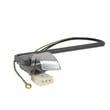
| Lid switch | Spin and agitation safety interlock | Washer lid switch WP3949238 |
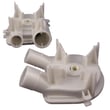
| Drain pump | Draining and spin performance | Washer drain pump WP3363394 |
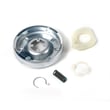
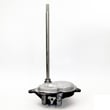
| Motor coupling | Agitation and spin drive | Coupling 285753A |
Kenmore washers can look similar across multiple series, but internal components (like the gear case, clutch, or timer) can differ. The exact model number ensures the replacement part fits and the repair instructions match your washer.
Last updated: February 2026
Is it worth repairing a Kenmore washing machine?
Yes, it’s usually worth repairing a Kenmore washer, especially a proven direct-drive style like model 11022832100, as long as the fix restores reliable wash and spin for less than the cost of replacement. Many common failures are part-level repairs, not full-machine replacements.
Use this quick checklist before spending money:
- Compare cost: If parts plus labor are under about 50% of a comparable new washer, repair is the better value.
- Confirm the symptom: No spin, no drain, or no agitate often points to a single failed component.
- Check for water leaks: Leaks can be simple (hose) or more involved (tub seal area).
- Consider downtime: If you need a fast fix, choose the most likely failure first.
- Match the repair to the machine’s condition: If the cabinet, basket, and controls are solid, repairs pay off.
These are frequent, high-impact fixes that typically restore normal operation:
| Symptom | Common cause | Example part for this model |
|---|---|---|
| Won’t spin or start | Lid safety circuit not closing | Washer lid switch WP3949238 |
| Won’t drain | Pump jammed or failed | Washer drain pump WP3363394 |
| Agitates poorly | Worn agitator drive pieces | Agitator dog 80040 |
| Motor runs but washer won’t move | Drive coupling worn | Coupling 285753A |
A targeted repair keeps a dependable Kenmore washer running for years and avoids the cost and hassle of replacing hoses, hookups, and learning a new machine. Your owner's manual also includes operating tips and troubleshooting guidance that can prevent repeat problems.
We recommend these steps first:
- Unplug the washer for 1 minute, then retry the cycle
- Verify the lid closes firmly and the lid strike aligns
- Check the drain hose for kinks or a clogged standpipe
- Reduce load size and redistribute if it bangs or goes off-balance
- Review the troubleshooting section in the owner's manual
Last updated: February 2026
What is the average lifespan of a Kenmore washer?
A Kenmore washer typically lasts 10 to 15 years with normal household use. For Kenmore model 11022832100, consistent care (proper loading, correct detergent use, and addressing small leaks or drain issues early) helps you reach the high end of that range; see the 11022832100 owner's manual for model-specific care and operating guidance.
- Overloading the basket and stressing the drive system
- Unbalanced loads that increase wear on suspension and drive components
- Poor draining (standing water, slow drain) that strains the pump and motor
- Lid switch problems that interrupt cycles and lead to repeated restarts
- Agitation wear from wrapping items around the agitator (the manual warns against this)
- Load items loosely; do not pack the tub tight.
- Keep loads balanced (mix large and small items).
- Use the right water level and cycle for the load size.
- If draining slows, check for kinks and restrictions; a failing pump is often the cause.
- If the washer will not spin or drain with the lid closed, test the lid switch circuit.
| Symptom | Likely area | Example part for this model |
|---|---|---|
| Won’t spin or stops mid-cycle | Lid safety circuit | Washer lid switch WP3949238 |
| Won’t drain or drains slowly | Drain system | Washer drain pump WP3363394 |
| Agitator moves poorly or “ratchets” | Agitator drive | Agitator dog 80040 |
| No agitation or weak agitation | Drive coupling | Coupling 285753A |
A washer that is nearing end-of-life often shows up as repeated no-spin, no-drain, loud operation, or chronic leaking. Catching those symptoms early can turn a major breakdown into a straightforward repair and keep your Kenmore washer running reliably.
Last updated: February 2026