Owner’s manual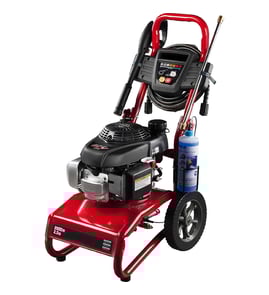




What kind of gas goes in a Craftsman 3000 PSI pressure washer?
For the Craftsman 580752060 gas pressure washer, we use clean, fresh unleaded gasoline with a minimum 87 octane (87 AKI) rating. Use fresh fuel and store it safely; old gas is a top cause of hard starting and rough running.
- Use fresh unleaded gas (avoid fuel that has been sitting for weeks).
- Keep the fuel container sealed to reduce moisture and contamination.
- Fill the tank outdoors with the engine off and cooled down.
- Wipe up spills immediately and move the unit away from the fueling area before starting.
- Do not overfill; leave room for fuel expansion.
The manual’s start-up steps include adding proper fuel, checking oil level, and confirming water supply before running the pump. Use this quick pre-start list:
| Check | What to do | Why it matters |
|---|---|---|
| Fuel | Add fresh unleaded 87 AKI gas | Helps prevent no-start and surging |
| Oil | Verify oil is at the proper level | Protects the engine from damage |
| Water supply | Connect and turn on water before starting | Prevents pump damage |
| Hose condition | Inspect for kinks, cuts, loose fittings | Helps maintain steady pressure |
Fuel quality directly affects how easily your pressure washer starts and how smoothly it runs under load. Fresh 87 AKI unleaded gas helps reduce stalling, hunting/surging, and power loss, especially after the unit has been stored.
If the engine runs but bogs down or loses power during use, follow the troubleshooting path in pressure washer engine losing power. For model-specific operating and safety steps (including outdoor operation and clearance), use the owner's manual.
Last updated: February 2026
How to tell if your pressure washer pump is bad?
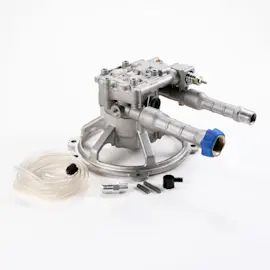
On the Craftsman pressure washer model 580752060, a bad pump usually shows up as low or surging pressure, water leaking at the pump, or no pressure even with good water supply. Pump damage is common after running the unit without water or after freeze damage; both are specifically warned against in the owner's manual.
- Confirm the garden hose supply is strong and turned fully on; the manual calls for more than 3.3 GPM and at least 20 PSI at the hose end.
- Purge air: turn water on, point the gun safely, and squeeze the trigger until flow is steady.
- Inspect the pump inlet screen for debris; clean it if clogged.
- Look for leaks at the pump body, fittings, or outlet tube connections.
- Listen for abnormal mechanical noise (grinding, knocking) while running.
- If pressure is weak with a known-good spray tip, the pump or unloader system is the likely cause.
| What you notice | Most common cause | What to do next |
|---|---|---|
| Pressure pulses or surges | Air in system, clogged inlet screen, sticking unloader | Purge air, clean screen; consider unloader service |
| Low pressure with normal engine speed | Worn pump valves/seals, nozzle restriction | Try a different nozzle; inspect pump for leaks |
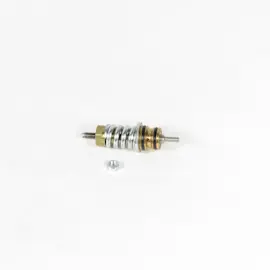
| No pressure but water flows | Unloader stuck open, internal pump damage | Check unloader; plan for pump repair/replacement |
| Water leaking from pump | Seal failure or freeze crack | Stop using; replace damaged parts |
These are fast items that often mimic a “bad pump”:
- Spray nozzle partially clogged or worn; try a different tip such as the pressure washer spray nozzle 195983XGS.
- High-pressure hose kinked, damaged, or internally collapsed.
- Inlet screen blocked (at the pump water inlet).
- Water supply issue (hose too long, low flow, or using hot water).
Running the pump without water and letting it freeze can permanently damage pistons and seals. The manual also warns that operating without the water supply connected and turned on can damage the equipment and shorten pump life.
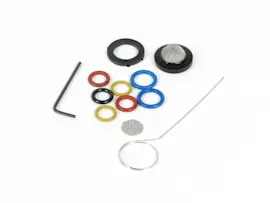
Replace the pump (or pump components) when you have persistent low/no pressure after the checks above, visible pump cracking, or recurring leaks that return quickly after tightening fittings.
Last updated: February 2026
Is 1900 psi good for a pressure washer?
Yes. For typical home cleaning, 1900 PSI is a solid, usable pressure level for jobs like patio furniture, grills, cars, and light mildew. Your Craftsman 580752060 is rated up to 2,500 PSI, so 1900 PSI is well within normal operating range (use the right spray tip and technique). See the 580752060 owner's manual for spray tip and operating limits.
- Washing vehicles (use a wider fan tip and keep distance)
- Patio furniture and outdoor cushions (gentle technique)
- Vinyl siding spot cleaning (avoid forcing water behind siding)
- Decks and fences (test a small area first)
- Driveways and sidewalks (works, but slower than higher PSI units)
PSI is the impact; GPM (flow) is the rinsing power. For the Craftsman 580752060, the manual lists a max flow rate of about 2.3 GPM and max pressure of 2,500 PSI.
| Spec | What it affects | What to expect at 1900 PSI |
|---|---|---|
| PSI (pressure) | How hard the spray hits | Good for general home cleaning without being overly aggressive |
| GPM (flow) | How quickly you rinse and flush dirt | More flow usually means faster cleaning, even at similar PSI |
| Spray tip angle | How concentrated the stream is | Narrower tips feel stronger; wider tips are safer for surfaces |
- Match the spray tip to the surface; a narrow tip can gouge wood and damage paint.
- Keep the wand moving and start farther back, then move closer as needed.
- Purge air before starting: turn water on and squeeze the trigger until flow is steady.
- Never run the pump without water connected and turned on.
- Wear proper eye protection; we recommend safety goggles, not just safety glasses.
If your spray seems weak or inconsistent, a worn nozzle is a common cause. Replacing the pressure washer spray nozzle 195983XGS often restores performance.
Using “enough” PSI (like 1900) with the correct spray tip and steady water supply helps you clean effectively while reducing the risk of surface damage and extending pump life.
Last updated: February 2026