Owner’s manual
 Error Codes


How to find Kenmore 10656712500 refrigerator model number?
You can find the model number for your Kenmore Elite side-by-side refrigerator on the model and serial number label inside the fresh food (refrigerator) compartment. For model 10656712500, check the inside wall of the refrigerator section first; it is the primary location noted in the documentation.
Where to look first (fastest checks)
- Inside the refrigerator compartment on an interior side wall
- Near the top front edge of the refrigerator liner (inside the fresh food section)
- On a label that also lists the serial number and purchase date fields
- If the label is hard to read, use a flashlight and wipe the area with a damp cloth, then dry
What the label looks like
The label typically includes these fields, so you know you found the right one:
| Label item | What it tells you | Why you need it |
|---|---|---|
| Model number | The exact model (example: 10656712500) | Ensures correct Kenmore parts fit |
| Serial number | Unique ID for your unit | Helps match production details |
| Purchase date (blank line) | Owner record space | Useful for your records |
Why it matters
We use the full model number to match the correct parts diagrams and compatible replacement parts (for example, the correct refrigerator water filter, ice maker, or door gasket). A single digit difference can change the fit.
Tip for ordering the right parts
- Copy the model number exactly as printed
- Take a clear photo of the label for reference
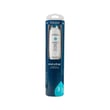
- Use the model number when selecting parts like the genuine Kenmore refrigerator water filter EDR3RXD1
- For additional label and location details, follow the owner's manual
Last updated: February 2026
How to tell cubic feet of Kenmore refrigerator by model number?
For Kenmore Elite model 10656712500, the most reliable way to get cubic feet is to look up the capacity in the specifications section of the owner's manual. The model number itself usually does not directly encode the exact cubic-foot capacity.
Fast ways to find the capacity
- Check the specifications/capacity section in the owner's manual.
- Look for a model and serial number label inside the fresh food compartment (the manual notes it is on the inside wall); use that model number to match the correct specs.
- If you cannot find a listed capacity, estimate it by measuring the interior and calculating volume (see below).
How to estimate cubic feet (measurement method)
If you want a close estimate, measure the usable interior space (not the outside cabinet):
- Measure width, height, and depth in inches for the refrigerator section.
- Do the same for the freezer section.
- Multiply each section’s measurements to get cubic inches.
- Add the two sections together.
- Convert to cubic feet.
Formula:
| What you measure | Calculation | Result |
|---|---|---|
| Refrigerator section | W × H × D (inches) | cubic inches |
| Freezer section | W × H × D (inches) | cubic inches |
| Total capacity | (Fridge + Freezer) ÷ 1728 | cubic feet |
Why your estimate may not match the “official” number
Manufacturers typically rate capacity using standardized methods; your tape-measure result can differ because of:
- Shelves, bins, and air channels reducing usable space
- Curved interior walls and door storage
- Ice maker components taking up freezer volume
- Measuring only “open space” vs. total interior cavity
Why it matters
Knowing cubic feet helps you compare replacement refrigerators, plan kitchen fit, and choose storage accessories (bins, door rails, and shelves) that match how much space you actually use.
Last updated: February 2026
What are the common problems with Kenmore 10656712500 refrigerators?
Common issues on the Kenmore Elite 10656712500 side-by-side refrigerator include no-cool or warm temperatures, moisture buildup, ice maker not making enough ice, water/ice dispenser flow problems, and new or unusual noises. Many of these trace back to airflow restrictions, door sealing, water supply issues, or defrost-related components.
Most common symptoms and what usually causes them
- Refrigerator not running at all: unplugged cord, tripped breaker, controls turned off (see owner's manual).
- Too warm in fresh food or freezer: doors opened often, large warm food load, controls set too warm, or airflow blocked.
- Moisture buildup inside: humid room conditions or doors not fully closed.
- Ice maker not producing ice or low ice: water shutoff not fully open, kinked supply line, ice maker switched off, or not enough time after install.
- Noisy operation: normal sounds like buzzing (water valve), pulsating (fans/compressor), sizzling (defrost), popping (expansion), or water running during defrost.
Quick checks we recommend first (before replacing parts)
- Confirm the unit is plugged into a grounded outlet and the breaker is not tripped.
- Make sure temperature controls are on and set appropriately; recheck temps after 24 hours.
- Keep doors fully closed; reduce door openings and verify shelves or bins are not preventing closure.
- If ice is low, verify the household shutoff valve is fully open and the water line is not kinked.
- Allow 24 hours after a new installation or ice maker setup for temperatures and ice production to stabilize.
Parts that commonly solve these problems (when diagnosis points to a failure)
| Symptom | Common part area | Example part for this model |
|---|---|---|
| Low ice or no ice | Ice maker assembly | Refrigerator ice maker 2198597 |
| Slow water flow, poor taste/odor | Water filter | Genuine Kenmore refrigerator water filter EDR3RXD1 |
| Frost buildup, warm temps | Defrost system | Refrigerator heater WP2323198 or refrigerator defrost bi-metal WPW10225581 |
| Warm temps, weak airflow | Evaporator fan area | Evaporator motor WP2315549 or refrigerator evaporator fan blade WP2169142 |
Why it matters
Temperature swings, moisture, and low ice output are often early signs of airflow, defrost, or water-supply problems. Catching them early helps protect food quality, reduces frost and leaks, and prevents the compressor and fans from running excessively.
Last updated: February 2026
What is the average lifespan of a Kenmore 10656712500 refrigerator?
A Kenmore Elite side-by-side refrigerator like model 10656712500 typically lasts 10 to 15 years. Regular maintenance (especially cleaning condenser coils and keeping door seals tight) helps you reach the high end of that range and reduces the chance of expensive sealed-system repairs.
Typical lifespan and what affects it
Most refrigerators in this class land in a fairly consistent range, but real-world life depends on heat, airflow, and how hard the unit works.
- Dirty condenser coils make the compressor run hotter and longer
- Worn door gaskets let warm, moist air in and increase run time
- Frequent door openings and overpacking restrict airflow
- Poor leveling can prevent doors from sealing consistently
- Water and ice system issues (valves, tubing, ice maker) can create leaks or freezing problems
Maintenance checklist to help it last longer
We recommend these habits for Kenmore side-by-side refrigerators:
- Vacuum and brush the condenser coil area regularly
- Confirm both doors close fully and self-close properly
- Keep vents inside the fresh food and freezer sections unblocked
- Replace the water filter on schedule to maintain flow and ice production
- Follow the care and cleaning guidance in the owner's manual
Common “age-related” repairs (and what they usually mean)
These are some of the most common repairs as a refrigerator approaches the 10+ year mark.
| Symptom | Often related to | Example part on this model page |
|---|---|---|
| Warm freezer or fresh food section | Defrost system issue | Refrigerator defrost bi-metal WPW10225581 |
| Frost buildup on back freezer wall | Defrost heater or thermostat | Refrigerator heater WP2323198 |
| No ice or slow ice production | Ice maker or water supply issue | Refrigerator ice maker 2198597 |
| Slow water dispensing | Filter restriction | Genuine Kenmore refrigerator water filter EDR3RXD1 |
Why it matters
Once a refrigerator is past about 10 years, maintenance has a bigger payoff because it directly reduces compressor run time. That helps stabilize temperatures, improves ice production, and can delay high-cost cooling-system problems.
Last updated: February 2026