Error Codes


How many cubic feet is the Kenmore washer model 11082980110?
The Kenmore washer model 11082980110 is a full-size, Whirlpool-built, agitator top-load design; washers in this Kenmore 110 platform are typically about 3.2 to 3.5 cu. ft. capacity. For an exact cubic-foot rating, match your basket and tub configuration to the correct replacement basket.
Typical capacity for this washer style
This model uses a traditional top-load basket and agitator system, which commonly lands in the mid-3 cu. ft. range.
- Most full-size agitator top-load washers: 3.0 to 3.6 cu. ft.
- Common Kenmore 110 direct-drive style: about 3.2 to 3.5 cu. ft.
- High-capacity top-load (larger tub, different platform): 4.0+ cu. ft.
How to confirm the exact capacity on your unit
Use parts identification to lock in the exact tub and basket design used on your washer.
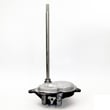
- Identify the spin basket used on your machine: basket W10389328
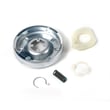
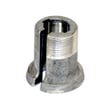
- Confirm the basket-to-drive interface: washer drive block WP389140
- Check the agitator style if you are comparing to similar Kenmore models: washer agitator WP389386
- If you are sizing loads today, treat it as a 3.2 to 3.5 cu. ft. washer to avoid chronic overloading
Quick sizing guide (practical use)
| Capacity range | Typical load size | What you will notice |
|---|---|---|
| 3.0 to 3.3 cu. ft. | Medium | Fills to around the top row of holes with dry clothes |
| 3.4 to 3.6 cu. ft. | Medium-large | More rollover space above the clothes |
| 4.0+ cu. ft. | Large | Comforters fit without packing |
Why it matters
Capacity affects load size, detergent dosing, and how well items circulate during agitation and spin. Using the correct capacity range helps prevent poor cleaning, out-of-balance spinning, and premature wear on the drive system.
Last updated: February 2026
How to identify a Kenmore washer model?
Your Kenmore washer model number is printed on the appliance’s model and serial tag. For Kenmore washers, it often starts with 110 (like 11082980110), and using the exact model number is the fastest way to match the correct parts for your washer.
Where to look on Kenmore model 11082980110
Check these common locations first (the tag is usually a sticker or metal plate):
- Under the lid along the rim of the washer opening (common on top-load washers)
- On the back panel of the cabinet
- Behind the control panel (sometimes visible from the rear)
- Inside the cabinet opening near the tub opening (less common)
- Near the power cord entry on the rear of the washer
What the model number looks like (and what to write down)
Record the model number exactly as shown, including all digits.
| What to capture | Example | Why it matters |
|---|---|---|
| Model number | 11082980110 | Ensures parts fit your exact Kenmore washer |
| Serial number | (varies) | Helps identify production run for some part changes |
| Prefix | 110 | Points to the manufacturing source used for many Kenmore washers |
Quick tips to avoid ordering the wrong part
These steps prevent the most common mix-ups when shopping for washer parts.
- Copy the model number directly from the tag, not from a receipt or listing
- Use all digits; do not shorten or round the number
- If the tag is worn, take a clear photo and zoom in to confirm characters
- Match parts by model first, then by symptom (drain, spin, agitation)
- When troubleshooting agitation issues, common wear items include the agitator dog 80040 and related agitator components
Why it matters
Kenmore washers can look similar across multiple series, but internal components (like the drive system, water pump, lid switch, and clutch) can differ by model. Using 11082980110 helps us narrow to the correct diagrams and compatible replacement parts.
Last updated: February 2026
How to reset Kenmore washer model 11082980110 top loader?
To reset your Kenmore washer model 11082980110, disconnect power long enough to clear the control, then restore power and restart a cycle. This reset fixes many “won’t start,” “stuck,” or “not responding” symptoms without replacing parts.
Quick reset steps
- Turn the washer OFF.
- Unplug the power cord from the outlet.
- Wait 5 minutes (this lets the control fully discharge).
- Plug the washer back in.
- Select a cycle and press Start.
If it still will not start after the reset
These checks solve the most common no-start issues on top-load Kenmore 110-style washers:
- Confirm the outlet has power (try a lamp or small appliance).
- Make sure the lid is fully closed; a failed lid switch can prevent agitation and spin.
- Verify the timer/knob is set firmly into a cycle selection.
- If the washer fills but will not agitate or spin, inspect the drive system parts.
- If the washer will not drain, check for a clog or a failing pump.
Parts that commonly relate to “won’t agitate/spin” or “won’t drain”
If the reset does not help and symptoms point to a mechanical issue, these model-compatible parts are common suspects:
| Symptom | Common cause | Example model-compatible part |
|---|---|---|
| Motor runs but no agitation/spin | Worn drive coupling | Coupling 285753A |
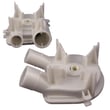
| Drains slowly or not at all | Clogged or failing pump | Water pump WP3363394 |
| Agitator moves poorly or slips | Worn agitator dogs/cam | Agitator dog 80040 |
Why it matters
A proper power reset clears a “hung” control state and saves time before deeper troubleshooting. If the problem returns immediately, the symptom pattern (no start, no drain, no spin, weak agitation) helps narrow the repair to the lid switch, drain system, or drive components.
Last updated: February 2026
Is it worth repairing a Kenmore washing machine?
Yes, it’s usually worth repairing a Kenmore washer, especially a proven direct-drive model like Kenmore 11082980110, when the fix is a common wear part and the machine isn’t leaking badly or rusted through. Repairs such as a coupling, water pump, or clutch often restore normal washing and spinning for far less than replacement.
Quick way we decide: repair vs. replace
We look at three things first: the symptom, the likely part cost, and whether the repair addresses the root cause.
- Repair when the washer won’t agitate/spin, won’t drain, or is noisy but otherwise solid
- Repair when the fix is a typical wear item (coupling, pump, clutch, lid switch)
- Replace when the tub is severely rusted, the cabinet is rotted, or there’s chronic major leakage
- Replace when multiple major systems are failing at once (drive + transmission + basket issues)
- Repair when you want to keep a familiar, simple mechanical design running
Common “worth it” repairs on model 11082980110
These are frequent, high-success repairs that usually make financial sense:
| Symptom | Likely cause | Example part for this model |
|---|---|---|
| Motor runs but won’t agitate/spin | Worn motor coupling | Coupling 285753A |
| Won’t drain or drains slowly | Pump jammed or leaking | Water pump WP3363394 |
| Spins weakly or smells like burning rubber | Worn clutch | Clutch 285785 |
| Agitator moves poorly or “ratchets” | Worn agitator dogs/cam | Agitator dog 80040 |
| Loud banging, off-balance movement | Suspension wear | Washer suspension spring WP63907 |
Why it matters
A targeted repair keeps your Kenmore washer’s cleaning performance and spin speed where they should be, which reduces wet loads, repeat washes, and strain on the drive system. Replacing a small failed part early can also prevent bigger damage (for example, a failing pump leading to leaks).
Before you spend money: 5-minute checks
- Unplug the washer; confirm the outlet has power
- Verify the lid closes firmly (a lid switch issue can stop spin)
- Check the drain hose for kinks and the standpipe for clogs
- Listen: motor running with no movement often points to a coupling
- Look underneath for fresh water trails that suggest a pump leak
Last updated: February 2026
What is the average lifespan of a Kenmore washer?
A Kenmore washer typically lasts 10 to 15 years with normal household use. For your Kenmore model 11082980110, good loading habits and basic upkeep help you reach the high end of that range, while wear items in the drive and drain systems can shorten it.
What affects lifespan the most
- Load size and balance: frequent overloading or consistently unbalanced loads strain the drive system.
- Drain performance: slow draining makes the pump work harder and can leave water behind.
- Agitation and spin wear: slipping or grinding during agitation/spin accelerates mechanical wear.
- Water quality: hard water can increase mineral buildup and valve issues.
- Maintenance habits: keeping hoses, tub area, and moving parts in good condition prevents secondary damage.
Common wear parts that can limit service life
If your washer stops agitating, won’t spin, or won’t drain, these model-compatible parts are often involved:
| Symptom | Commonly related part | What it does |
|---|---|---|
| Agitator moves poorly or “ratchets” | Agitator dog 80040 | Helps the agitator grip and move clothes properly |
| Washer won’t agitate/spin, loud clunking | Coupling 285753A | Connects motor power to the transmission/drive system |
| Won’t drain or leaves water in tub | Water pump WP3363394 | Pumps water out during drain |
| Spins weakly or slips under load | Clutch 285785 | Helps the basket reach and hold spin speed |
Practical ways to make it last longer
- Keep loads below the top of the basket and distribute items evenly.
- Use the right amount of detergent to reduce residue and buildup.
- Check fill and drain performance; address slow draining early.
- Listen for new noises (grinding, squealing, repeated clunking) and correct the cause.
- If the washer shakes excessively, inspect suspension components such as the washer suspension spring.
Why it matters
A washer that is draining, agitating, and spinning correctly runs cooler and with less strain. Catching early symptoms often prevents bigger failures in the drive system (coupling, clutch, gearcase components) and helps your Kenmore 11082980110 reach its full expected lifespan.
Last updated: February 2026
What size is a Kenmore model 11082980110 washer?
The Kenmore washer model 11082980110 is a full-size, top-load washer; most machines in this Kenmore 110 platform measure about 27 inches wide, 27 to 28 inches deep, and 42 to 43 inches tall. For a perfect fit, we recommend measuring your specific unit in place.
Typical dimensions you can expect
These are the most common exterior size ranges for a standard Kenmore top-load washer with an agitator:
- Width: ~27 to 27.5 inches
- Depth (cabinet): ~27 to 28 inches
- Height (to top of console): ~42 to 43 inches
- Depth with hoses: plan +3 to +6 inches behind the washer
- Door/lid clearance: plan +18 to +24 inches above the top
How we recommend measuring (so it fits the first time)
Use a tape measure and record the largest point in each direction.
- Measure width at the widest point of the cabinet
- Measure depth from the front edge to the back edge (then add room for hoses)
- Measure height from the floor to the highest point (often the console)
- Confirm your doorway and hallway clearances for moving the washer
- Leave space for vibration and airflow (at least 1 inch on each side is typical)
Space planning quick guide
| What you’re planning for | What to allow | Why |
|---|---|---|
| Washer body | ~27 in W x 27 to 28 in D x 42 to 43 in H | Typical Kenmore top-load footprint |
| Behind washer | +3 to +6 in | Hoses and drain standpipe clearance |
| Above washer | +18 to +24 in | Lid opening and loading |
Why it matters
Correct sizing prevents installation headaches like kinked drain hoses, crushed fill hoses, a lid that cannot fully open, or a washer that bangs the wall during spin. If you’re troubleshooting shaking or movement after moving the washer, worn suspension parts can also contribute, such as the washer suspension spring WP63907.
Last updated: February 2026