Installation guide
 Owner’s manual
 Error Codes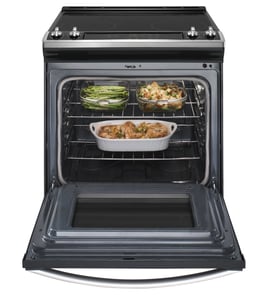



How big is the Kenmore 79092613810?
The Kenmore 79092613810 is a standard 30-inch class electric range. Most ranges in this class measure about 30 inches wide, roughly 36 inches tall to the cooktop, and about 25 to 28 inches deep (not including the door handle). For exact clearances and leveling details, use the 79092613810 owner's manual.
Typical size and what to measure at home
Use a tape measure and confirm these points before ordering parts, planning a countertop fit, or moving the range:
- Width: measure the cabinet opening side-to-side (most are 30 inches)
- Height: measure floor to cooktop surface; then check if leveling legs need adjustment
- Depth: measure from the back of the range to the front of the closed door (handles vary)
- Door swing clearance: allow space in front so the oven door can open fully
- Rear clearance: leave room for the power cord and terminal block area
Quick reference: common measurements for 30-inch electric ranges
| Measurement | Typical range | Why it varies |
|---|---|---|
| Width | ~29 7/8 to 30 in. | cabinet cutout tolerance, side panels |
| Height (to cooktop) | ~36 in. | leveling legs, flooring thickness |
| Depth (without handle) | ~25 to 28 in. | backguard design, door profile |
Why it matters
Correct dimensions help prevent installation problems such as a range that will not slide fully into the opening, a cooktop that sits unevenly, or a power connection that gets pinched. The manual also covers setup guidance like leveling and placement.
Related installation tip
If you are installing or moving the range, follow the clearance, leveling, and electrical connection guidance in the 79092613810 installation guide.
Last updated: February 2026
Where can I find my Kenmore electric range model number?
On Kenmore electric range model 79092613810, the model and serial number are printed on the identification (serial) plate on the lower right oven frame. We access it by opening the storage drawer or warmer drawer (depending on your range). See the 79092613810 owner's manual for the exact plate location illustration.
Quick ways to find the model number label
- Pull out and remove the storage drawer (or open the warmer drawer) and look at the lower right oven frame.
- Check the oven door jamb/frame area around the opening (common on many ranges).
- Look on the back panel near the power cord area (some installations make this hard to see).
- Use a flashlight; the plate is often silver with black text.
What the model number looks like (and why it matters)
For this Kenmore series, you may see a format like 790.9261* on the label (the asterisk indicates a color code). When ordering parts or using troubleshooting steps, we use the full model number 79092613810 to match the correct wiring, control board, and surface element parts.
Model vs. serial number (use this table)
| Item on the label | What it’s used for | Example format |
|---|---|---|
| Model number | Parts lookup, diagrams, manuals | 79092613810 or 790.9261* |
| Serial number | Manufacturing ID, service history | Letters and numbers |
Why it matters
Using the exact model number prevents ordering the wrong bake element, surface element control switch, or oven temperature sensor, and it helps match the correct error code chart and wiring configuration.
Last updated: February 2026
What is the average lifespan of 79092613810?
A Kenmore electric range like model 79092613810 lasts 13 years on average with normal household use. Regular cleaning, correct cookware, and fixing heating or control issues early helps you reach (and often exceed) that typical service life; see the 79092613810 owner's manual for care guidance.
What affects lifespan most
- Heat stress from frequent high-heat baking/broiling and long self-clean cycles
- Power quality (loose connections or overheating at the terminal block)
- Cooktop habits (spills baked onto elements, heavy pans, dragging cookware)
- Ventilation and cooling around the control area
- Maintenance (keeping the oven cavity, door seal area, and cooktop clean)
Parts that commonly wear before the range does
If performance drops, replacing a wear part often restores normal operation.
| Symptom | Common wear area | Example part for this model |
|---|---|---|
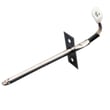
| Oven temperature swings | Temperature sensing | Range oven temperature sensor 316233903 |
| No bake heat | Lower heating circuit | Frigidaire range bake element 316225001 |
| Weak or no broil | Upper heating circuit | Frigidaire range broil element 316203200 |
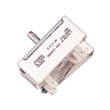
| Surface element not regulating | Infinite switch | Frigidaire range surface element control switch 316436001 |
Simple habits that extend life
- Wipe up spills promptly so they do not carbonize on the cooktop or in the oven
- Avoid slamming the oven door; it protects hinges, receivers, and door alignment
- Use cookware that sits flat to reduce hot spots on radiant elements
- Replace a failing element or sensor early to prevent overheating and control damage
- Keep the control panel area dry; do not spray cleaner directly onto it
Why it matters
Knowing the typical 13-year lifespan helps you decide whether to repair (often cost-effective for a sensor, element, or switch) or plan for replacement if multiple major components are failing.
Last updated: March 2026