Owner’s manual
 Error Codes


How to remove bottom grille on GE refrigerator?
On the GE GNE22GSEBFSS bottom-mount refrigerator, we remove the bottom (base) grille by taking out the two Phillips-head screws, then pulling the grille off. This grille is also removed during leveling and some doorway-fit steps; see the GNE22GSEBFSS owner's manual.
Steps to remove the bottom (base) grille
- Unplug the refrigerator or switch off power at the breaker if you will be working near wiring.
- Locate the base grille at the very bottom front of the refrigerator.
- Remove the two Phillips-head screws securing the grille.
- Pull the grille straight off the front of the cabinet.
- Set the screws aside so you can reuse them during reinstallation.
Reinstalling the grille (quick checklist)
- Position the grille so it sits flush against the cabinet.
- Align the screw holes.
- Reinstall the two Phillips-head screws and tighten until snug (do not overtighten).
When you typically remove the grille
| Task | Why the grille comes off | What to do next |
|---|---|---|
| Leveling the refrigerator | Access to leveling legs and stabilizing points | Adjust leveling legs, then reinstall grille |
| Fitting through a doorway | Extra clearance after removing doors/drawer (on some models) | Move unit, then reinstall grille |
| Cleaning | Better access to floor area and front base | Vacuum and wipe, then reinstall grille |
Why it matters
The base grille protects the lower front area and helps keep airflow and components shielded from bumps and debris. Reinstalling it correctly also helps prevent rattles after cleaning or leveling.
Last updated: January 2026
How to remove the bottom drawer of a GE refrigerator?
To remove the bottom freezer drawer on your GE GNE22GSEBFSS bottom-mount refrigerator, open the drawer fully, lift the freezer basket out, remove the screws on both sides of the drawer rail, then lift up on both sides of the handle to separate the drawer front from the rail assemblies. Use the steps in the GNE22GSEBFSS owner's manual for the exact sequence.
Step-by-step: removing the bottom freezer drawer
- Unplug the refrigerator if you will be working near wiring or moving the unit.
- Open the freezer drawer until it stops.
- Lift the freezer basket up at the back, then lift the front and remove the basket.
- Remove the screw on each side of the drawer railing.
- Lift up on both sides of the freezer drawer handle to separate the drawer railings from the rail assemblies.
- Set the drawer front on a non-scratching surface.
- Push the rail assemblies back into the locking position.
If you still need more clearance (doorway moves)
If the refrigerator still will not fit through a doorway after the drawer is removed, the manual allows removing the base grille (toe grille) by taking out its screws.
| What you remove | Why you remove it | Typical tools |
|---|---|---|
| Freezer basket | Access the drawer front screws | None |
| Drawer front | Reduce depth for tight doorways | Phillips screwdriver |
| Base grille (if needed) | Gain a bit more clearance | Phillips screwdriver |
Why it matters
Removing the drawer correctly prevents bent rails, broken mounting tabs, and drawers that will not close or seal properly afterward. Keeping the rail assemblies in their locked position also makes reinstallation smoother.
Last updated: January 2026
Why is my GE freezer leaking from the bottom?
On a GE GNE22GSEBFSS bottom-mount refrigerator, a leak from the bottom of the freezer is usually caused by defrost water not draining correctly; it can overflow into the freezer drawer area and then seep out underneath. A clogged defrost drain, an iced-over drain trough, or a cracked drain pan are the most common causes.
Quick checks we recommend first
- Make sure the freezer drawer is fully closed; warm air can create excess frost that later melts and overwhelms the drain.
- Look for a sheet of ice on the freezer floor or under the lower basket; that often points to a drain freeze-up.
- Check for water trails starting at the back wall of the freezer and running forward.
- Confirm the refrigerator is level front-to-back and side-to-side; poor leveling can misdirect water.
- If the unit has a water dispenser or ice maker, rule out a supply leak at the back connection.
For model-specific access points and drawer removal steps, follow the GNE22GSEBFSS owner's manual.
Most likely causes and what to do
| What you see | Most likely cause | What to do next |
|---|---|---|
| Ice under the freezer basket, then water later | Defrost drain clogged or frozen | Defrost the drain area; flush the drain with hot water and clear debris |
| Water only after heavy ice buildup | Door not sealing or drawer not closing | Inspect gasket, remove obstructions, avoid overfilling baskets |
| Water appears near back of cabinet or under unit | Drain pan cracked or shifted | Inspect the drain pan in the machine compartment; replace if damaged |
| Water line area wet, dispenser/ice issues | Water supply connection or valve leaking | Inspect tubing and fittings; test inlet valve for seepage |
If the leak is related to the water system
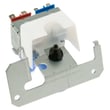
If you see dripping at the rear lower area or you notice slow ice production, the inlet valve can be a contributor. On this model, a common replacement is the refrigerator water valve WR57X33326.
Why it matters
Defrost water that cannot drain properly can refreeze into a thicker ice layer, restrict airflow, and lead to warmer freezer temperatures, noisy fan operation, and recurring puddles under the refrigerator.
Last updated: January 2026
What is the most common problem with GE refrigerators?
The most common issue we see with GE refrigerators like model GNE22GSEBFSS is a cooling complaint (food warming, freezer not staying cold, or temperature swings). In many cases, the root cause is airflow restriction, dirty condenser coils, or a defrost-related problem rather than a single “bad part.”
Most common symptoms customers report
- Fresh food section is warm but freezer seems OK
- Freezer is warm and ice production slows
- Frost buildup on the back wall of the freezer
- Refrigerator runs a lot or seems louder than normal
- Food freezes in the refrigerator section (items too close to the rear air vent)
Quick checks that solve many “not cooling” calls
Start with these basics before replacing parts:
- Confirm controls are set correctly; adjust one increment at a time and allow 24 hours to stabilize (see GNE22GSEBFSS owner's manual).
- Make sure doors close fully; a package holding the door open can cause slow ice freezing and warming.
- Keep food away from the air vent at the back of the refrigerator to prevent freezing and airflow blockage.
- Clean the interior and manage odors; the manual recommends baking soda and routine cleaning.
- If you feel warm air under the refrigerator, that is normal heat rejection from the cooling system.
Parts that commonly relate to cooling problems
If the basic checks do not help, these components are often involved in temperature problems:
| Symptom | Common system involved | Example part for this model |
|---|---|---|
| Warm temps, erratic temps | Temperature sensing/control | Refrigerator temperature sensor WR55X10025 |
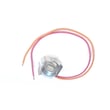
| Frost buildup, poor airflow | Defrost system | Refrigerator defrost bi-metal thermostat WR50X10069 |
| No water to dispenser/ice maker (not a cooling issue) | Water supply | Refrigerator water valve WR57X33326 |
Why it matters
Cooling problems can spoil food quickly and also create secondary issues like slow ice production and odors. Doing the simple airflow, door, and control checks first prevents unnecessary part replacement and helps you pinpoint whether the issue is defrost, airflow, or temperature sensing.
Last updated: January 2026