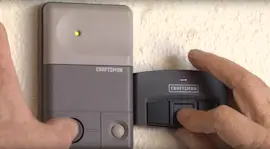
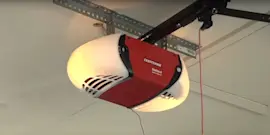
Owner’s manual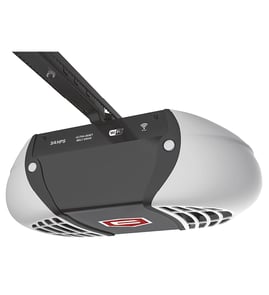

Can you get a universal remote for an old garage door opener?
Yes. For an older Craftsman garage door opener like model 13953515SR, you can typically use a universal remote if it supports your opener’s radio system, or you can add an external receiver kit that works with a new remote. Use the programming and code-setting steps in the 13953515SR owner's manual.
What usually works (from easiest to most flexible)
- Replace the remote with a compatible universal remote that supports your opener’s frequency and coding method.
- Reprogram your existing remotes so they all match the same code settings (common on older switch-coded transmitters).
- Add an external receiver and new remotes if you cannot find a compatible universal remote for the built-in receiver.
- Replace the remote battery first if range is short or operation is intermittent.
- Check the opener’s hanging antenna wire; it should extend fully downward for best range.
How to confirm compatibility on older Craftsman openers
Older openers often use a transmitter with internal code switches (small switches under the battery cover). On the 13953515SR series, the manual describes matching or changing transmitter code switch positions so all transmitters operate the same receiver.
| What you see on the remote | What it usually means | Best next step |
|---|---|---|
| Small code switches inside | Fixed-code system | Match the switch pattern on the new remote to the opener’s working remote (or reset all remotes to a new matching pattern) |
| No switches, “learn” style pairing | Newer rolling-code system | Use the learn/program steps for that remote style |
| Very short range | Battery, antenna, or interference | Replace battery; verify antenna hangs down; try a different location in the vehicle |
Why it matters
A correctly matched remote and receiver prevents “random” operation and improves reliability. The manual also notes that if a neighbor’s opener uses the same code, changing your code settings helps stop unintended operation.
Parts and help for older remote setups
If you need to add an external receiver or replace related components, start with the parts list for model 13953515SR, or search by model number on Sears PartsDirect.
Last updated: February 2026
Is it worth repairing a 20 year old garage door opener?
Yes, it’s often worth repairing a 20-year-old garage door opener if the problem is a wear item or adjustment on your Craftsman 13953515SR (for example, chain tension, limit/force settings, or a sensor issue). If the motor/gear housing is failing or safety features are unreliable, replacement is usually the better long-term value.
Quick decision guide
- Repair makes sense when the opener runs, but needs adjustment, a minor electrical fix, or a common mechanical service.
- Replacement makes sense when the unit is noisy with internal gear wear, has repeated breakdowns, or you want modern safety and convenience features.
What we check first on a Craftsman 13953515SR
Start with the items that most often cause “old opener” complaints and are typically fixable:
- Door balance and binding: a sticking or heavy door overloads the opener.
- Chain tension: a chain that’s too loose or too tight can cause noise and poor travel.
- Travel limits and close force: incorrect settings can cause reversing or incomplete closing.
- Safety reversal test: the door should reverse on a 1-inch obstacle during testing.
- Photo-eye/sensor setup (if equipped): misalignment or sunlight interference can prevent closing.
For model-specific adjustment and safety steps, follow the 13953515SR owner's manual.
Repair vs replace: cost and reliability comparison
| Situation | Typical outcome | Best choice |
|---|---|---|
| Needs limit/force adjustment or chain tension set correctly | Restores normal operation quickly | Repair/adjust |
| Door reverses unexpectedly or won’t close due to sensor issues | Often solved by alignment, cleaning, or shielding | Repair/adjust |
| Loud grinding, intermittent movement, repeated failures | Points to internal wear (gears/motor components) | Replace |
| You want quieter operation, updated controls, newer safety tech | Better daily use and fewer nuisance issues | Replace |
Why it matters
A garage door system is under extreme tension at the springs, cables, and brackets. Keeping the door balanced and the opener properly adjusted helps prevent damage to the opener and reduces the risk of injury during operation and service.
Parts and documentation
We recommend using the parts list for Craftsman 13953515SR to match components by description and model number; you can also search by model on Sears PartsDirect. For troubleshooting patterns and diagnostic flashes, use Craftsman error codes.
Last updated: February 2026
Where can I buy Craftsman garage door opener parts?
You can buy replacement parts for your Craftsman garage door opener model 13953515SR by using the model-specific parts listing and diagrams for this opener, then matching the part description to your repair. For part identification and ordering details, use the 13953515SR owner's manual and shop through Sears PartsDirect.
Best way to find the right part for model 13953515SR
We recommend identifying the part by function and location on the opener, then confirming it against the parts information in the manual.
- Find the model number label on the opener (typically on the right side panel)
- Use the parts list to match the part description to what failed
- Confirm the part fits your opener series (the manual covers 13953515SR and related models)
- Note the exact details you will need when ordering: part number, description, and model number
- If the issue is remote or radio-control related, check troubleshooting guidance before replacing parts
Common parts customers replace on Craftsman openers
These are frequently replaced items on openers like the Craftsman 13953515SR (exact part selection depends on your symptom):
| Symptom | Likely area to check | Typical fix type |
|---|---|---|
| Motor runs but door does not move | Drive system (gears) | Gear kit or drive components |
| Door stops or reverses unexpectedly | Travel/limit system | Limit switch adjustment or replacement |
| Intermittent operation | Sensor/control feedback | RPM sensor or wiring checks |
| Door will not close | Safety sensor alignment/beam | Align sensors, clear obstructions |
Why it matters
Ordering by model number and part description helps prevent wrong-part returns and speeds up repairs. It also helps you avoid replacing good components when the real issue is adjustment, sensor alignment, or a worn drive mechanism.
Helpful DIY resources
If you are troubleshooting before buying parts, we recommend starting with error and symptom guidance:
Last updated: February 2026
How do I know which garage door opener is compatible?
For a Craftsman garage door opener like model 13953515SR, compatibility is determined by the opener’s receiver type and radio controls, not by the door itself. Start by confirming the exact model and then match the remote/wall control features and code settings described in the 13953515SR owner's manual.
What to check first (fast compatibility checklist)
- Confirm the opener model number on the motor unit: 13953515SR.
- Identify the receiver style (for this series, the manual references an “SR” code button receiver).
- Match the remote type to the receiver type (button style and coding method must match).
- If your system uses code switches, make sure all transmitters use the same switch positions.
- Verify safety sensor setup and door condition before troubleshooting “compatibility” symptoms.
How compatibility works on this Craftsman system
Your 13953515SR is part of a Craftsman series that uses specific radio control logic. The manual explains that transmitters can be set up to operate additional openers and light controls, but the receiver and transmitter must be coded to match.
Code-switch matching basics (when applicable)
- Set the code switches in all transmitters to matching positions.
- Receiver switch #1 typically corresponds to which transmitter button you want to use.
- Receiver switches #2 and up must match the transmitter’s switch positions.
Common “not compatible” symptoms (and what they usually mean)
- Remote won’t operate the door: coding mismatch, dead battery, or receiver not set to the selected button.
- Wall control works but remote doesn’t: remote coding/battery issue more than opener compatibility.
- Door starts down then reverses: safety sensor beam issue or door travel/force adjustment, not remote compatibility.
Quick reference table
| What you’re trying to add | What must match | What to verify |
|---|---|---|
| Remote/transmitter | Receiver type and coding method | “SR” receiver details and code steps in the manual |
| Additional opener/light control | Shared code settings | Same code switches across transmitters |
| Keypad (if used) | Supported accessory type | Manual accessory and programming notes |
Why it matters
Using the correct compatible controls prevents nuisance failures (no response, intermittent operation) and helps keep safety features working as designed. It also avoids unnecessary force/travel changes when the real issue is radio coding.
If you need to look up parts or accessories by model number, search using 13953515SR on Sears PartsDirect.
Last updated: February 2026
What are the common problems with Craftsman garage door openers?
Common problems on the Craftsman 13953515SR garage door opener usually come from the door system (binding or out-of-balance door), misaligned safety sensors, or limit and force settings that need adjustment. Light problems and chain tension issues can also cause noisy or inconsistent operation.
Most common symptoms and likely causes
- Door won’t close or reverses: safety sensors blocked or misaligned; force or travel limits need adjustment.
- Opener strains or needs maximum force: door is out of balance or springs are broken.
- Motor hums briefly, then stops: trolley jammed at stop bolts, door lock engaged, or a door spring issue.
- Noisy operation: chain too loose or too tight; sprocket noise increases with incorrect tension.
- Lights act up: wrong bulb type, wall control light feature setting, or wiring at the wall control.
Quick checks we recommend first
- Pull the emergency release and test door balance by hand; a balanced door stays at any point of travel.
- Clean and align the safety sensors so they face each other with an unobstructed beam.
- Recheck limit and force settings; repeat the safety reverse test after any adjustment.
- Set chain tension; many Craftsman chain drives run best with about 1/2 inch sag above the rail midpoint (do not overtighten).
Common problems at a glance
| Problem area | Typical sign | Best next step |
|---|---|---|
| Door balance/hardware | Straining, uneven travel | Balance test; repair door hardware/springs as needed |
| Safety sensors | Won’t close, reverses | Clean, align, remove obstructions |
| Force/limits | Reverses at floor, over-travels | Adjust and retest safety reverse |
| Chain tension | Rattle, sprocket noise | Adjust to proper sag; avoid overtightening |
Why it matters
Most “opener problems” are actually door or safety-system issues. Correct balance, sensor alignment, and properly set force and limits reduce motor strain and help prevent nuisance reversals.
For model-specific procedures, use the 13953515SR owner's manual. For diagnostic flash patterns and code help, use Craftsman error codes. To order parts by model number, use Sears PartsDirect.
Last updated: February 2026