Installation guide
 Owner’s manual
 Error Codes


How can I tell how many cubic feet my Whirlpool refrigerator is?
For your Whirlpool ED5VHGXMB11 side-by-side refrigerator, the most reliable way to confirm cubic feet is to look up the capacity listed for your exact model in the product literature; you can also estimate it by measuring the interior and converting cubic inches to cubic feet using 1,728.
- Check the specifications section in the ED5VHGXMB11 owner's manual.
- Use the model and serial number label inside the fresh food compartment to confirm you are matching the correct model (the label is typically on an inside wall).
- If you only need a quick estimate, measure the usable interior space and calculate cubic feet.
- If shelves, bins, or the ice maker take up space, measure around them to estimate usable capacity.
- Empty enough items to measure safely.
- Measure the interior (usable) width, height, and depth in inches.
- Multiply:
width x height x depth = cubic inches. - Divide by 1,728 to convert to cubic feet.
| What you have | What to do | Result |
|---|---|---|
| Interior measurements (inches) | Multiply W x H x D | Cubic inches |
| Cubic inches | Divide by 1,728 | Cubic feet (approx.) |
Knowing cubic feet helps us match the right replacement parts and accessories (like shelves, bins, and ice storage) and it also helps you compare similar Whirlpool side-by-side refrigerators when planning kitchen space or food storage.
Last updated: January 2026
What's the average lifespan of a Whirlpool refrigerator?
Most Whirlpool refrigerators average 10 to 20 years of service life. For a Whirlpool side-by-side like ED5VHGXMB11, steady temperatures, clean condenser coils, and keeping the ice maker and water system maintained are the biggest factors that help it reach the upper end of that range.
- Condenser coil cleanliness (dust buildup makes the compressor work harder)
- Door seal condition (air leaks cause longer run times and frost issues)
- Ice maker and water dispenser use (more components, more wear points)
- Ventilation and room temperature (tight cabinets and hot garages shorten life)
- Power quality (frequent outages or surges stress electronics and motors)
- Vacuum coils and the grille area regularly.
- Keep door gaskets clean and check for gaps.
- Replace water filters on schedule and flush the dispenser after changes.
- Level the refrigerator so doors close fully.
- Keep freezer and fresh food vents unblocked for proper airflow.
| Refrigerator type | Typical lifespan | Notes |
|---|---|---|
| Top-freezer | 12 to 20 years | Fewer features, simpler design |
| Side-by-side (like ED5VHGXMB11) | 10 to 20 years | Ice and water features can add wear |
| French door | 10 to 18 years | More doors, seals, and airflow components |
A refrigerator that runs longer than normal, struggles to hold temperature, or builds frost often costs more to operate and can strain major components like the compressor and evaporator fan. Following the care steps in the ED5VHGXMB11 owner’s manual helps protect performance and extend service life.
Last updated: January 2026
What is the most common problem with a Whirlpool refrigerator?
The most common Whirlpool refrigerator problem is a cooling complaint (not cold enough, temperature swings, or running too much). On the Whirlpool ED5VHGXMB11, this often ties back to airflow and heat removal issues such as dirty condenser coils, doors left ajar, or a fan or defrost component starting to fail; our ED5VHGXMB11 owner's manual also notes that frequent door openings, warm rooms, and large food loads can make the motor run longer.
- Fresh food section is warm but freezer seems closer to normal
- Refrigerator runs for long periods (especially after installation or heavy use)
- Frost buildup on the freezer back wall or vents
- Ice maker or dispenser performance drops (slow ice, hollow cubes, no ice)
- New or different noises (buzzing, pulsating, sizzling during defrost)
- Give it time after setup: allow 24 hours after a new installation for full cool-down.
- Confirm control settings: make sure the controls are on and set to normal temperatures.
- Clean condenser coils: dust buildup makes the compressor run longer and cool worse.
- Check door sealing: a poor seal lets warm air in and drives long run times.
- Avoid overpacking vents: blocked vents reduce airflow between compartments.
| Symptom | Most likely area | What to look for |
|---|---|---|
| Runs constantly | Coils, door seal, airflow | Dirty coils, doors not closing, blocked vents |
| Frost buildup | Defrost system | Heavy frost on freezer panel, warm fridge |
| No ice or slow ice | Water supply/valve, ice maker | Buzzing at fill, low water flow, no fill |
| Warm fridge, freezer OK | Airflow control/fan | Weak airflow from fridge vents |
If troubleshooting points to a failed component, these model-matched parts are common starting points:
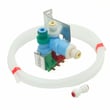
- Refrigerator inlet valve W10408179 for no water to ice maker/dispenser
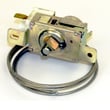
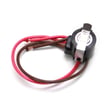
- Refrigerator defrost bi-metal WPW10225581 for defrost-related frost buildup
- Refrigerator heater WP2323198 when the defrost heater circuit is not heating
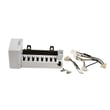
- Ice maker assembly 4317943 when the ice maker stops cycling or won’t harvest
Cooling problems usually get worse over time; long run times can lead to warm food, excess frost, and higher energy use. Addressing airflow, coil cleanliness, and early defrost or water-supply symptoms helps restore normal performance faster.
Last updated: January 2026