Owner’s manual
 Error Codes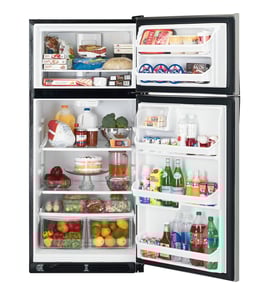
What are the most common issues with 10674234402?
The most common issues we see with the Kenmore 10674234402 top-mount refrigerator are warm temperatures from airflow problems, ice maker not producing ice, water leaks at the supply/valve area, and interior light or door-seal problems. Many of these are fixed with cleaning, simple checks, or targeted part replacement.
Common problems and what usually causes them
- Refrigerator or freezer not cold enough: dirty condenser coils, failed evaporator fan, frost buildup from a defrost issue, or a control problem.
- No ice or slow ice production: ice maker assembly failure, thermostat/mold issues, or low water flow.
- Water leaking: cracked water tube, loose connections, or a leaking inlet valve.
- Light not working: failed door/light switch or burned-out bulb.
- Door not sealing well: worn gasket or hinge alignment issues.
Quick checks we recommend first
- Set temps to typical targets: 0°F in the freezer and 37°F in the fresh food section.
- Make sure vents inside both compartments are not blocked by food.
- Clean condenser coils and confirm the condenser fan runs when the compressor is running.
- If you see heavy frost on the freezer back wall, suspect a defrost or airflow problem.
- For ice and water issues, confirm the household shutoff valve is fully open and the supply line is not kinked.
Parts that commonly solve these symptoms
| Symptom | Likely part area | Example part for this model |
|---|---|---|
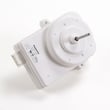
| Warm temps, poor airflow | Evaporator fan | Evaporator motor WPW10189703 |
| No ice | Ice maker system | Ice maker assembly 4317943 |
| Water leak or no fill | Water inlet system | Refrigerator inlet valve WP2315576 |
| Light stays off | Door/light circuit | Refrigerator light switch W11384469 |
Why it matters
Catching airflow, water, and door-seal issues early protects food quality and helps the compressor avoid long run times that increase wear.
Model-specific help
Use the owner's manual for the correct temperature control settings, feature details, and any model-specific troubleshooting steps for the 10674234402.
Last updated: March 2026
What is the top mount refrigerator?
A top-mount refrigerator is a classic fridge layout where the freezer compartment is on top and the fresh-food (refrigerator) compartment is below. Your Kenmore 10674234402 is a top-mount model designed to circulate cold air between both sections through internal vents (so keeping vents clear matters).
How a top-mount refrigerator is set up
In a top-mount design, the freezer does most of the cooling work and shared airflow helps keep the refrigerator section cold.
- Freezer on top; refrigerator section below
- Cool air moves from the freezer into the refrigerator through vents
- Blocking vents with food can cause warm spots and moisture issues
- Odors can transfer between sections because air circulates between them
- Controls are typically set to mid-settings when first installed (then adjusted as needed)
What to do (and avoid) for best cooling
Good airflow is the difference between steady temperatures and constant temperature swings.
- Keep packages away from freezer and refrigerator vents
- Do not overpack shelves; leave space for air to move
- Wrap or cover foods tightly to reduce odor transfer and drying
- Clean both compartments if you are chasing persistent odors
- If temperatures drift, confirm the controls are not set to OFF
Quick comparison: top-mount vs. other common layouts
| Layout | Freezer location | Typical strengths | Common tradeoffs |
|---|---|---|---|
| Top-mount (your 10674234402) | Top | Simple design, strong freezer performance | Bending for fresh-food access |
| Bottom-freezer | Bottom | Fresh food at eye level | Freezer drawers can be harder to organize |
| Side-by-side | Left/right | Narrow door swing, easy freezer access | Narrower shelves for wide items |
Why it matters
Knowing you have a top-mount refrigerator helps with troubleshooting and daily use: airflow between sections is intentional, so vent blockages, odor transfer, and uneven temperatures are often solved by improving circulation and food placement. For model-specific operating details and control settings, use the owner's manual.
Last updated: February 2026
What is the top part of a refrigerator called?
On a Kenmore top-mount refrigerator like model 10674234402, the top compartment is the freezer compartment. It is designed to keep foods frozen, and on many setups it also supports ice production when an ice maker is installed.
What the freezer compartment does
The freezer is the coldest section of the refrigerator; it stores frozen foods and helps manage airflow between the freezer and fresh-food sections.
- Keeps food at freezing temperatures for long-term storage
- Supplies cold air that circulates to the refrigerator section
- Houses freezer vents that must stay unblocked for proper cooling
- Often includes an ice storage bin when equipped with an ice maker
- May include shelves, door bins, and a freezer light (varies by configuration)
Freezer vs. refrigerator section (quick comparison)
| Section | Typical location on this style | Primary purpose | Common issues when overloaded |
|---|---|---|---|
| Freezer compartment | Top | Freezing and ice storage | Poor airflow, warm spots, slow ice production |
| Refrigerator compartment | Bottom | Fresh-food cooling | Temperature swings, moisture issues |
Tips that prevent cooling problems
Air needs to move freely between compartments. If the freezer vents are blocked, temperatures and moisture control can suffer.
- Keep packages away from freezer vents and the top vent into the refrigerator section
- Avoid packing items tightly against the back wall where airflow paths often run
- Let temperatures stabilize after changes; allow about 24 hours after major loading or control adjustments
- If you have an ice maker, leave room behind the refrigerator for the water line connection
Why it matters
Knowing the top section is the freezer helps with troubleshooting (warm freezer, no ice, frost buildup) and with ordering the right parts for your configuration.
For diagrams and feature descriptions specific to your refrigerator, use the 10674234402 owner's manual.
Last updated: February 2026