 Installation guide
 Owner’s manual
 Error Codes






Is GE profile considered high-end?
Yes. GE Profile is widely considered GE’s higher-end mainstream line: you typically get more premium finishes, more advanced features, and more tech-forward controls than standard GE models, without moving into GE’s luxury tiers.
Where GE Profile fits in the GE lineup
GE generally positions its brands in tiers. Here’s the practical way to think about it when you’re shopping or comparing features:
- Standard GE: core features and value-focused designs
- GE Profile: upgraded performance and features (often quieter operation, more cycles/options, more design upgrades)
- GE Café / Monogram: premium and luxury styling, specialty features, and higher price points
What “high-end” usually means in real use
When customers call a line “high-end,” they usually mean a mix of performance, convenience, and design. GE Profile models commonly emphasize:
- More wash or dry options and cycle customization
- Quieter operation compared to entry-level models
- More advanced electronic controls and displays
- More refined rack features and adjustability
- More premium exterior styling (stainless looks, handle designs)
Quick comparison table
| Line | Typical positioning | Best for |
|---|---|---|
| Standard GE | Value to mid-range | Reliable basics at a lower cost |
| GE Profile | Mid-to-high-end mainstream | More features and upgraded design |
| GE Café / Monogram | Premium to luxury | Design-forward kitchens and specialty features |
Why it matters for your dishwasher (GDT550HSD2SS)
Your GE GDT550HSD2SS is a GE dishwasher model; the exact feature set depends on the specific model series and configuration. For cycle options, care guidance, and operating details, use the GDT550HSD2SS owner’s manual.
Last updated: February 2026
What does H20 mean on the dishwasher?
On the GE GDT550HSD2SS dishwasher, an H2O or H20 message points to a water-fill problem: the cycle pauses because the dishwasher is not getting enough incoming water. Restoring proper water supply and restarting the cycle typically clears it.
What to check first (fast fixes)
- Confirm the shut-off valve under the sink is fully open.
- Straighten any kinks in the water supply line.
- Run the hot water at the sink until it is hot, then start the dishwasher.
- Make sure the incoming water is hot enough for proper operation (GE recommends 120°F to 150°F entering water).
- Check that the home water pressure is in a normal range; this model’s installation guidance calls for 20 to 120 PSI.
Step-by-step: clear the H2O/H20 condition
- Cancel the cycle (or power the dishwasher off).
- Turn on the hot water faucet nearest the dishwasher for 30 to 60 seconds.
- Verify the shut-off valve is open and the supply line is not pinched.
- Restart the cycle and listen for filling during the first minute.
- If it still will not fill, follow the water supply setup details in the GDT550HSD2SS installation guide.
Parts that commonly relate to fill issues
If the water supply is good but the dishwasher still will not fill, these parts are common suspects on many GE dishwashers:
| Symptom | What it often points to | Example part for this model |
|---|---|---|
| Stops and shows H2O/H20 soon after start | Overfill protection stuck or sensing water incorrectly | Dishwasher float switch WD21X10519 |
| Fills slowly or inconsistently | Supply restriction, valve issue, or control not energizing fill | Use the GDT550HSD2SS owner’s manual for checks |
Why it matters
A dishwasher that cannot fill correctly cannot wash or heat water properly, so you can see poor cleaning, long cycle times, or a paused cycle. Getting the hot water temperature and supply pressure in range prevents repeat H2O/H20 interruptions.
Last updated: February 2026
What is the average lifespan of a GE dishwasher?
A GE dishwasher like model GDT550HSD2SS typically lasts 10 to 12 years with normal household use. Consistent cleaning, correct detergent use, and fixing small issues early (draining, heating, door closing) are what most often push lifespan toward the high end.
What affects lifespan the most
- Water quality and temperature (hard water and low hot-water temps increase buildup and strain)
- How often you run it (daily use wears pumps, seals, and racks faster)
- Cleaning and maintenance habits (filters, spray arms, and tub seals)
- Detergent and rinse aid choices (use dishwasher-rated products as outlined in the GDT550HSD2SS owner’s manual)
- Early repairs (replacing a worn seal or clogged spray arm prevents bigger failures)
Typical lifespan ranges (what we see most often)
| Usage pattern | Typical lifespan | Notes |
|---|---|---|
| Light (1 to 3 loads/week) | 12 to 15 years | Maintenance matters most |
| Average (4 to 7 loads/week) | 10 to 12 years | Most common household range |
| Heavy (multiple loads/day) | 8 to 10 years | Higher wear on pumps, heater, and racks |
Maintenance that helps you reach 10 to 12 years
- Clean the filter area and remove debris that can restrict circulation
- Check spray arms for clogs and damage; replace if cracked or not spinning freely
- Use a dishwasher cleaner periodically to reduce film and odor buildup
- Keep the door sealing surfaces clean to prevent leaks
- Address performance symptoms early (not draining, not drying, not cleaning)
Parts that commonly impact performance over time
If cleaning issues start showing up, these model-matched parts are common fixes:
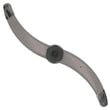
- Dishwasher spray arm, lower WD22X33499 (poor cleaning, weak spray)
- Dishwasher heater element WD05X30818 (poor drying, cooler wash results)
- Tub gasket WD08X23476 (leaks around the door or tub edge)
Why it matters
Dishwashers usually do not fail all at once; they lose cleaning, draining, or drying performance first. Keeping water moving freely (filters and spray arms) and maintaining heat (heater circuit) reduces strain on the circulation system and helps your GE dishwasher last longer.
Last updated: February 2026
How to fix leaking GE Cafe dishwasher corner baffle replacement?
On the GE GDT550HSD2SS dishwasher, a leaking corner baffle is fixed by removing the old baffle, cleaning the corner sealing surface thoroughly, then pressing the new baffle fully into place so it seats evenly. After replacement, run a short test cycle and check for door-area leaks.
Before you start (quick safety and setup)
- Turn off power at the breaker before working around the door and tub edge.
- Let the dishwasher cool if it recently ran a heated cycle.
- Pull the lower rack out for easier access to the tub corner.
- Wipe up standing water so you can see the leak path clearly.
- Keep a towel handy to confirm whether the leak is from the door corner or from underneath.
Corner baffle replacement steps
- Open the door and locate the corner baffle at the leaking corner of the tub opening.
- Remove the old baffle by pulling it straight out (work slowly so you do not tear surrounding seals).
- Clean the corner area completely: remove soap film, grease, and debris so the new baffle can seal.
- Align the new baffle and slide it into position.
- Press firmly along the full length until it is fully seated and flush.
Confirm the repair with a wet test
GE’s installation procedure calls for running the dishwasher and checking for leaks after work is completed. Use the same approach here:
- Restore power.
- Start a cycle and make sure the door is latched.
- Watch for leaks under the dishwasher and around the door.
- If you see a door-edge leak, check for door rubbing against adjacent cabinets and reposition if needed.
Refer to the GDT550HSD2SS installation guide for the wet test and leak-check steps.
Common causes of “corner leaks” (and what to check)
| What you see | Most likely cause | What to do next |
|---|---|---|
| Drip at one upper corner | Corner baffle not seated or sealing surface dirty | Reseat baffle; reclean corner |
| Water trails down the door edge | Door alignment issue or door hitting cabinet | Adjust position; verify clearance |
| Leak appears underneath | Hose/connection leak | Inspect water and drain connections |
| Suds and overflow | Too much detergent or wrong detergent | Use dishwasher detergent; reduce amount |
Why it matters
A corner baffle leak can look minor, but repeated dripping can lead to water damage and can also mimic other problems like a tub gasket or door alignment issue. A clean sealing surface and a fully seated baffle are what stop the leak.
Last updated: February 2026
What is the most common problem with GE dishwashers?
Drain and wash-performance problems are the most common issues we see on GE dishwashers like model GDT550HSD2SS; they usually trace back to dirty filters, a restricted drain path, or spray arms that are clogged or not turning freely. Regular filter cleaning every month or two prevents many of these complaints.
Quick checks that fix the most issues
- Clean the filters; GE recommends inspecting them periodically (about every other month, depending on usage) and cleaning if wash performance drops or dishes feel gritty.
- Make sure the door is fully closed and Start is pressed correctly; a flashing Start light or beeping can happen if the door was opened or left ajar during operation.
- Check for standing water and clear the drain path (sink/disposer connection and drain hose routing).
- Inspect spray arms for blocked holes and confirm they spin freely; replace a damaged arm if it wobbles or cracks.
- Use automatic dishwasher detergent only; the manual notes that the wrong detergent can cause suds and poor results.
Parts that commonly solve these symptoms on GDT550HSD2SS
If cleaning and basic checks do not restore normal operation, these model-matched parts are frequent fixes:
| Symptom | Most likely area | Example model-matched part |
|---|---|---|
| Dishes gritty, poor cleaning | Filtration or spray | Dishwasher coarse filter WD22X10093 or dishwasher spray arm, lower WD22X33499 |
| Won’t start, stops mid-cycle, door-related beeping | Door latch system | GE dishwasher door latch lock WD21X10490 |
| Not draining or slow drain | Drain system | Dishwasher drain hose WD24X10062 or dishwasher drain pump WD19X25187 |
| Leaks at the front or around the tub | Door/tub sealing | Tub gasket WD08X23476 |
Why it matters
Most “GE dishwasher problems” are maintenance-driven; a partially clogged filter or spray arm reduces water flow, which leads to gritty dishes, longer cycles, and repeat draining complaints. Keeping the filters clean and the drain path clear helps the circulation pump and heater do their jobs efficiently.
Helpful references for this model
- Use the cleaning and troubleshooting steps in the GDT550HSD2SS owner’s manual.
- If you’re seeing a code or unusual beeping patterns, use GE electronic dishwasher error codes to narrow the failure to a specific system.
Last updated: February 2026
Can I replace dishwasher parts myself?
Yes, for the GE GDT550HSD2SS dishwasher, many common repairs are DIY-friendly if you shut off power and water first and follow the steps in the GDT550HSD2SS installation guide and GDT550HSD2SS owner's manual. We recommend a qualified technician for repairs involving wiring, grounding, or major plumbing connections.
What you can usually replace yourself
These jobs typically require basic mechanical skill and simple hand tools:
- Cleaning or replacing filters (often restores cleaning performance)
- Replacing a spray arm (clogs and poor wash coverage)
- Replacing a tub gasket (minor leaks at the door or tub edge)
- Replacing a door latch or strike (won't start, door won't stay latched)
- Replacing rack hardware (rollers, brackets, tine rows)
Repairs that are better for a technician
Your manual emphasizes disconnecting power before maintenance and notes that servicing not specifically recommended should be referred to a qualified technician. These repairs also carry higher shock or leak risk:
- Control board or user interface diagnostics and replacement
- Heater circuit troubleshooting
- Grounding and hard-wiring corrections
- Water inlet line or valve work if access is tight or fittings are corroded
Quick safety checklist (do this every time)
- Turn off the breaker; turning the dishwasher “off” does not remove power
- Shut off the water supply under the sink
- Wear gloves and safety glasses during installation or service
- Keep the dishwasher installable for future removal (service access matters)
- Take photos of wire and hose routing before you disconnect anything
Common symptom-to-part examples for GDT550HSD2SS
| Symptom | Common DIY check | Part that’s often involved |
|---|---|---|
| Dishes not clean | Clean filter, check spray arm holes | Dishwasher spray arm, lower WD22X33499 |
| Won’t start or won’t latch | Inspect latch and strike alignment | GE dishwasher door latch lock WD21X10490 |
| Not drying well | Verify heat options, check heater circuit | Dishwasher heater element WD05X30818 |
| Leaking at tub edge | Inspect gasket for tears or flattening | Tub gasket WD08X23476 |
Why it matters
DIY repairs can save time and money, but dishwashers combine electricity and water. Following the documented grounding and power-disconnect guidance helps prevent shocks, leaks, and repeat failures.
Last updated: February 2026





